Connect with us

Search by keyword

Computers

Can AI Truly Understand Videos Now?

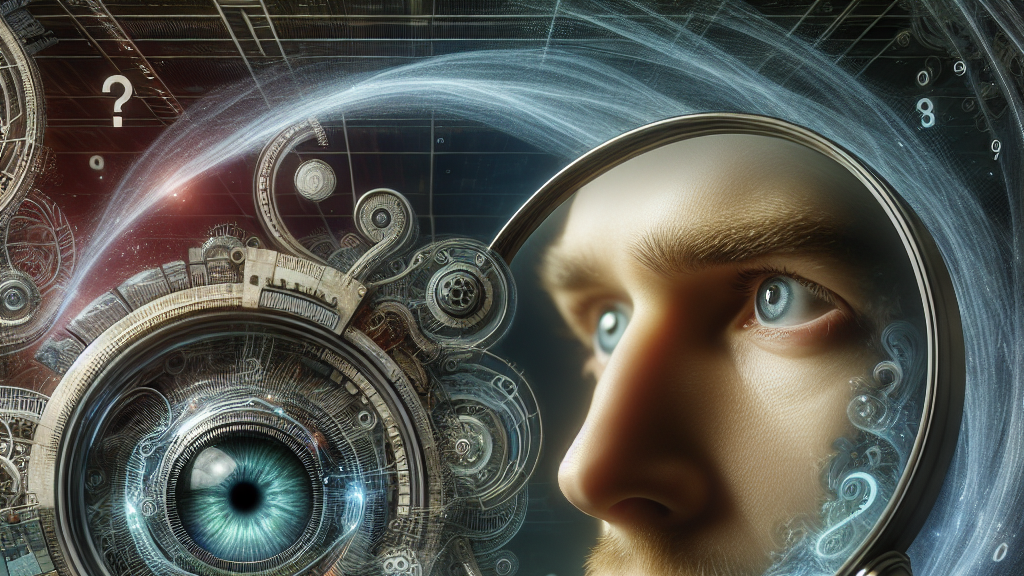
Ever wondered if AI can truly understand what’s happening in a video like a human does? Researchers have developed MotionEpic, a groundbreaking technology that could revolutionize how we interact with videos in the future.

Can AI Truly Understand Videos Now

Have you ever watched a video and thought, ‘Wow, that’s complex’? Imagine if computers could not only see, but understand those complexities! That’s what the latest breakthrough in AI video comprehension seeks to tackle with a system called MotionEpic.

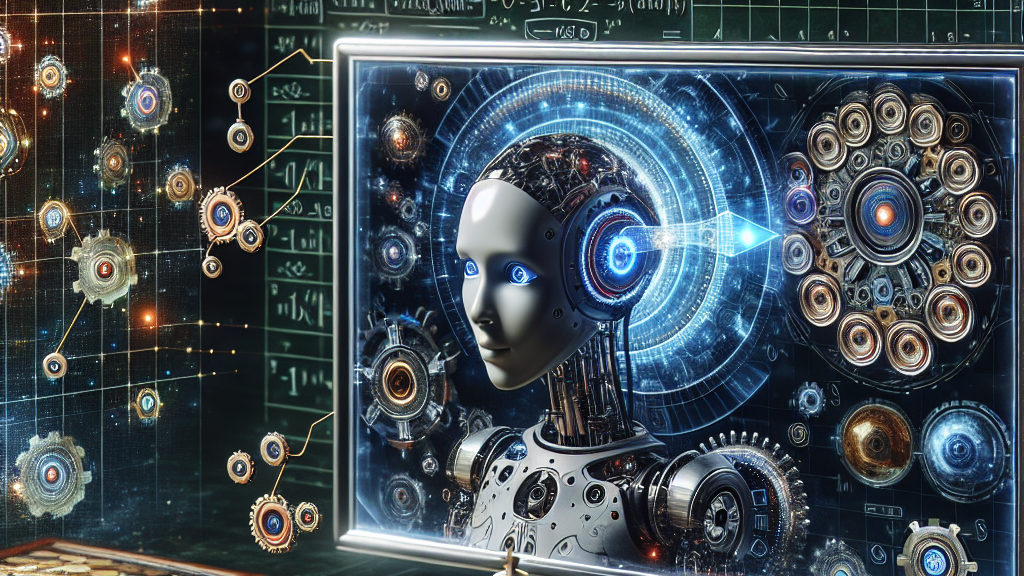
MotionEpic uses cutting-edge technology to break down videos into bite-sized pieces, enabling machines to understand every little movement and change, just like our brains do. It’s a little like teaching a computer to watch videos the way we do, by first picking up on small details and gradually understanding the bigger picture. Imagine explaining a complicated scene, like a dancing flash mob or an intricate magic trick, to someone who’s never seen it before. That’s what MotionEpic does on a grand scale.

What does this mean for you? Picture a world where your personal AI assistant doesn’t just play your favorite shows but also helps you understand them better, like highlighting important scenes or predicting plot twists. This technology has the potential to transform educational content, enhance entertainment experiences, and even aid in professional tasks like video editing. It’s like having a super-smart friend who sees and explains everything with precision!

MotionEpic can break down a video scene much like explaining a complex magic trick step by step.

FAQs

What unexpected discovery did scientists make?

Researchers found that by using a Chain-of-Thought approach, similar to human reasoning, they could significantly improve how AI understands videos, allowing machines to ‘think’ through video content step-by-step.

Why is MotionEpic important for the future of technology?

MotionEpic paves the way for more intelligent video content analysis and interaction, with potential applications ranging from entertainment to education and professional video editing.

How does this technology differ from previous video understanding methods?

Unlike prior methods that primarily focus on surface-level analysis, MotionEpic delves into fine-grained pixel details and builds a holistic cognitive understanding through a novel Chain-of-Thought reasoning framework.

Could this have practical uses in everyday life?

Absolutely! This tech can enhance personal AI assistants, making them better at summarizing content, aiding in video editing, and even potentially spotting details we might miss.

How soon could we see this tech in our devices?

While the tech is still developing, its open-source nature means that improvements and applications could develop rapidly, bringing new features to consumer devices sooner than expected.

Background

Video understanding in AI involves teaching a machine not just to see what’s happening in a video, but to comprehend and reason through it like a human. This requires understanding both the visual aspects (spatial) and how things change over time (temporal). A breakthrough in this field is the integration of spatial-temporal scene graphs to represent this information in a more detailed and nuanced way.

History

Video understanding has been a longstanding challenge in AI research. Earlier methods focused primarily on interpreting video content based on visual cues, without deeper reasoning. Recent advancements have incorporated machine learning techniques to improve comprehension, but MotionEpic represents a significant leap by combining cognitive reasoning models with fine-grained scene comprehension strategies.

Based on “Video-of-Thought: Step-by-Step Video Reasoning from Perception to Cognition” by Hao Fei, Shengqiong Wu, Wei Ji, Hanwang Zhang, Meishan Zhang, Mong-Li Lee, Wynne Hsu, available on arXiv (arxiv.org/abs/2501.03230), used under CC BY 4.0 (creativecommons.org/licenses/by/4.0/).

Trending

Latest

Can AI Save Water Discover How

Computers

AI is transforming the tech world, but it uses lots of water! A new tool, SCARF, helps us measure and reduce AI's water footprint,...

Whats a Forbush Decrease and Why Should We Care Whats a Forbush Decrease and Why Should We Care

Space

Scientists just observed the biggest solar storm event in years, revealing unexpected cosmic ray patterns. Understanding these changes could help us protect our technology...

Can Cars Spot Danger Faster Than Humans Can Cars Spot Danger Faster Than Humans

Computers

Think about how quickly you react when something unexpected happens on the road. This research brings us closer to creating self-driving cars that can...

Can Fear of the Other Stop Social Harmony Can Fear of the Other Stop Social Harmony

Physics

Fear of the unknown might make it harder for people to agree and get along. This study shows that when people have strong xenophobic...

Can AI Revolutionize Breast Cancer Diagnosis Can AI Revolutionize Breast Cancer Diagnosis

Electricity

This research introduces a groundbreaking AI model that can accurately assess HER2-positive breast cancer using widely accessible staining methods, potentially revolutionizing how we diagnose...

Can AI Transform Your Singing into a Choir Can AI Transform Your Singing into a Choir

Computers

Imagine singing solo and having AI turn you into a choir. This research unveils a groundbreaking AI tool that transforms your voice into rich...

You May Also Like

Computers

AI is transforming the tech world, but it uses lots of water! A new tool, SCARF, helps us measure and reduce AI's water footprint,...

Computers

Think about how quickly you react when something unexpected happens on the road. This research brings us closer to creating self-driving cars that can...

Electricity

This research introduces a groundbreaking AI model that can accurately assess HER2-positive breast cancer using widely accessible staining methods, potentially revolutionizing how we diagnose...

Computers

Imagine a machine capable of reading ancient books, deciphering complex pages with precision! This research is paving the way for AI to unlock the...

Economics

Discover how AI models can unknowingly favor certain races in mortgage decisions and how new methods could dramatically reduce these biases, fostering a fairer...

Computers

This research explores how AI models designed to understand both images and words might improve their performance simply by teaching themselves to think better....

Computers

Imagine if playing games could make a computer program better at understanding and creating text! This research suggests that by using creative tasks like...

Computers

Dive into the world of AI mistrust, where computers don't always know when they're wrong! Discover how teaching AI to see like us might...

Computers

What if talking to a robot could feel as comforting as a therapy session? This research uncovers the striking similarities between human therapists and...

Copyright © 2024 8ig8rain.

Disclaimer: The content on 8ig8rain.com consists of AI-generated summaries of scientific abstracts from arXiv. Please note that most arXiv abstracts are preprints and may not have undergone formal peer review. While these summaries aim to convey key ideas and potential applications, they are provided for informational purposes only and should not be interpreted as validated scientific findings or professional advice. The summaries are intended to educate, spark curiosity, and inspire further exploration of science.