Ever looked up at the night sky and marveled at the tiny dots twinkling above? Imagine if those dots held the secrets to some of the universe’s biggest mysteries. Scientists are exploring how these ‘little red dots’ from the early universe may be connected to the formation of massive black holes, unraveling more of the universe’s fascinating story.
Researchers have proposed that dark matter—an elusive, mysterious substance—could create dense pockets in space that eventually collapse, forming the seeds of black holes. This theory might explain how we see supermassive black holes, weighing millions of times more than our Sun, appearing relatively quickly in cosmic history. These incredible transformations, captured by telescopes like JWST, challenge our understanding, suggesting a cosmic lifecycle where dark matter is the lead actor.
Now, why does this matter to you? Picture it this way: just as tiny seeds grow into enormous trees, the small structures we’re observing could be the precursors to the colossal black holes that influence galaxy formation. This discovery means we might need to rethink how galaxies like our Milky Way evolved and how they continue to interact with dark matter, which is a major part of the cosmos.
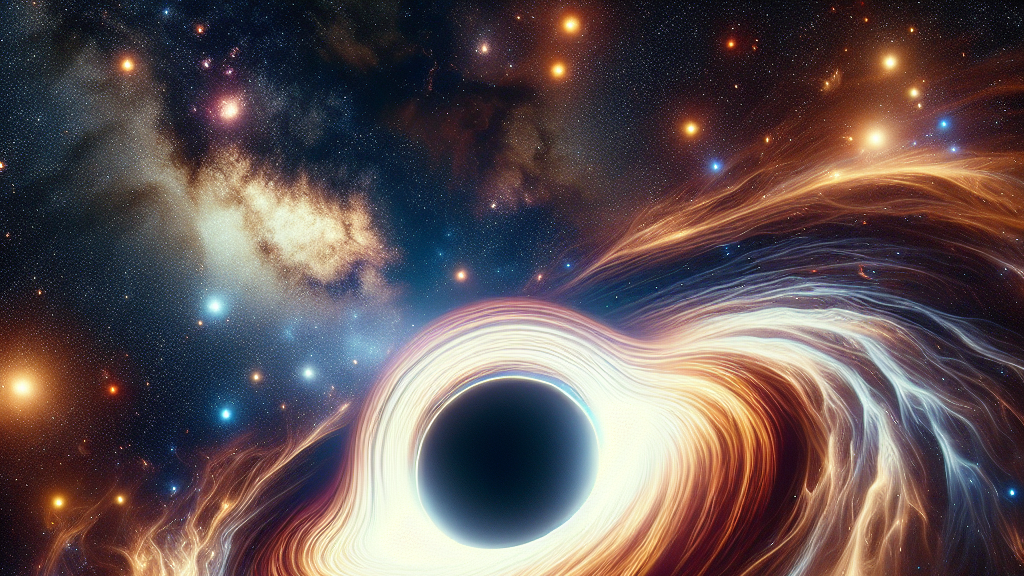
If you could squish the mass of the sun down to the size of a city, you’d get a black hole—a cosmic vacuum that can grow from eating dark matter.
FAQs
What are JWST little red dots, and why are they significant?
JWST little red dots, or LRDs, are faint, mysterious objects observed in the early universe, potentially holding clues to the formation of supermassive black holes. They are significant as they challenge and expand our understanding of cosmic evolution and black hole growth.
How does dark matter contribute to black hole formation?
Dark matter is thought to create dense pockets in space through gravothermal core collapse, which eventually collapse into black holes. This process could seed the massive black holes we observe today by feeding them with dark matter, not just regular matter.
Why is understanding black hole formation important?
Understanding black hole formation helps us unlock the mysteries of galaxy evolution, providing insights into how the universe, as we know it, has come to be. These cosmic giants influence the structure and behavior of galaxies, impacting star formation and the distribution of matter.
Background
This research tackles the mystery of how supermassive black holes form so quickly after the Big Bang. It revolves around the concept of ‘gravothermal core collapse,’ where dark matter—a type of matter we can’t see directly—can form dense cores that evolve into black holes. This theoretical model attempts to solve the puzzle of the little red dots observed in the early universe that can harbor black holes millions of times the mass of our Sun.
History
The investigation of how huge black holes come to be has deep roots in astrophysics. It started with observations of quasars, bright centers of distant galaxies, and evolved as we discovered that black holes can be incredibly massive. Previously, models focused more on ordinary, visible matter forming black holes. With the discovery of dark matter, scientists have expanded these models to include its potential role in early universe black hole growth.
Based on “Dark Bondi Accretion Aided by Baryons and the Origin of JWST Little Red Dots” by Wei-Xiang Feng, Hai-Bo Yu, Yi-Ming Zhong, available on arXiv (arxiv.org/abs/2506.17641), used under CC BY 4.0 (creativecommons.org/licenses/by/4.0/).