Connect with us

Search by keyword

Math

Can We Predict Virus Spread in Networks?

Researchers have discovered a way to understand how infections spread in networks using advanced math! This could help us forecast and manage diseases better in the future.

Can We Predict Virus Spread in Networks
✨Researched by humans. Explained by robots. Learn more.

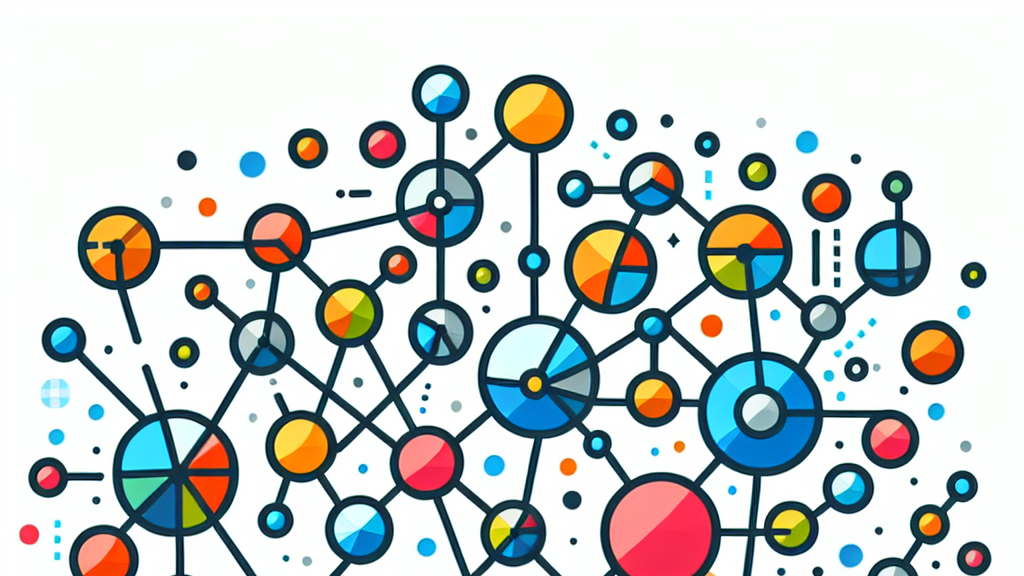
Imagine if we could predict how diseases spread through a city, not just by who sneezes on whom, but by the connections between everyone in town. Sounds like science fiction, right? But that’s exactly what scientists are working on using the concept of long-range percolation networks—it’s like understanding the hidden pathways of a spider’s web.

In their latest study, researchers focused on what’s known as a ‘contact process’ on these networks. By using a special mathematical trick called renormalization, they showed that if the rate of disease transmission is below a certain point, the disease will eventually die out. It’s a bit like knowing exactly how much water you can pour on a sponge before it starts to leak.

This research matters because it could change the way we handle pandemics. Imagine controlling the spread of flu or another virus by understanding not just direct person-to-person transmission but how it moves through groups of people. This method could lead to more effective ways to predict and manage outbreaks, keeping us safer and healthier in the long run.

Did you know? Understanding network spread is similar to figuring out how rumors spread in a school!

FAQs

How does the contact process on networks help predict virus spread?

The contact process uses mathematical models to simulate how diseases can spread through networks, helping us predict and understand the flow of infections in a more connected way, beyond just direct contact.

What is long-range percolation and why is it important?

Long-range percolation is a concept to describe connections formed over distances in a network. It helps us understand how events, like disease spread, can travel through a network in less obvious ways.

Why is renormalization used in this research?

Renormalization is a mathematical method to simplify complex systems, allowing scientists to identify critical points where a disease might stop spreading, thus providing insight into managing outbreaks effectively.

Background

The contact process is a mathematical model used to simulate the spread of an infection through a network. Networks can represent anything from social interactions to computer connections. Long-range percolation adds to this by considering that some connections might spread more efficiently over longer distances, not just immediate neighbors. Renormalization helps in breaking down complex networks into simpler parts to study them more easily.

History

Long-range percolation as a study has evolved from basic network theory, which examines how nodes (or points) are connected. It builds on previous studies that looked at direct connections and adds a new layer of complexity by considering that nodes can affect, or be affected by, more distant ones. This study refines our understanding of network spread and the conditions under which it might cease.

Based on “The extinction of the contact process in a one-dimensional random environment with long-range interactions” by Pablo A. Gomes, Marcelo R. Hilário, Bernardo N. B. de Lima, Thomas Mountford, available on arXiv (arxiv.org/abs/2506.17444), used under CC BY 4.0 (creativecommons.org/licenses/by/4.0/).


Trending

Latest

Can AI Save Water Discover How

Computers

AI is transforming the tech world, but it uses lots of water! A new tool, SCARF, helps us measure and reduce AI's water footprint,...

Whats a Forbush Decrease and Why Should We Care Whats a Forbush Decrease and Why Should We Care

Space

Scientists just observed the biggest solar storm event in years, revealing unexpected cosmic ray patterns. Understanding these changes could help us protect our technology...

Can Cars Spot Danger Faster Than Humans Can Cars Spot Danger Faster Than Humans

Computers

Think about how quickly you react when something unexpected happens on the road. This research brings us closer to creating self-driving cars that can...

Can Fear of the Other Stop Social Harmony Can Fear of the Other Stop Social Harmony

Physics

Fear of the unknown might make it harder for people to agree and get along. This study shows that when people have strong xenophobic...

Can AI Revolutionize Breast Cancer Diagnosis Can AI Revolutionize Breast Cancer Diagnosis

Electricity

This research introduces a groundbreaking AI model that can accurately assess HER2-positive breast cancer using widely accessible staining methods, potentially revolutionizing how we diagnose...

Can AI Transform Your Singing into a Choir Can AI Transform Your Singing into a Choir

Computers

Imagine singing solo and having AI turn you into a choir. This research unveils a groundbreaking AI tool that transforms your voice into rich...

You May Also Like

Physics

What if we could predict the absolute worst heatwave before it even happens? By using a groundbreaking climate model, scientists are now able to...

Economics

A new method using job data can predict US recessions months in advance, potentially preventing economic crisis by alerting us before it's too late.

Computers

Exciting new research shows our computers can be even smarter in predicting chemical reactions and properties by using hidden layers of information, promising faster...

Nonlinear Sciences

This research tackles the big question of how well we can predict 'tipping points' in nature—those moments where a small change can trigger a...

Math

Exploring how random factors impact network connectivity could offer insights to optimize real-world systems, from internet connections to social networks.

Statistics

In a world obsessed with AI, could old-school statistical methods still be the real MVPs? This study shows they might just outperform AI when...

Computers

This research unveils a new AI model, OMGPT, designed to predict the best future business actions by learning from the past. It could revolutionize...

Computers

This study reveals how AI models learn and remember information, pulling back the curtain on their decision-making processes and strange behaviors. Unlocking these secrets...

Computers

Imagine spotting tiny drones from over 3 miles away! This new tech combines neural networks with a unique detection system, promising enhanced security, surveillance,...

Copyright © 2024 8ig8rain.

Disclaimer: The content on 8ig8rain.com consists of AI-generated summaries of scientific abstracts from arXiv. Please note that most arXiv abstracts are preprints and may not have undergone formal peer review. While these summaries aim to convey key ideas and potential applications, they are provided for informational purposes only and should not be interpreted as validated scientific findings or professional advice. The summaries are intended to educate, spark curiosity, and inspire further exploration of science.