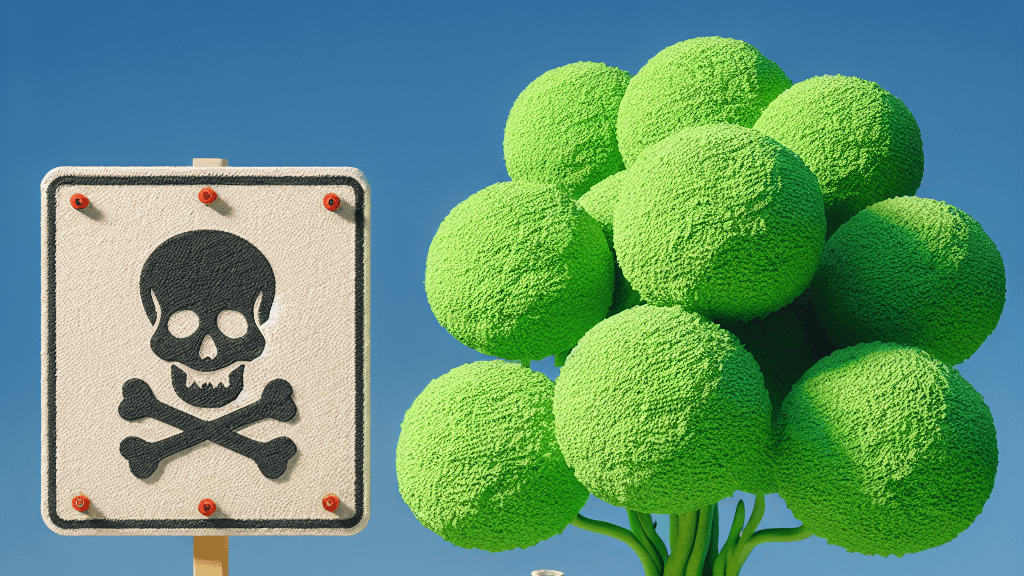
Many people trust the healing power of herbs, but did you know that some of the plants used in traditional medicine might be hiding dangerous secrets? The Sandpaper tree, a common remedy in Nigeria, is one such plant that’s under scrutiny for its toxicity levels.
Researchers recently analyzed the content of this plant and found surprising levels of heavy metals like cadmium, copper, and lead, which are not safe for consumption. In a test using wild shrimps, even moderate exposure to the plant’s extract resulted in significant mortality rates. This shows that while the plant might offer some health benefits, it also poses serious risks if not used carefully.
Imagine using a herbal remedy and unknowingly ingesting harmful metals. It’s crucial to consult experts before relying on such treatments. This research serves as a reminder that not everything natural is inherently safe, and understanding the balance between benefit and harm is essential for your well-being.
The Sandpaper tree is known for its rough texture, similar to sandpaper, which is how it got its name.
FAQs
What unexpected discovery did scientists make about the Sandpaper tree?
Scientists found that the Sandpaper tree contains heavy metals like cadmium, copper, and lead, which can be toxic to humans.
Why is the Sandpaper tree used in traditional medicine?
The Sandpaper tree is believed to have various health benefits and is traditionally used to treat several ailments in Nigeria.
Can the Sandpaper tree be safely used as a herbal remedy?
Yes, but only in low to medium doses and under the guidance of an expert. High doses pose significant toxicity risks.
How was the toxicity of the Sandpaper tree assessed in the study?
The researchers used wild shrimps to test the lethality of the plant’s extract at different concentrations.
What should consumers do before using the Sandpaper tree as a remedy?
Consumers should seek the guidance of a medicinal plant expert to ensure safe usage of the herb.
Background
Herbal remedies often seem like a natural solution for health problems, so understanding the potential harmful substances they can contain is crucial. One common issue is the contamination by heavy metals—elements that can be toxic and accumulate in the body over time. This study on the Sandpaper tree focused on identifying both the beneficial components and the toxic risks to create a fuller picture of what’s in these leaves.
History
The use of medicinal plants dates back centuries, with traditional healers relying on their knowledge to harness nature for healing. Recent scientific advances have allowed researchers to analyze the chemical makeup of these remedies to ensure they’re safe. This study builds on previous work by applying modern scientific methods to test the toxicity levels of popular plant-based remedies, providing a more comprehensive understanding of their effects.
Based on “Toxicological Evaluation of Phytochemicals and Heavy Metals in Ficus exasperata Vahl (Sandpaper) Leaves obtained in Birnin Kebbi, Nigeria” by Tajudeen O. Yahaya, Titilola F. Salisu, Israel O. Obaroh, Muyiwa A. Adelabu, Abdulrazaq Izuafa, Jamilu B. Danjuma, Hamdalat Sheu, Ibrahim B. Abdulgafar, available on arXiv (arxiv.org/abs/2501.11037), used under CC BY 4.0 (creativecommons.org/licenses/by/4.0/).