Connect with us

Search by keyword

Computers

Can Your Phone Recognize You in Any Mood?

Imagine your phone always knowing it’s you, even if you’re pulling a funny face or looking off to the side. This research introduces a dataset that helps AI understand and customize facial features for better and more personal recognition.

Can Your Phone Recognize You in Any Mood
✨Researched by humans. Explained by robots. Learn more.

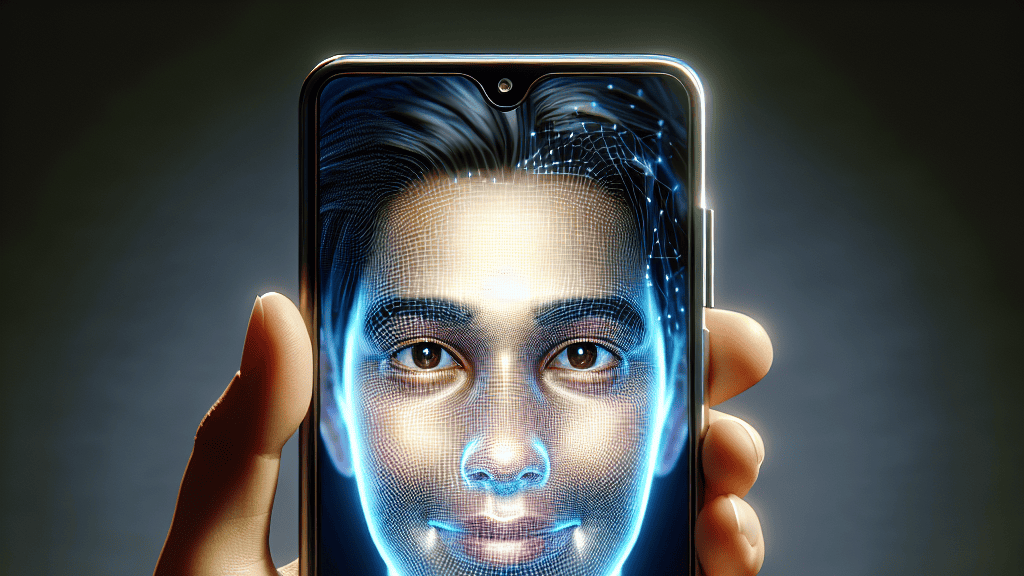
Have you ever wondered if your phone could recognize you, even when you’re pulling a funny face or looking at it from the side? Well, thanks to new research, AI might soon be able to do just that. This not only makes technology more fun but also more secure, as your phone learns to identify you in various moods and angles.

The secret behind this technology is a massive new dataset called CrossFaceID. It contains images of people showing off different expressions, angles, and even wearing different accessories. This range helps AI learn to tweak the way it recognizes faces, making it more flexible and personalized. By training the AI with these diverse images, it becomes skilled at keeping your identity consistent while adjusting minor details like a smile or a side glance.

Imagine a future where face recognition is so advanced it works even when you’re wearing those giant sunglasses or practicing your epic selfie angle. This technology isn’t just about cool selfies, though. It could also enhance security systems, ensuring that only you can unlock your phone, any time of day, in any mood. This exciting advancement could make technology feel a little more human.

Did you know that AI can now recognize faces with different moods and angles, just like humans do?

FAQs

How does the CrossFaceID dataset improve face recognition technology?

The CrossFaceID dataset helps AI learn to recognize the same face with variations like different expressions and angles, making face recognition more flexible and personalized.

Why is facial recognition important in everyday technology?

Facial recognition adds a layer of security and convenience in technology, allowing devices to identify users quickly and with ease, even when in different situations or moods.

How does the AI adapt to different facial expressions?

By training on a variety of images with different expressions and angles, AI learns to recognize consistent identity markers while adapting to changes in facial features.

What makes CrossFaceID different from other datasets?

CrossFaceID is designed specifically for variation in facial attributes, providing a broader range of expressions, angles, and adornments not commonly found in other datasets.

Can my phone recognize me if I change my hairstyle or wear glasses?

With advancements like those in the CrossFaceID dataset, AI is getting better at recognizing faces despite minor changes like hairstyles or wearing glasses.

Background

Face recognition technology relies heavily on datasets that teach AI to understand and identify facial features. These datasets help AI learn patterns and distinguish between different faces by being exposed to a variety of images. The more diverse the dataset, the better the technology can adapt to real-world scenarios where people might look different depending on their expressions or angles.

History

Facial recognition has evolved significantly over the years. Early systems required consistent lighting and angles to work effectively. As technology advanced, researchers developed more sophisticated datasets and algorithms that improved accuracy and flexibility. Now, with datasets like CrossFaceID, AI is able to recognize faces with a wide range of expressions and angles, marking a new era in personalized facial recognition technology.

Based on “Turn That Frown Upside Down: FaceID Customization via Cross-Training Data” by Shuhe Wang, Xiaoya Li, Xiaofei Sun, Guoyin Wang, Tianwei Zhang, Jiwei Li, Eduard Hovy, available on arXiv (arxiv.org/abs/2501.15407), used under CC BY 4.0 (creativecommons.org/licenses/by/4.0/).

Trending

Latest

Can AI Save Water Discover How

Computers

AI is transforming the tech world, but it uses lots of water! A new tool, SCARF, helps us measure and reduce AI's water footprint,...

Whats a Forbush Decrease and Why Should We Care Whats a Forbush Decrease and Why Should We Care

Space

Scientists just observed the biggest solar storm event in years, revealing unexpected cosmic ray patterns. Understanding these changes could help us protect our technology...

Can Cars Spot Danger Faster Than Humans Can Cars Spot Danger Faster Than Humans

Computers

Think about how quickly you react when something unexpected happens on the road. This research brings us closer to creating self-driving cars that can...

Can Fear of the Other Stop Social Harmony Can Fear of the Other Stop Social Harmony

Physics

Fear of the unknown might make it harder for people to agree and get along. This study shows that when people have strong xenophobic...

Can AI Revolutionize Breast Cancer Diagnosis Can AI Revolutionize Breast Cancer Diagnosis

Electricity

This research introduces a groundbreaking AI model that can accurately assess HER2-positive breast cancer using widely accessible staining methods, potentially revolutionizing how we diagnose...

Can AI Transform Your Singing into a Choir Can AI Transform Your Singing into a Choir

Computers

Imagine singing solo and having AI turn you into a choir. This research unveils a groundbreaking AI tool that transforms your voice into rich...

You May Also Like

Computers

AI is transforming the tech world, but it uses lots of water! A new tool, SCARF, helps us measure and reduce AI's water footprint,...

Computers

Think about how quickly you react when something unexpected happens on the road. This research brings us closer to creating self-driving cars that can...

Electricity

This research introduces a groundbreaking AI model that can accurately assess HER2-positive breast cancer using widely accessible staining methods, potentially revolutionizing how we diagnose...

Computers

Imagine a machine capable of reading ancient books, deciphering complex pages with precision! This research is paving the way for AI to unlock the...

Economics

Discover how AI models can unknowingly favor certain races in mortgage decisions and how new methods could dramatically reduce these biases, fostering a fairer...

Computers

This research explores how AI models designed to understand both images and words might improve their performance simply by teaching themselves to think better....

Computers

Imagine if playing games could make a computer program better at understanding and creating text! This research suggests that by using creative tasks like...

Computers

Dive into the world of AI mistrust, where computers don't always know when they're wrong! Discover how teaching AI to see like us might...

Computers

What if talking to a robot could feel as comforting as a therapy session? This research uncovers the striking similarities between human therapists and...

Copyright © 2024 8ig8rain.

Disclaimer: The content on 8ig8rain.com consists of AI-generated summaries of scientific abstracts from arXiv. Please note that most arXiv abstracts are preprints and may not have undergone formal peer review. While these summaries aim to convey key ideas and potential applications, they are provided for informational purposes only and should not be interpreted as validated scientific findings or professional advice. The summaries are intended to educate, spark curiosity, and inspire further exploration of science.