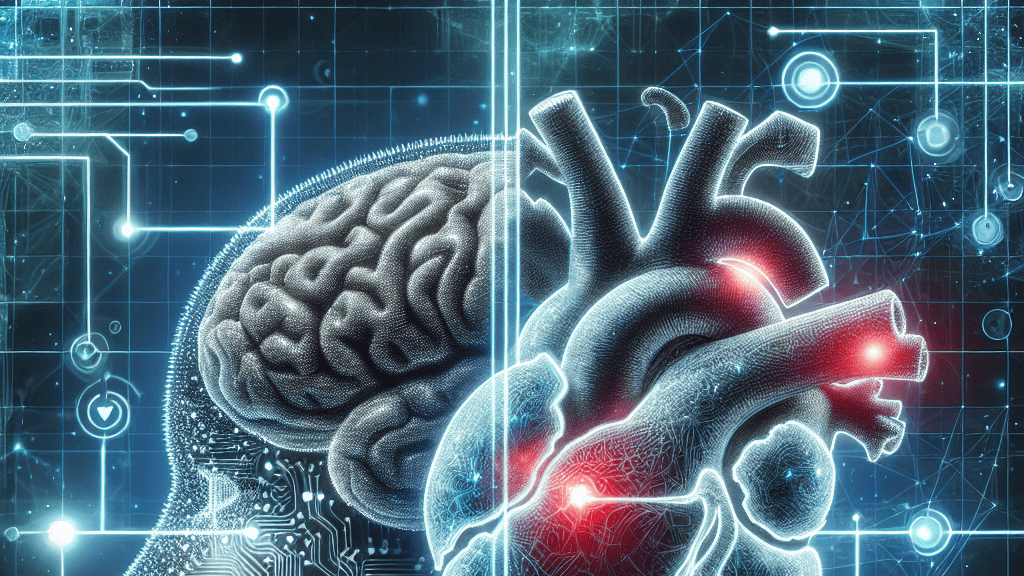
Have you ever wondered how the brain and the heart communicate? It’s a complex dance that impacts our health more than we realize, but studying this connection can be quite challenging and often inefficient. Enter the world of artificial intelligence, where a groundbreaking new system promises to streamline this research and make our understanding of the brain-heart connection more precise than ever.
This innovative AI-driven system acts like a super-powered assistant for researchers. By automatically identifying key components of scientific studies and using smart algorithms to detect overlaps and gaps in research, it ensures that no time is wasted. It even provides real-time updates and interactive features, almost like having a knowledgeable friend who keeps you in the loop about all things brain-heart related, saving resources, enhancing research quality, and ultimately guiding better health decisions.
Imagine getting your health check-up, and your doctor has access to the latest, most accurate information about how your brain and heart work together—all thanks to this AI tool. Not only does it optimize brain-heart studies, but its flexible design means it could soon be applied to other health fields, potentially changing how medical research is conducted and helping doctors make smarter decisions based on the best available science.
Did you know that AI can help researchers keep track of hundreds of scientific studies at once, making it easier to identify where more research is needed?
FAQs
How does the AI system improve brain-heart connection research?
The AI system streamlines research by automatically identifying key study components and using advanced algorithms to find overlaps and gaps, making the study of the brain-heart connection more efficient and accurate.
What makes this AI tool different from traditional research methods?
This AI tool offers real-time updates and interactive features, reducing research waste and enhancing quality, unlike traditional methods that can be time-consuming and less flexible.
Can this AI system be used for other medical research areas?
Yes, the AI system’s adaptable design allows it to be applied across various biomedical fields, supporting rigorous evidence synthesis and informed decision-making beyond brain-heart research.
Why is understanding the brain-heart connection important?
The brain-heart connection plays a crucial role in our overall health, influencing everything from emotions to physical fitness, making it essential to understand for better health outcomes.
What practical impacts could this AI have on healthcare?
This AI could help doctors access the most accurate health information, leading to better medical decisions and healthier lives by optimizing research processes and resource allocation.
Background
At the core of this research is the concept of the Brain-Heart Interconnectome, a term that describes how the brain and heart communicate and affect each other’s functions. This collaboration between neurology (the study of the brain) and cardiology (the study of the heart) is essential for understanding how these organs work together to maintain health. The research aims to address inefficiencies and redundancies in this field by employing AI technologies to improve the synthesis of evidence, ensuring that efforts aren’t wasted and that high-quality standards are met.
History
Exploring the brain-heart connection is not a new idea, but recent advances in technology have provided new ways to study this complex interplay. Previously, researchers relied on manual processes that were time-consuming and less accurate, often leading to research waste and missed opportunities. The advent of AI offers a more efficient and systematic approach to this challenge. This study builds on past efforts by incorporating cutting-edge AI methods that automate and enhance evidence synthesis, leading to more focused and effective research outcomes.
Based on “An AI-Driven Live Systematic Reviews in the Brain-Heart Interconnectome: Minimizing Research Waste and Advancing Evidence Synthesis” by Arya Rahgozar, Pouria Mortezaagha, Jodi Edwards, Douglas Manuel, Jessie McGowen, Merrick Zwarenstein, Dean Fergusson, Andrea Tricco, Kelly Cobey, Margaret Sampson, Malcolm King, Dawn Richards, Alexandra Bodnaruc, David Moher, available on arXiv (arxiv.org/abs/2501.17181), used under CC BY 4.0 (creativecommons.org/licenses/by/4.0/).