





































































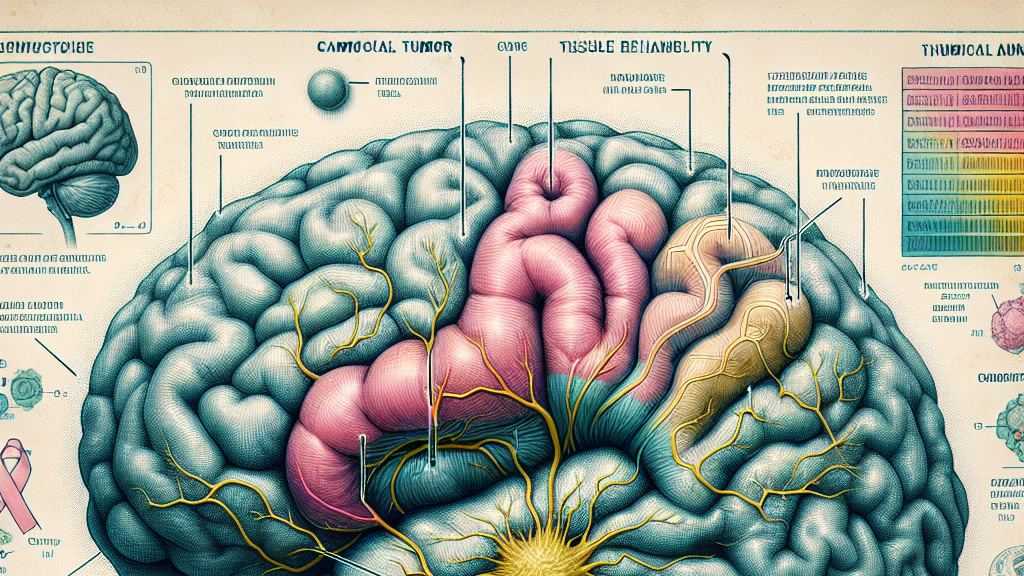
Imagine if doctors could predict the growth of brain tumors with high precision. That’s what this exciting research is aiming to achieve. By using a complex mathematical model, researchers are looking at how brain tumors interact with chemicals like lactate that are naturally produced in the body, as well as how the brain tissue itself responds to this growth. This could revolutionize how we approach brain tumor treatment in the future.
The study delves into the intricacies of how tumors grow, taking into account not just the tumor itself but also the surrounding brain tissues. By creating a model that looks at the viscoelastic properties—imagine how a stress ball slowly returns to shape after you squeeze it—researchers provide a more comprehensive picture of what happens when a tumor grows. They also incorporate potential damage from surgery into their models, allowing for a more realistic prediction of how tumors might behave and react over time.
With this knowledge, the future of brain tumor treatment becomes brighter and more hopeful. Imagine a world where doctors can tailor therapies to individuals by understanding exactly how their specific tumor behaves in their unique body. This could mean more effective treatments with fewer side effects, personalized to each patient’s needs and maximizing the chances of success.
Did you know lactate, a byproduct of intense exercise, also plays a crucial role in brain tumor metabolism?
FAQs
What does this research reveal about brain tumor growth?
This research uncovers how brain tumors grow by examining their interactions with lactate metabolism and the viscoelastic properties of brain tissues. Understanding these interactions can lead to better prediction and treatment strategies.
How does lactate metabolism influence brain tumors?
Lactate, a byproduct created during energy production in cells, influences tumor growth by interacting with the tumor environment, potentially affecting its growth rate and behavior.
Why is it important to consider tissue properties in tumor growth studies?
Considering tissue properties like viscoelasticity is crucial because these characteristics affect how the brain’s structural environment interacts with a growing tumor, influencing treatment outcomes.
How could this research impact future brain tumor treatments?
This research could pave the way for more personalized treatments by allowing doctors to predict tumor growth patterns based on individual patient data, leading to tailored and effective therapies.
What role does surgical damage play in this study?
This study includes potential surgical damage as a factor to understand how tumors might react post-surgery, aiding in developing strategies to minimize adverse effects and improve recovery.
Background
This research centers around understanding brain tumor growth using a mathematical model. The study integrates various elements like lactate metabolism, a chemical process closely linked with tumor environments, and viscoelastic properties, which describe how tissues respond to stress and deformation over time. By studying momentum balance equations and reaction-diffusion equations, scientists aim to predict tumor growth more accurately, accounting for factors like surgical interventions.
History
Research on brain tumors and their growth has been ongoing for decades, with early studies focusing on simple models of tumor cells and their uncontrolled division. Over the years, researchers have recognized the importance of the tumor microenvironment, leading to more complex models that include biochemical and biomechanical factors. This study builds upon these advancements by introducing a coupled mathematical framework that considers lactate metabolism, tissue properties, and surgical impacts, representing a significant leap in the understanding of tumor dynamics.
Based on “On a Brain Tumor Growth Model with Lactate Metabolism, Viscoelastic Effects, and Tissue Damage” by Giulia Cavalleri, Pierluigi Colli, Alain Miranville, Elisabetta Rocca, available on arXiv (arxiv.org/abs/2502.02126), used under CC BY 4.0 (creativecommons.org/licenses/by/4.0/).
