





































































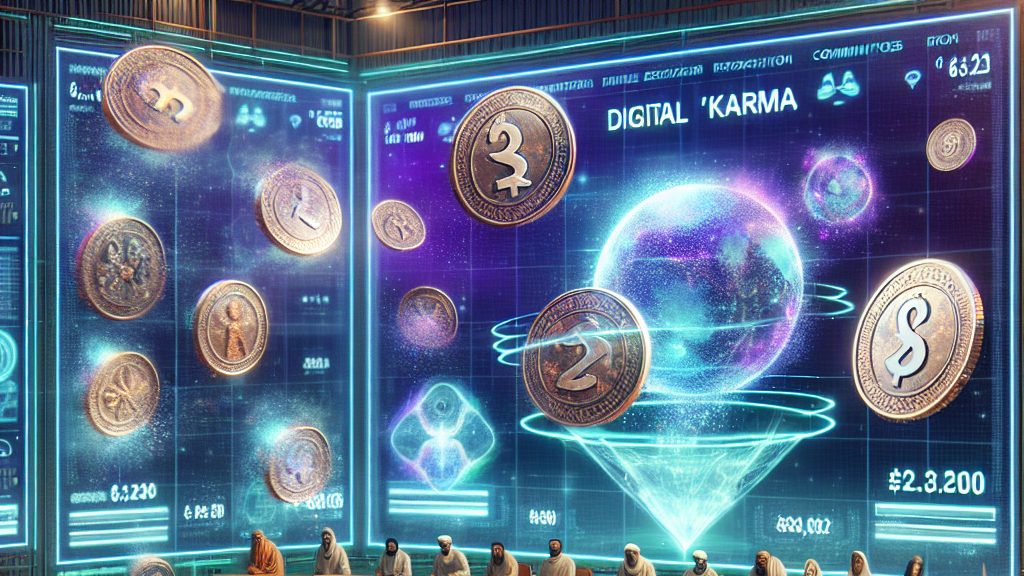
Picture a world where money isn’t the only currency, but instead, you trade with something less tangible, like karma. This isn’t just a spiritual concept anymore; it’s becoming a practical way to allocate resources when traditional money feels unfair. Think about traffic management or food distribution, where this form of artificial currency can help us make better decisions for everyone involved.
In this world of karma auctions, you get to use ‘earn and spend’ karma points to bid on resources you need, like a seat in a packed course or a quicker route home. But unlike regular money, karma here doesn’t have value outside the auction. So, the challenge is learning its worth internally and how to spend wisely. Researchers have proposed a clever strategy that helps users adaptively learn to bid optimally, ensuring smarter choices and fair distribution.
The magic happens when everyone uses this system. As users become more familiar with how to bid karma—both earning it by being considerate and spending it to get what they need—the dynamics balance out. It’s like a dance where everyone’s actions contribute to a smooth flow of resources. Imagine a future where this kind of system makes our daily lives more equitable and efficient, turning karma into a tangible form of balance and harmony.
Did you know karma auctions let you earn currency just for being nice? It’s like getting rewarded twice: once for your good deeds and again when you use that karma to get what you need!
FAQs
What are karma auctions in simple terms?
Karma auctions are a way to use a special, made-up currency called karma to bid for resources, as an alternative to using money. This currency only has value within the auction, so users must learn both how much it’s worth and how to use it wisely.
How does this karma system differ from regular auctions?
Unlike regular auctions where money is used, karma auctions involve a currency that is only valuable within the auction and can be earned and spent based on one’s actions. It’s designed to encourage smart and fair distribution.
Why use karma when money is available?
In situations where money might create unfairness, like in distributing food donations, karma provides a way to make decisions more equitable by rewarding good behavior and encouraging thoughtful bidding.
Can karma influence real-world resource allocation?
Yes, karma systems can impact real-world resources like traffic flow or class seats by providing a fairer, behavior-based currency to manage these limited resources.
Is it complex to learn to bid with karma?
Initially, yes. But researchers have developed adaptive strategies to help users learn and optimize their bids effectively, making the process smoother over time.
Background
Karma auctions use an artificial currency called karma, which is different from money because it only has value within the auction itself. Users must learn how to use and value karma as they interact with these auction settings. This unique approach encourages strategic behavior and equitable resource allocation by redistributing karma based on fair or considerate actions.
History
The roots of karma auctions can be traced back to settings where traditional monetary exchange seemed inappropriate or unfair, prompting the search for alternatives. Over time, the concept of using an artificial currency has evolved, finding applications in realms like traffic management and resource distribution where fairness is key. This study advances this approach by refining strategies to make it more intuitive and effective.
Based on “To Spend or to Gain: Online Learning in Repeated Karma Auctions” by Damien Berriaud, Ezzat Elokda, Devansh Jalota, Emilio Frazzoli, Marco Pavone, Florian Dörfler, available on arXiv (arxiv.org/abs/2403.04057), used under CC BY 4.0 (creativecommons.org/licenses/by/4.0/).
