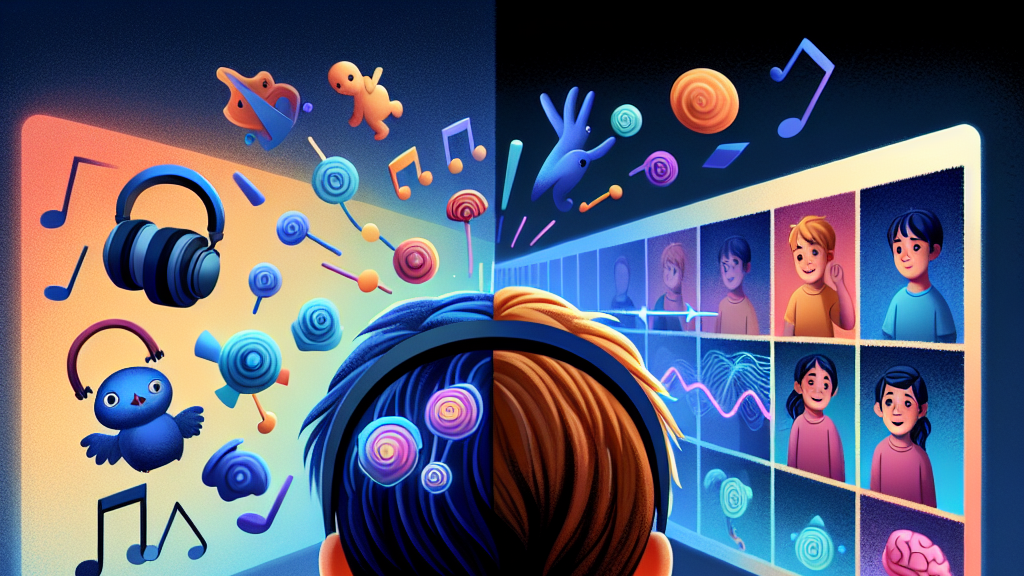
Imagine scrolling through your video feed and not realizing that most of what you’re seeing might be AI-generated. With the ease of creating high-quality AI videos, our feeds are flooded with content that’s not just impressive, but also subtly altering the way we’re served videos. This might sound intriguing, but it raises important questions about digital content bias and fairness.
The research delves into how retrieval systems, the technologies that help showcase videos to you based on what you click or search, tend to favor AI-generated videos over real ones. By setting up a benchmark with a mix of real and AI-crafted videos, researchers analyzed how these tech-savvy systems pick favorites. They discovered that because of certain unseen visual and timeline cues in videos, AI videos often win attention, leading to a biased content ecosystem.
This bias isn’t just a curiosity; it matters because it affects what we see and consume online. Fortunately, the researchers propose a solution by re-tuning the retrieval models using an innovative technique called contrastive learning—which essentially teaches these systems to be fairer. This means in the future, we could see a more balanced mix of both real and AI-generated content, ensuring that what captures our attention online is a fair representation of available content.
Did you know? AI-generated videos can be created in seconds but may completely dominate your video feed without you even realizing it!
FAQs
How do AI-generated videos affect our content feed?
AI-generated videos are often favored by video retrieval systems, influencing what videos get recommended to viewers, potentially flooding their feed with AI-created content and overshadowing real videos.
What causes bias towards AI videos in retrieval systems?
The bias stems from unseen visual and temporal information in videos, where AI videos may possess features that make them more attractive to retrieval models, resulting in a skewed preference.
Can video retrieval bias be fixed?
Yes, researchers have shown that by adjusting the retrieval models using contrastive learning, the bias can be minimized, leading to a more balanced presentation of video content.
Why is the bias in video retrieval significant?
Because it can shape viewer experiences by unfairly prioritizing AI-generated content, potentially skewing public perception and consumption of video content online.
What impact do AI-generated videos have on the digital content ecosystem?
They flood the ecosystem with high-quality, easily produced content, which can dominate feeds and complicate the search and retrieval systems meant to present balanced content to users.
Background
Video retrieval systems are designed to help users find videos by analyzing both visual and temporal characteristics in video files. However, with the surge in AI-generated content, these systems could become biased, favoring content that aligns more closely with AI characteristics. Contrastive learning is a method employed in machine learning to teach systems to discern different data points more effectively, potentially reducing bias.
History
The realm of video content has seen a significant transformation with AI. While early AI applications primarily focused on simple tasks, advancements have enabled the creation of complex AI-generated videos. This development has raised questions and prompted research into how such content interacts with existing digital infrastructure, such as video retrieval systems.
Based on “Generative Ghost: Investigating Ranking Bias Hidden in AI-Generated Videos” by Haowen Gao, Liang Pang, Shicheng Xu, Leigang Qu, Tat-Seng Chua, Huawei Shen, Xueqi Cheng, available on arXiv (arxiv.org/abs/2502.07327), used under CC BY 4.0 (creativecommons.org/licenses/by/4.0/).