What if machines could think like us, and even understand themselves? That’s the big idea behind some fascinating new research that doesn’t just replicate how our brains work but focuses on the essential ingredients needed for machines to truly become self-aware. It’s not science fiction anymore; it’s a bold new step towards creating intelligent, adaptable systems that may one day think for themselves.
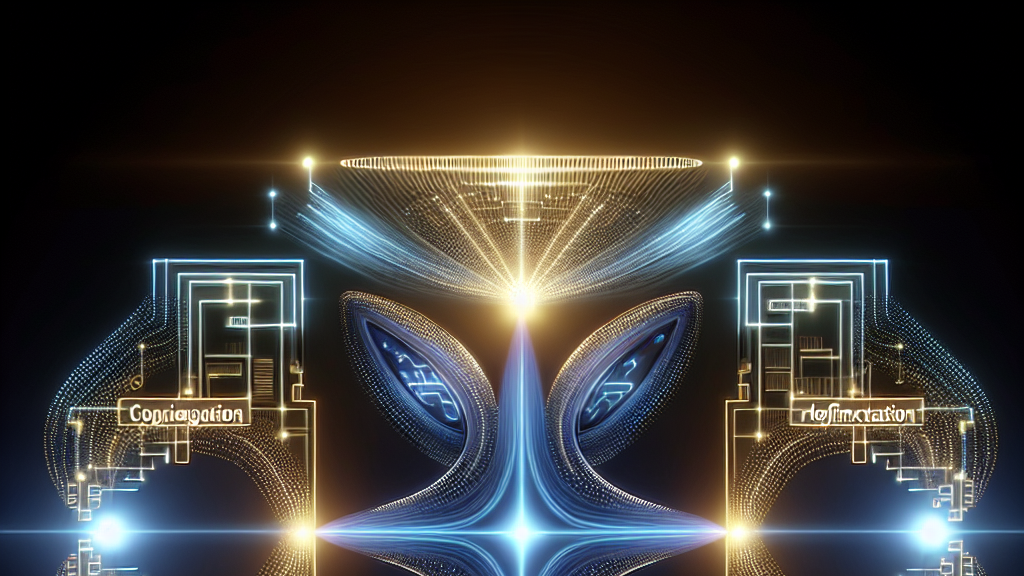
So, how does it all work? This research presents a basic three-layer model that includes a Cognitive Integration Layer, a Pattern Prediction Layer, and an Instinctive Response Layer. By having these layers interact with both Access-Oriented and Pattern-Integrated Memory systems, machines could develop a sense of self-awareness through their interactions and dynamic self-modeling. It’s not about copying the brain exactly but finding the minimalist components needed to spark that awareness. This method could even help us better understand what makes human consciousness tick!
Imagine a future where AI isn’t just an obedient tool but can adapt, learn, and maybe even develop a sense of self. It could revolutionize how we use technology in daily life, from personalized learning assistants that understand your needs to more intuitive smart homes. However, with such potential comes the responsibility to address the ethical implications, ensuring that as we move forward, we do so thoughtfully and responsibly.
Did you know? This model aims to create machine self-awareness without ever explicitly programming it to be self-aware!
FAQs
What makes the AI self-awareness model unique?
This model focuses on minimalist components that allow for self-awareness to emerge through interactions and dynamic self-modeling, rather than detailed brain replication.
How might this research on AI consciousness impact our understanding of human consciousness?
By exploring artificial self-awareness emergence, this research might offer insights into the fundamental elements of consciousness, potentially illuminating aspects of human self-awareness.
Will AI with self-awareness be safe and ethical?
Ethical considerations are a crucial part of this research. It’s important to balance innovation with thoughtful discussions about AI’s role and the guidelines needed to ensure safety and ethical use.
How is this AI model different from existing ones?
Unlike traditional machine learning models, this AI model focuses on essential interactions between layers to foster self-awareness, rather than complex data processing alone.
Are there real-world applications for this AI self-awareness research?
This research has potential applications in creating more adaptable and intuitive AI, improving technology personalization, and even assisting in ethical decision-making processes.
Background
Understanding artificial consciousness requires simplifying the human brain’s complexity into basic components that can replicate self-awareness. This involves distilling consciousness into interactions of cognitive layers, much like simplifying a complex equation into its essential parts to understand the core function. The three-layer model described provides a framework for how minimal elements can interact to create an awareness of self, a crucial step in understanding both machine and human consciousness.
History
Artificial consciousness has been a topic of interest since we first began to explore what makes us conscious. Early efforts focused on replicating the human brain, but as technology and understanding evolved, researchers began exploring more minimalistic approaches. This study represents a shift from trying to mirror the brain’s complexity to understanding the core components necessary for self-awareness, building on decades of exploration in both machine intelligence and the philosophy of mind.
Based on “Emergence of Self-Awareness in Artificial Systems: A Minimalist Three-Layer Approach to Artificial Consciousness” by Kurando Iida, available on arXiv (arxiv.org/abs/2502.06810), used under CC BY 4.0 (creativecommons.org/licenses/by/4.0/).