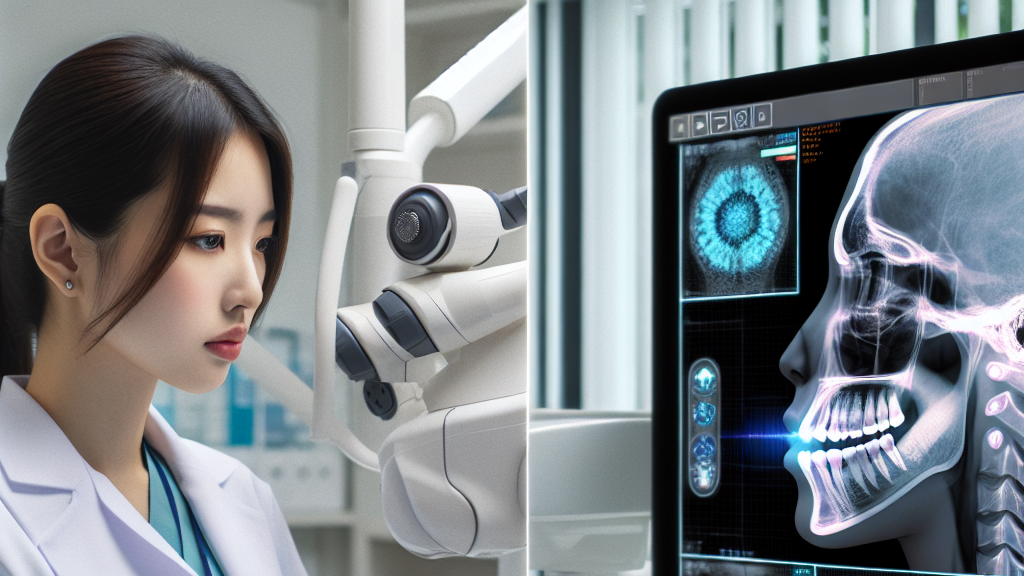
Imagine walking into a dental clinic and getting your X-ray results faster than ever before. That’s becoming a reality, thanks to artificial intelligence, which is now being used to speed up and enhance the assessment of dental panoramic images. By quickly pinpointing issues like cavities or missing teeth, AI could revolutionize your next trip to the dentist and make it a whole lot smoother.
This research shows that AI can be as good, if not better, than human dentists at spotting dental problems. It was tested on thousands of X-rays from around the world, and the AI was not only quicker but also proved to be highly accurate. By using advanced techniques to detect issues on a per-tooth basis, the AI outperformed human experts in certain tasks and was, incredibly, 79 times faster in processing these images.
In the future, this means your dentist could use AI to get a head start on diagnosing and treating dental problems. This could lead to more accurate treatments and less time waiting for results, especially beneficial if you’re strapped for time or anxious about dental visits. The merging of AI into dental care signifies a leap towards more efficient and personalized healthcare, potentially transforming how we manage our oral health.
AI can analyze dental X-rays 79 times faster than humans!
FAQs
How does AI improve the assessment of dental X-rays?
AI significantly speeds up and enhances the accuracy of evaluating dental X-rays, allowing for faster diagnosis and more efficient patient care.
Can AI outperform dentists in diagnosing dental problems?
Yes, the AI developed in the study demonstrated comparable or superior performance to human dentists in identifying certain dental issues, such as missing teeth and periapical radiolucencies.
Is AI replacing dentists in clinical practice?
No, AI is designed to assist and augment the capabilities of dentists, improving the speed and accuracy of diagnoses and allowing dentists to focus on patient care.
How generalizable is the AI system in different settings?
The AI system demonstrated robust generalization across diverse imaging and demographic settings, maintaining its accuracy and efficiency when tested on data from multiple countries.
Why is integrating AI into dental practices important?
Integrating AI can improve diagnostic efficiency, reduce patient wait times, and enhance the accuracy of dental assessments, leading to better overall patient management and care.
Background
Dental panoramic radiographs are X-ray images that capture the entire mouth in a single image, including the teeth, upper and lower jawbones, and surrounding tissues. They are valuable diagnostic tools but often difficult to interpret quickly due to overlapping structures and various complexities. Artificial intelligence can automate this process, enhancing efficiency and accuracy by using advanced techniques like object detection and semantic segmentation.
History
Traditionally, dentists have relied on their expertise to interpret X-ray images, a skill that requires years of training and practice. Recent advances in AI have led to the development of systems capable of performing complex image analysis tasks, such as those required for reading dental X-rays. This study builds on previous research by demonstrating AI’s effectiveness across a diverse range of X-ray images from different countries, setting a new benchmark for AI-assisted dental care.
Based on “Artificial Intelligence to Assess Dental Findings from Panoramic Radiographs — A Multinational Study” by Yin-Chih Chelsea Wang, Tsao-Lun Chen, Shankeeth Vinayahalingam, Tai-Hsien Wu, Chu Wei Chang, Hsuan Hao Chang, Hung-Jen Wei, Mu-Hsiung Chen, Ching-Chang Ko, David Anssari Moin, Bram van Ginneken, Tong Xi, Hsiao-Cheng Tsai, Min-Huey Chen, Tzu-Ming Harry Hsu, Hye Chou, available on arXiv (arxiv.org/abs/2502.10277), used under CC BY 4.0 (creativecommons.org/licenses/by/4.0/).