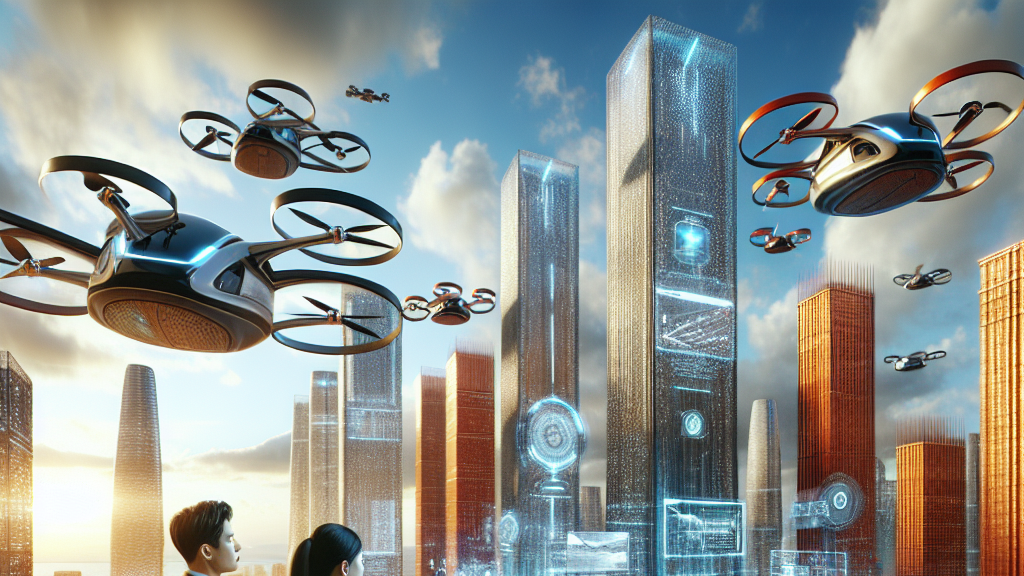
Imagine zipping over your city’s skyline instead of getting stuck in traffic during your daily commute. Sounds fantastic, right? Well, the German Aerospace Center is actually testing this ‘air taxi’ idea out, and they’re checking out how you, the potential passenger, feel about it. They even set up a cool simulator that lets folks experience what it’s like to ride an air taxi. Participants got to pretend they were zooming across the city on a virtual business flight to find out what they thought about in-flight information and comfort, especially when unexpected things happened, like having to change course.
The researchers discovered some intriguing insights. Passengers really want to know what their air taxi is up to next—like where it’s flying and why it’s doing a sudden shift. And here’s the kicker: having a flight attendant on board isn’t a must, but it definitely makes people feel better when there’s an unexpected detour or delay. It’s kind of like having a calm and collected friend when things don’t go as planned.
So why should you care? Well, air taxis could be the future of commuting, blending speed with sky-high views, and maybe even beat your dreary road traffic blues. Imagine getting home in half the time it takes now, all because you’re breezing over the city. And thanks to this research, those virtual flights have provided valuable feedback that could shape the air taxi experience, making it both convenient and comfortable for future jet-setters like you!
Did you know? Air taxis could potentially bypass traffic jams and shorten commute times significantly!
FAQs
How did the German Aerospace Center study passengers’ acceptance of air taxis?
The German Aerospace Center used a Mixed Reality Air Taxi Simulator where participants experienced virtual flights, allowing researchers to gather insights on their comfort and information needs.
Why might passengers want information during an air taxi flight?
Passengers desire to be informed about the intentions of the air taxi, especially during unexpected changes, to ensure a sense of comfort and control over their journey.
Is a flight attendant necessary on air taxis based on the study findings?
The presence of a flight attendant isn’t essential, but having one can enhance passengers’ wellbeing, particularly in non-routine situations where reassurance is valuable.
What unexpected situation was simulated in the study?
Participants experienced a flight rerouting due to the unavailability of the planned landing site, which tested their reaction to unexpected changes in the journey.
How might air taxis impact daily commutes in the future?
Air taxis could revolutionize commuting by offering a faster, traffic-free alternative, potentially reducing travel times significantly and providing a unique travel experience.
Background
This study delves into the burgeoning field of urban air mobility, an area that envisions transporting people via small, autonomous aircraft within urban environments. In this context, mixed reality technology creates simulated experiences that help potential users interact with these futuristic transport options before they even exist in reality.
History
Urban air mobility is an evolving concept that’s been gaining interest as cities seek innovative solutions to traffic congestion. The German Aerospace Center’s project builds on the work of aerospace pioneers and simulations used in other fields like space travel to understand human factors and user acceptance in new transport modalities.
Based on “Experiencing Urban Air Mobility: How Passengers evaluate a simulated flight with an Air Taxi” by Anne Papenfuss, Maria Stolz, Nele Riedesel, Franziska Dunkel, Johannes Maria Ernst, Tim Laudien, Helge Lenz, Aytek Korkmaz, Albert End, Bianca Isabella Schuchardt, available on arXiv (arxiv.org/abs/2311.01079), used under CC BY 4.0 (creativecommons.org/licenses/by/4.0/).