Connect with us

Search by keyword

Computers

Are Machines Missing Human-Like Thinking Skills?

This research explores why AI can struggle with problems that are intuitive for us, suggesting a future where AI might think a bit more like humans by learning foundational concepts differently.

Are Machines Missing Human Like Thinking Skills
✨Researched by humans. Explained by robots. Learn more.

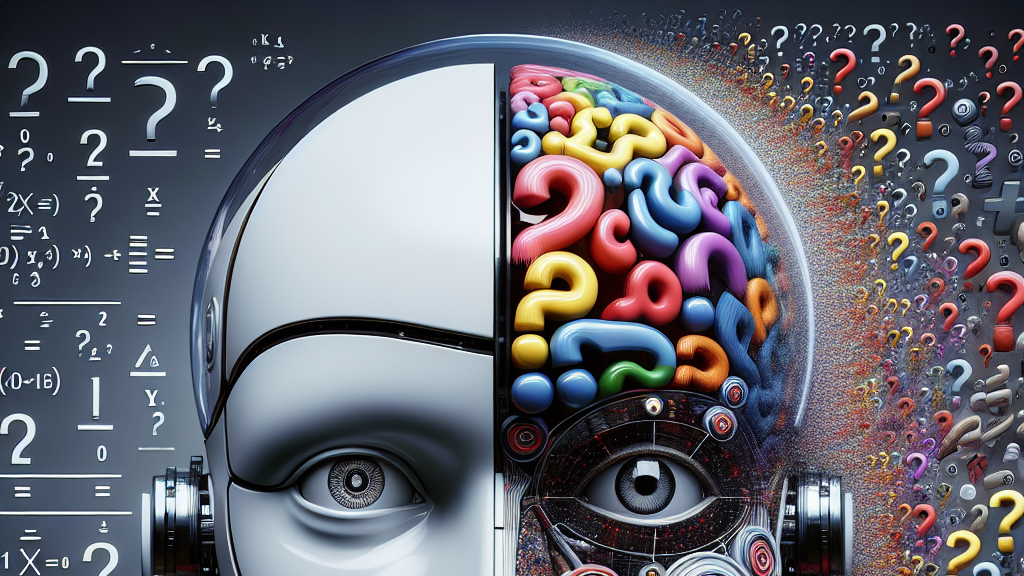
Ever wondered why even the smartest AI sometimes flunks at basic tasks that a child breezes through? The answer might be in how we teach them to think. Current AI models are great at complex reasoning but tend to stumble over simple problems. That’s because they lack a fundamental component that humans have—core knowledge. This research highlights a fascinating gap between human and machine cognition.

Researchers found that while both humans and machines increase their problem-solving skills by building on existing knowledge, AI models are missing foundational structures present in human cognition. These structures allow us to tackle new and varied problems by leaning on basic understandings. Without this core knowledge, AI can struggle to generalize skills across different tasks. This paper suggests that it’s not a limitation of AI’s architecture but rather how we train them.

Imagine a world where AI could solve a math problem while understanding the story of how you got there, just as easily as a human does. The study proposes a new training method that uses synthetic data to teach core knowledge to AI. By giving AI foundational concepts to build on, just like humans, future models might better handle real-world scenarios. Think of it as teaching AI its ABCs before tackling Shakespeare.

Did you know? Babies can intuitively solve basic physics problems without ever being taught, thanks to core knowledge!

FAQs

What makes human cognition different from language models?

Human cognition builds on core knowledge, a set of foundational cognitive skills developed early in life, enabling intuitive problem-solving, while language models lack this foundational structure.

Why do language models struggle with tasks intuitive to humans?

Language models often fail at intuitive tasks because they aren’t trained with the core knowledge that humans develop naturally, which helps in solving these tasks effortlessly.

Can language models be trained to think more like humans?

Yes, researchers propose using synthetic training data to integrate core knowledge into language models, potentially making them more adept at human-like problem-solving.

Is the limitation of language models in problem-solving inherent?

No, the limitation isn’t due to an inherent architectural constraint but rather how they’re currently trained without foundational cognitive structures.

How could this research change future AI development?

This research suggests a new training strategy using synthetic data that could enable AI to acquire foundational skills, potentially revolutionizing how they solve real-world problems.

Background

Core knowledge refers to the basic cognitive structures that humans develop from a young age, forming the foundation for understanding the world. Built into our cognition, these structures allow us to intuitively handle simple tasks, learn languages, and solve basic problems without formal training. In contrast, AI language models rely on vast amounts of data to mimic these skills, often lacking the innate intuitiveness humans possess.

History

Earlier studies have shown that AI excels in complex reasoning but falters with basic problem-solving tasks. This research builds on the idea of core knowledge—a concept proposed in cognitive science to explain how humans effortlessly perform certain tasks by leveraging foundational cognitive skills. This study adds to the growing body of evidence that integrating such foundational knowledge into AI could bridge the gap in AI’s problem-solving capabilities.

Based on “The Philosophical Foundations of Growing AI Like A Child” by Dezhi Luo, Yijiang Li, Hokin Deng, available on arXiv (arxiv.org/abs/2502.10742), used under CC BY 4.0 (creativecommons.org/licenses/by/4.0/).


Trending

Latest

Can AI Save Water Discover How

Computers

AI is transforming the tech world, but it uses lots of water! A new tool, SCARF, helps us measure and reduce AI's water footprint,...

Whats a Forbush Decrease and Why Should We Care Whats a Forbush Decrease and Why Should We Care

Space

Scientists just observed the biggest solar storm event in years, revealing unexpected cosmic ray patterns. Understanding these changes could help us protect our technology...

Can Cars Spot Danger Faster Than Humans Can Cars Spot Danger Faster Than Humans

Computers

Think about how quickly you react when something unexpected happens on the road. This research brings us closer to creating self-driving cars that can...

Can Fear of the Other Stop Social Harmony Can Fear of the Other Stop Social Harmony

Physics

Fear of the unknown might make it harder for people to agree and get along. This study shows that when people have strong xenophobic...

Can AI Revolutionize Breast Cancer Diagnosis Can AI Revolutionize Breast Cancer Diagnosis

Electricity

This research introduces a groundbreaking AI model that can accurately assess HER2-positive breast cancer using widely accessible staining methods, potentially revolutionizing how we diagnose...

Can AI Transform Your Singing into a Choir Can AI Transform Your Singing into a Choir

Computers

Imagine singing solo and having AI turn you into a choir. This research unveils a groundbreaking AI tool that transforms your voice into rich...

You May Also Like

Computers

This research explores how AI models designed to understand both images and words might improve their performance simply by teaching themselves to think better....

Computers

Imagine if playing games could make a computer program better at understanding and creating text! This research suggests that by using creative tasks like...

Computers

Imagine a super-smart AI that can watch your daily life in real-time and remember everything without taking up much space. This research shows how...

Computers

This research explores how artificial intelligence language-powered robots might think they're seeing things that aren't actually there. Investigating this quirk could lead to more...

Computers

This exciting study reveals that just like us, AI has its own biases that can skew its thinking, especially when solving problems. Understanding and...

Computers

This research uncovers vulnerabilities in AI that could expose private and sensitive data while fine-tuning these models for specific fields like healthcare. By understanding...

Computers

Discover how language models might not be as random as we thought! By examining their decision-making processes, researchers found that these models can sometimes...

Computers

Understanding how small changes in computer settings can lead to big differences in AI performance has huge implications for reliability in AI applications. This...

Computers

Imagine teaching artificial intelligence to truly get the physical world by using sound! This research shows it's possible by equipping AI with nifty tricks...

Copyright © 2024 8ig8rain.

Disclaimer: The content on 8ig8rain.com consists of AI-generated summaries of scientific abstracts from arXiv. Please note that most arXiv abstracts are preprints and may not have undergone formal peer review. While these summaries aim to convey key ideas and potential applications, they are provided for informational purposes only and should not be interpreted as validated scientific findings or professional advice. The summaries are intended to educate, spark curiosity, and inspire further exploration of science.