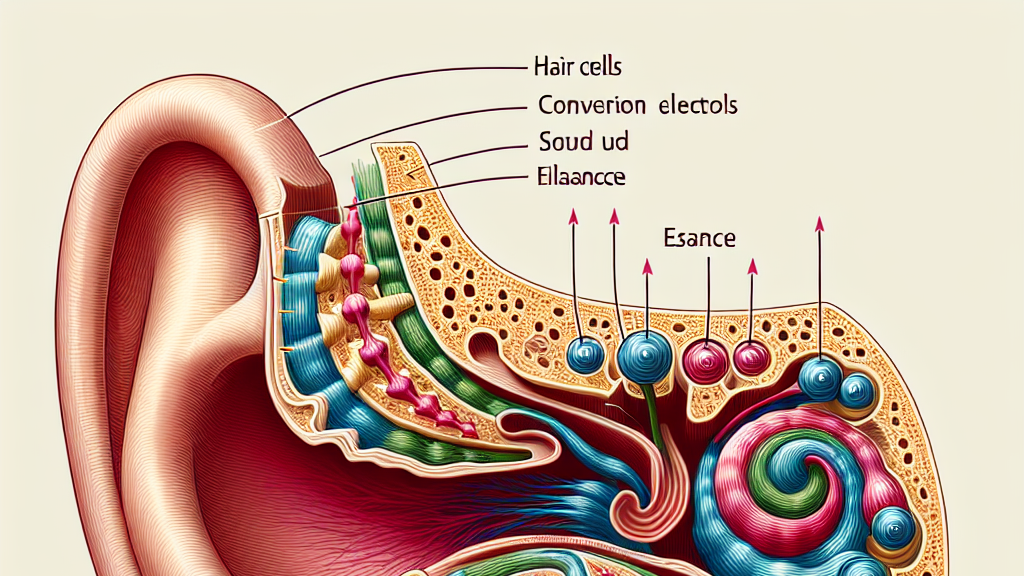
Our ears are home to some incredible tiny machines called hair cells. These aren’t just passive listeners. They actively move their tiny, hair-like structures to help us hear noises and keep our balance. It’s like having a hidden team working tirelessly to make sure we’re safe and sound.
Recent research has uncovered that these hair cells act like little machines that convert energy in complex ways. Sometimes they use the energy to enhance the signals they receive, making them great amplifiers for sound. Other times, they transform external energy to power their movement, like a mini power plant inside our ear. This dual function is essential for their role in detecting and amplifying signals, which is key for hearing and balance.
Imagine how this works in real life! If we could mimic this process, it would transform how we create hearing aids or balance-assisting devices. These scientific insights into the mechanics of hair cells could lead to groundbreaking technology that enhances the natural abilities of our ears, providing clearer sound for those with hearing difficulties and better balance for everyone.
Did you know? Hair cells in our ears can transform up to 80% of the energy they use into sound amplification or balance signals!
FAQs
What makes hair cells in the ear special for hearing?
Hair cells in the ear are unique because they actively move to detect and amplify sound, using energy efficiently to enhance our hearing and balance.
How do hair cells convert energy into movement?
Hair cells operate like tiny machines, converting the energy they receive into motion. This motion helps amplify sound and balance signals, similar to how an amplifier strengthens sound in a speaker.
Could this research lead to better hearing aids?
Yes! By understanding how hair cells work, we could develop advanced hearing aids that mimic this energy conversion process, leading to clearer sound for those with hearing loss.
How do hair cells impact our balance?
Hair cells also help maintain balance by detecting motion and changes in position. This function allows us to stay upright and move smoothly in our environment.
What is the significance of the 80% energy efficiency?
The high efficiency means hair cells convert most of their energy into useful work, like signal amplification. This efficiency is why they are so effective in enhancing hearing and balance.
Background
Hair cells are specialized cells in the inner ear that help us hear and maintain balance. These cells have tiny, hair-like structures that move in response to sound waves and head movements. This movement generates electrical signals sent to the brain, allowing us to interpret sound and balance. The study focuses on understanding how these cells use energy to perform their functions efficiently.
History
The study of hair cells has evolved over years of research focused on understanding how the ear converts sound into signals the brain can understand. Earlier studies identified hair cells’ role in mechanosensation—how physical stimuli are converted into electrical signals. This new research builds on that knowledge by exploring the energy dynamics within these cells, revealing their complex roles in signal amplification and energy conversion.
Based on “Active energy harvesting and work transduction by hair-cell bundles in bullfrog’s inner ear” by Yanathip Thipmaungprom, Laila Saliekh, Rodrigo Alonso, Édgar Roldán, Florian Berger, Roman Belousov, available on arXiv (arxiv.org/abs/2502.14485), used under CC BY 4.0 (creativecommons.org/licenses/by/4.0/).