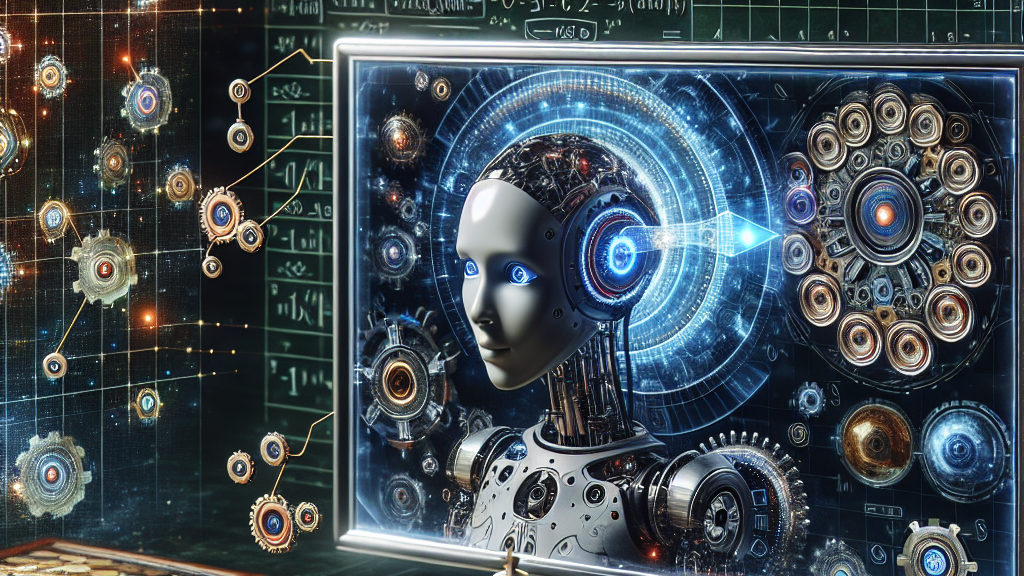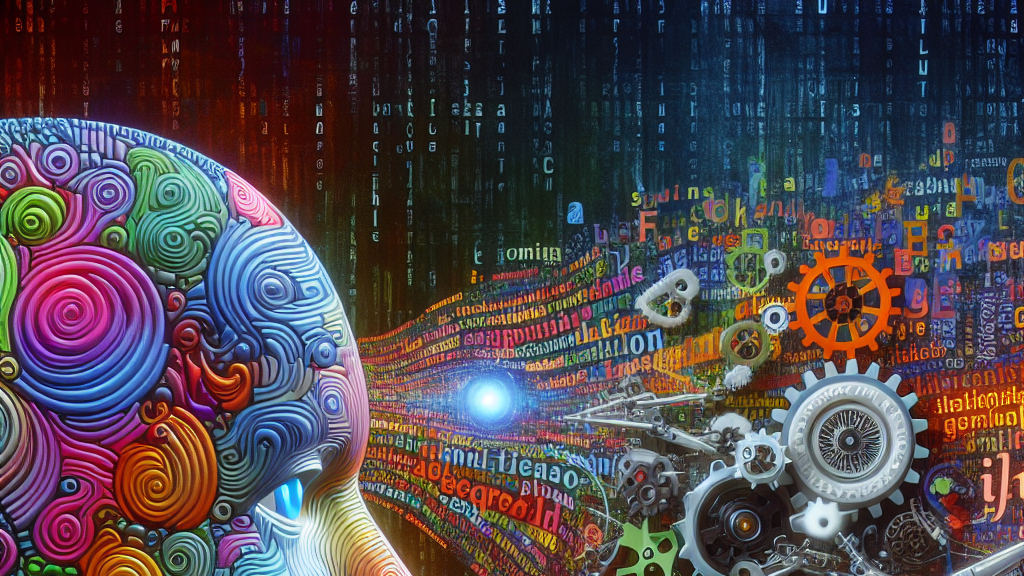
Imagine a world where computers can understand what seems like complete gibberish to us. Sounds crazy, right? But that’s exactly what researchers have discovered about large language models (AI programs that process and generate human language). These models are not just decoding standard text but are making sense of ‘unnatural languages’—strings of words that look like a hodgepodge of characters to humans but mean something to machines.
The research highlights how these AI models use these strange sequences to recognize patterns and extract meaningful data, just like they would with human language. It turns out, these peculiar strings of text have hidden features that AI can tap into, and when these models are trained on them, they perform just as well as they do with normal languages. This suggests that our current understanding of language processing is just scratching the surface.
So, what does this mean for the future? Imagine training AI models on data that looks like nonsense to us but contains valuable insights. This could revolutionize industries dependent on data processing, like finance and healthcare. Picture a future where computers recognize patterns we can’t see, making predictions or diagnoses faster and more accurately than before. It’s a mind-bending concept, but one that’s closer to reality than you might think!
Did you know that some AI models can understand nonsensical text better than humans? These ‘unnatural languages’ have hidden features that AI can use!
FAQs
How do AI models understand gibberish-like text?
AI models can detect hidden patterns and semantic meanings in what looks like gibberish to us, allowing them to process these unnatural languages effectively.
Why is understanding unnatural languages important in AI development?
Studying unnatural languages helps improve AI’s ability to generalize and adapt to different tasks, enhancing its performance across various applications.
What advantages does training AI on unnatural language provide?
Training AI on unnatural language allows models to access latent features, offering insights that might be overlooked with standard language processing.
Can AI models trained on unnatural languages outperform those trained on natural languages?
Yes, in certain tasks, models trained on unnatural languages perform on par with those trained on natural languages, expanding their utility.
Will understanding these languages change AI applications in the real world?
Absolutely! It could enable AI systems to make better predictions and analyses in fields like healthcare and finance, where pattern recognition is key.
Background
Large language models are AI systems trained to understand and generate human language. They usually learn from vast amounts of text data, recognizing patterns and meanings. However, this research focuses on ‘unnatural languages’—text sequences that look meaningless to humans but not to machines. The study found that these sequences contain hidden features that AI can utilize, revealing a new layer of language processing.
History
Language models have evolved from basic text processing to sophisticated versions that mimic human writing. Early models struggled with context and meaning, but with deep learning techniques, they’ve become proficient in understanding and generating human-like text. This study builds on the idea of AI’s growing sophistication, seeing how even ‘nonsense’ text holds utility if AI can decode it.
Based on “Unnatural Languages Are Not Bugs but Features for LLMs” by Keyu Duan, Yiran Zhao, Zhili Feng, Jinjie Ni, Tianyu Pang, Qian Liu, Tianle Cai, Longxu Dou, Kenji Kawaguchi, Anirudh Goyal, J. Zico Kolter, Michael Qizhe Shieh, available on arXiv (arxiv.org/abs/2503.01926), used under CC BY 4.0 (creativecommons.org/licenses/by/4.0/).