





































































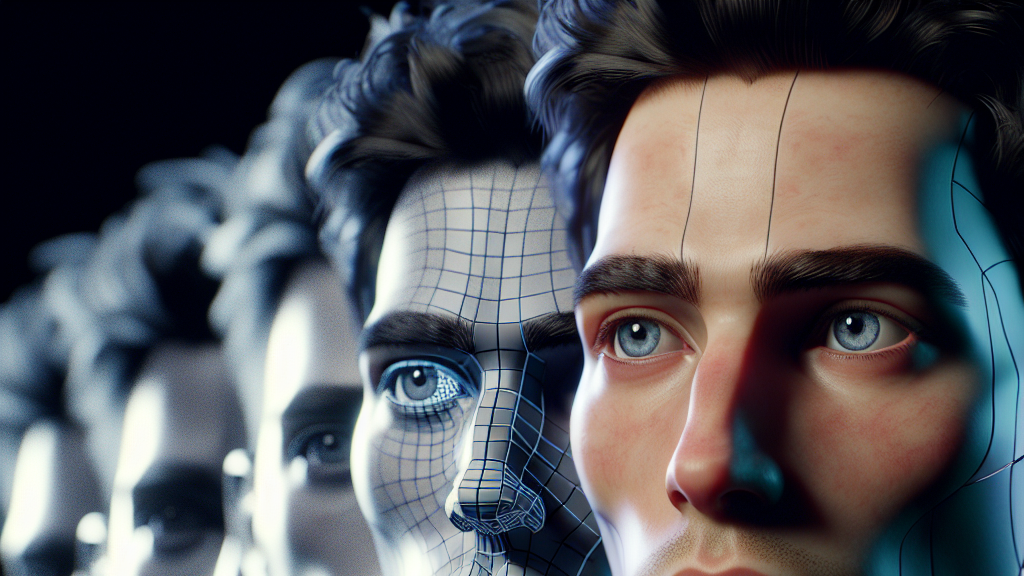
Imagine watching a movie where the characters are so lifelike, you could swear they were real people. That’s the kind of magic researchers are working on with avatars in videos. They’re making avatars more realistic, faster to create, and more responsive than ever before, even from just regular videos taken with your phone! It’s like bringing video game characters to life with just a click.
This breakthrough comes from turning to a new technique called 2D Gaussian Splatting, which sounds fancy, but simply means they’ve found a way to make animated characters look more real and move smoother. By using simple video inputs, this method creates detailed and dynamic 3D characters that can be animated instantly. Compared to older methods, this is faster and captures more life-like details that can really make a difference in the digital world.
Picture this: in the near future, you could use your phone to create a digital version of yourself that you can send into a video game or a virtual meeting. It could move and talk just like you, all thanks to the speedy, accurate techniques being developed today. This isn’t just about better video games; it’s about transforming how we interact with virtual worlds in everyday life.
Did you know? The same technology that creates life-like avatars could soon let you insert yourself into your favorite video game!
FAQs
How does the 2D Gaussian Splatting technique improve avatar animation?
The 2D Gaussian Splatting technique helps create avatars that look more realistic and move more smoothly by efficiently capturing and rendering detailed, dynamic, and photo-realistic appearances using simple video inputs.
What makes 2D Gaussian Splatting different from previous 3D methods?
Unlike 3D methods, 2D Gaussian Splatting focuses on faster training and rendering, reducing the time and complexity involved while enhancing the quality of animated characters to look and feel more life-like.
How can this technology change video-based interactions?
This technology allows users to create detailed digital versions of themselves quickly, facilitating more engaging and immersive experiences in virtual environments, from gaming to virtual meetings.
Why are accurate geometry and fast training important in rendering avatars?
Accurate geometry ensures the avatar appears realistic, while fast training means avatars can be generated and animated quickly, making it feasible to use in real-time applications like gaming or video chats.
What real-world applications can benefit from lifelike animated avatars?
Lifelike animated avatars can revolutionize virtual reality, gaming, online interactions, and even create personalized digital content for entertainment or professional use.
Background
Rendering high-fidelity avatars involves creating digital representations that look incredibly realistic. The challenge is in doing this quickly and accurately from simple inputs like regular videos. Gaussian Splatting is a method that improves this process by focusing on efficiency and detail, enabling avatars that move naturally and appear real-time.
History
The field of creating digital avatars began with simple animations and has evolved with technology like Neural Radiance Fields, which improved quality but lacked speed. The latest research builds on this by incorporating Gaussian Splatting techniques, which makes the process faster and enhances realism in avatar rendering.
Based on “2DGS-Avatar: Animatable High-fidelity Clothed Avatar via 2D Gaussian Splatting” by Qipeng Yan, Mingyang Sun, Lihua Zhang, available on arXiv (arxiv.org/abs/2503.02452), used under CC BY 4.0 (creativecommons.org/licenses/by/4.0/).
