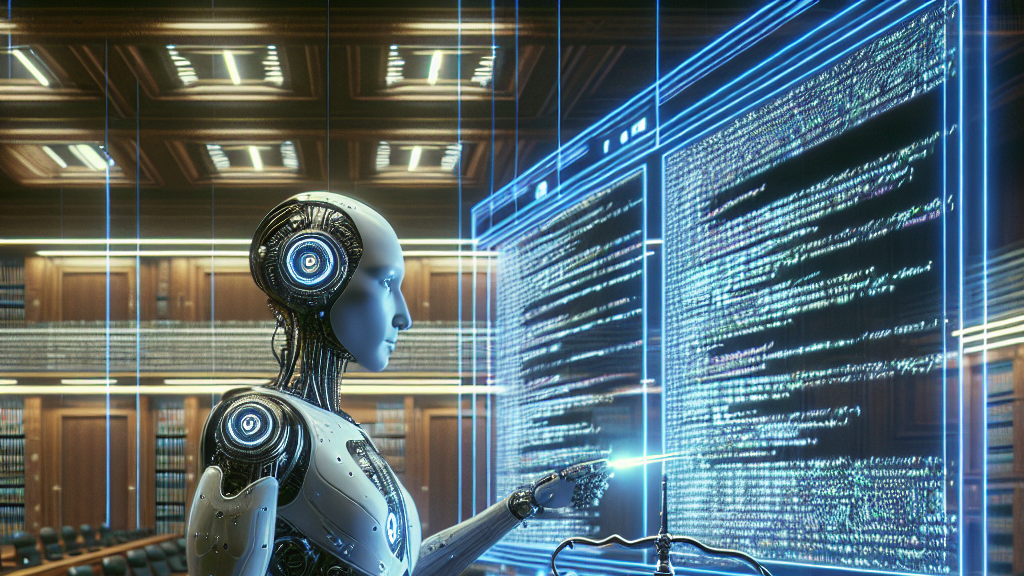
Imagine a future where artificial intelligence (AI) takes on the role of a stern, knowledgeable judge, deciding the quality of software faster and possibly even better than humans can! As AI continues to weave itself into our daily lives, one exciting possibility is its potential to act as a judge for software quality by 2030. That’s right, instead of just helping us write code, AI may soon also be evaluating whether the code is any good—which could mean faster, more consistent checks, and maybe even fewer bugs in the software we use every day.
In the world of software engineering, evaluating the quality of code is as complex as it sounds. Traditionally, humans have had to step in to determine how readable, useful, and error-free a piece of software is. With LLMs—those amazing AI systems that excel at interpreting and generating human-like text—there’s a shift in the air. These AI tools can now potentially act as ‘judges’, offering a fresh, automated way to evaluate software quality. The forward-looking research outlined in this study suggests that LLMs, trained to think like humans and with a knack for intricate coding and reasoning tasks, could one day serve as reliable, scalable substitutes for human evaluators.
What does this mean for the future? Imagine owning a smart gadget that needs a quick software update. Instead of waiting for human engineers to review the updates, an AI judge swiftly checks the code for you, ensuring it’s top-notch and safe to use. This research invites the software community to explore the potential paths AI judging could take, ultimately leading to smarter, faster ways of ensuring software reliability. It’s not just about coding anymore; it’s about anticipating a dynamic transformation where AI keeps our digital world running smoothly.
Did you know? The concept of AI judging software quality could save companies millions in evaluation costs by 2030!
FAQs
What is the ‘LLM-as-a-Judge’ approach in software engineering?
The ‘LLM-as-a-Judge’ approach involves using Large Language Models to evaluate software quality automatically. These AI systems mimic human judgment, making software assessments faster, potentially reducing errors, and offering cost-effective solutions.
Why is human evaluation of software artifacts expensive?
Human evaluation of software artifacts involves experts spending significant time reviewing and assessing code quality. This process requires skilled labor, making it costly and time-consuming compared to automated solutions.
How might AI judging software quality impact everyday tech users?
AI judging software quality can lead to faster software updates with fewer bugs, enhancing the reliability and user experience of everyday tech gadgets and applications.
What are the hurdles to implementing LLM-as-a-Judge in software evaluation?
Key hurdles include teaching AI to understand complex software quality aspects like readability, usefulness, and context-specific requirements, which traditionally rely on human insights.
Are current AI systems ready to replace human software judges?
Current AI systems, while advanced, still require significant development in nuanced understanding and judgment to fully replace human evaluators in software quality assessment.
Background
Large Language Models are a form of artificial intelligence trained to generate and understand text. In this context, they are being explored for their potential to replace human evaluators in assessing software code quality, which traditionally involves checking readability, usefulness, and error-free execution.
History
Evaluating software quality has traditionally relied on human experts, but over the years, automated tools have been developed to assist in this laborious task. The introduction of LLMs marks a significant step forward, as these AI models offer the ability to understand and generate human-like text, potentially revolutionizing the way software is evaluated.
Based on “From Code to Courtroom: LLMs as the New Software Judges” by Junda He, Jieke Shi, Terry Yue Zhuo, Christoph Treude, Jiamou Sun, Zhenchang Xing, Xiaoning Du, David Lo, available on arXiv (arxiv.org/abs/2503.02246), used under CC BY 4.0 (creativecommons.org/licenses/by/4.0/).