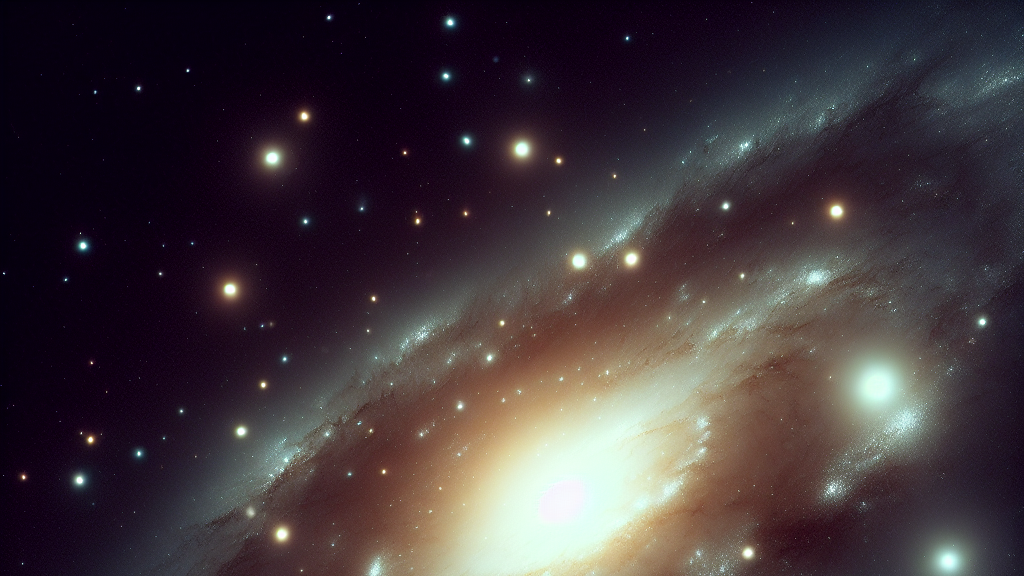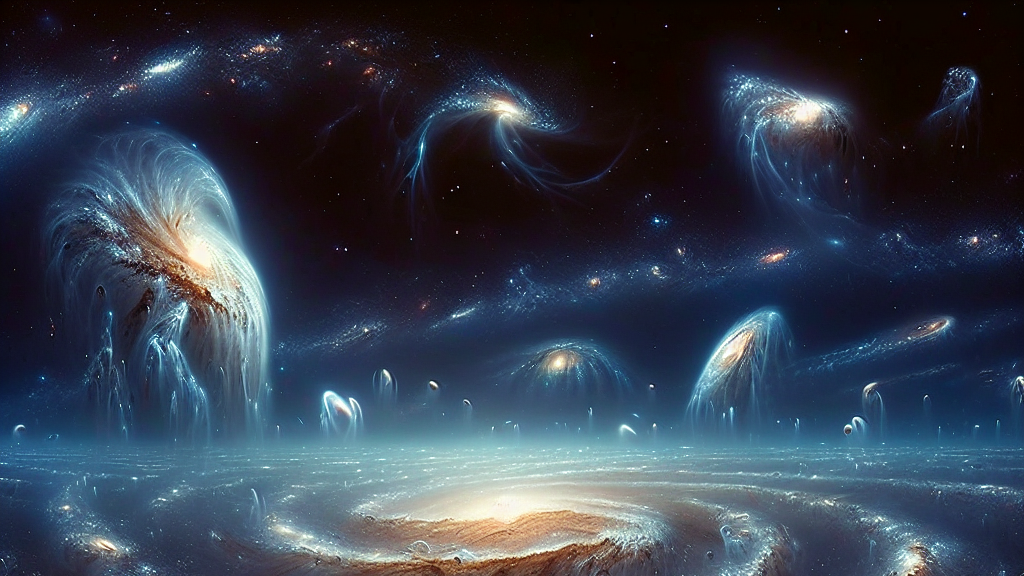
Imagine there are enormous, empty spaces in the universe known as cosmic voids, where galaxies are few and far between. Scientists are studying how winds from these sparse galaxies fill these empty spaces, much like how perfume spreads in an empty room. Their goal? To get a clearer picture of how galaxies grow and change in these voids compared to busier parts of the universe.
Researchers have used fancy simulations to model how galaxies behave in these voids. Think of it as a simulated game where you watch how galaxies and their winds spread over a vast, empty landscape. They found that while voids have fewer galaxies, those that do exist are stable, even if the empty space around them grows. The simulations allow scientists to predict how ‘windy’ these voids get due to galactic outflows.
So, why does this matter? Well, it turns out these empty regions tell us a lot about the universe’s overall structure. For example, in our very own cosmic neighborhood, understanding these voids helps us predict how galaxies might behave and evolve. Plus, it adds to our knowledge of where stars can be born and how they form galactic structures. Imagine cosmic voids as the universe’s silent observers, quietly influencing galactic growth and distribution.
Did you know that cosmic voids can be tens of millions of light-years wide, yet they’re some of the most stable parts of the universe?
FAQs
What are cosmic voids, and why are they important?
Cosmic voids are vast, empty spaces between galaxy clusters. They are important because they help us understand the large-scale structure of the universe and the distribution of galaxies.
How do galactic outflows affect cosmic voids?
Galactic outflows, or winds from galaxies, fill these voids, influencing the environment and possibly even affecting galaxy formation and evolution.
How does this research impact our understanding of the universe?
This research offers insights into how galaxies and cosmic structures are distributed, impacting our models of galaxy formation and cosmic evolution. It helps us predict behavior in our local cosmic environment, like the Local Group void.
Background
In space, voids are huge empty regions with few galaxies. They’re part of the ‘cosmic web,’ which includes galaxies, clusters, and superclusters. Scientists simulate these voids to study galaxy behavior within them. By understanding voids, scientists learn about the universe’s large-scale structure and how galaxies evolve within these vast empty spaces.
History
Cosmic voids were first noted in the 1970s when astronomers realized some parts of space were sparsely populated with galaxies. Over time, studies have focused on how these voids affect cosmic structures and galaxy formation. This area of research builds on past observational studies by adding high-resolution simulations to provide more precise insights into these mysterious regions.
Based on “Much Ado About Nothing: Galaxy Formation and Galactic Outflows in Cosmic Voids” by Yue Pan, Romain Teyssier, Ulrich P. Steinwandel, Alice Pisani, available on arXiv (arxiv.org/abs/2503.02938), used under CC BY 4.0 (creativecommons.org/licenses/by/4.0/).