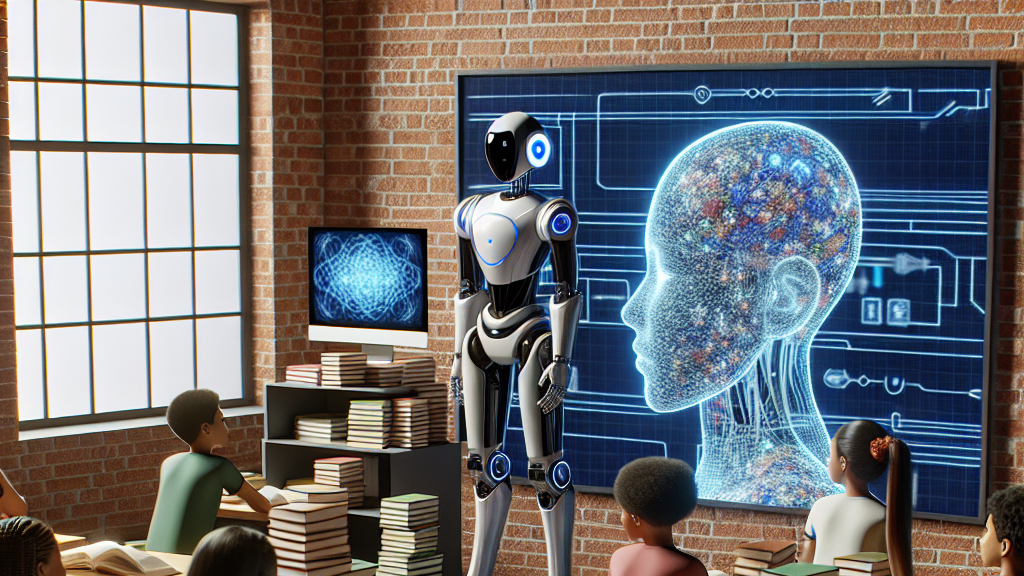
Imagine an artificial intelligence program enrolling in a semester-long college class, working through assignments, and trying to keep up with human students. This isn’t a science fiction plot; it’s a groundbreaking exploration of how advanced AI can keep pace with undergraduate students in a control systems course. With AI achieving a B-grade performance, nearly hitting the average class score of 84.99%, educators and tech enthusiasts are buzzing about what this means for the future of learning.
In the study, researchers evaluated 115 different course tasks to see how AI, specifically ChatGPT, managed various challenges, ranging from typical multiple-choice quizzes to complex coding and essay writing. The AI excelled in structured assignments but found open-ended projects more challenging. This indicates that while AI can handle some educational tasks with ease, it still struggles with creative and critical thinking components that lack defined boundaries or templates.
In the future, as AI technology advances, it could become a vital educational tool, not just a passive assistant. Picture a world where students use AI as a study partner to tackle tough assignments or even as a substitute for attending classes. This might open new doors for education, making learning more accessible and tailored to individual needs, potentially changing the landscape of academic study for generations to come.
Did you know that AI managed to score an impressive 82.24% in a college course, nearly matching human students?
FAQs
Can AI really keep up with college students in complex courses?
Yes, in this study, AI managed a B-grade performance in an undergraduate control systems course, showcasing that it can handle structured assignments but struggles with open-ended projects.
What were the strengths and weaknesses of AI in this educational study?
The AI, particularly ChatGPT, was best at structured assignments like multiple-choice quizzes but faced challenges with creative tasks requiring critical thinking and innovation.
How might AI integration affect future education?
As AI technology evolves, it could become a crucial learning tool, aiding students with personalized help and possibly transforming traditional education models by offering tailored, automated study assistance.
Is AI advancement a threat or benefit to education systems?
While AI poses challenges, such as students becoming overly reliant on it, it also offers benefits by serving as a versatile educational resource, potentially enhancing learning accessibility and efficiency.
Why did the AI struggle with open-ended projects?
Open-ended projects require creativity and critical thinking, areas where AI still has limitations as it currently operates best within defined structures and guidelines.
Background
Large Language Models are a type of artificial intelligence that can understand and generate human-like text. They’re trained on vast amounts of data, allowing them to answer questions, write essays, and even code. In education, these models can assist with typical student tasks by providing explanations, generating content, or simulating study partners. The study in question assesses how these models handle a complex set of course requirements under realistic conditions set within a college setting.
History
The research into large language models has been advancing over recent years, building on decades of AI and machine learning developments. Early natural language processing models started by understanding basic text and language structures. As computing power and data resources expanded, these models grew more sophisticated. ChatGPT represents one of the most advanced iterations, pushing boundaries by tackling complex educational tasks, showing potential areas for integration into academic settings.
Based on “The Lazy Student’s Dream: ChatGPT Passing an Engineering Course on Its Own” by Gokul Puthumanaillam, Melkior Ornik, available on arXiv (arxiv.org/abs/2503.05760), used under CC BY 4.0 (creativecommons.org/licenses/by/4.0/).