Connect with us

Search by keyword

General Relativity and Quantum Cosmology

Could Unseen Bursts Explain the Universe’s Secrets?

Researchers propose that rare, quick bursts in space and time could explain why we can’t detect dark matter and dark energy, offering clues about the universe’s history and expansions.

Could Unseen Bursts Explain the Universes Secrets
✨Researched by humans. Explained by robots. Learn more.

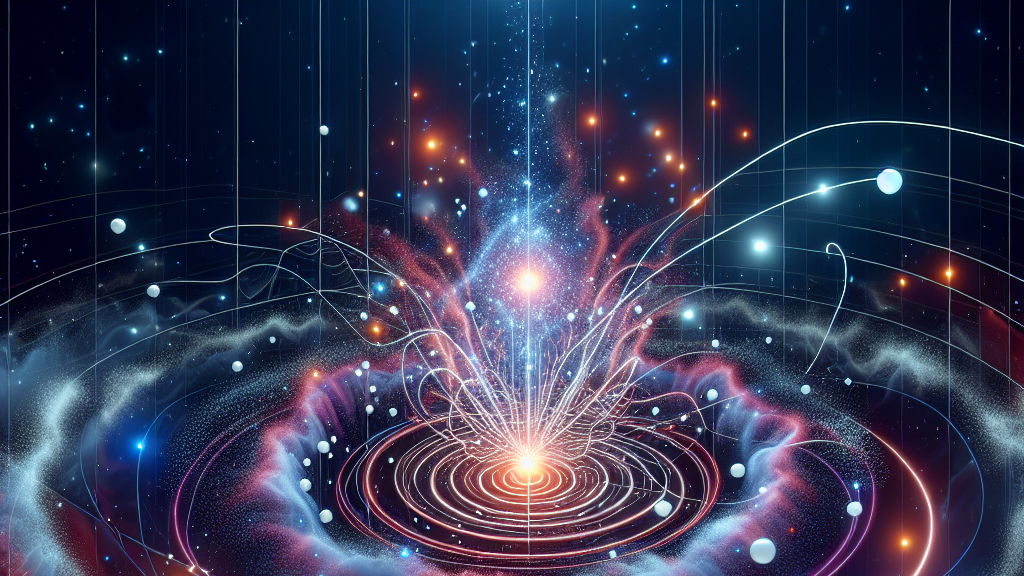
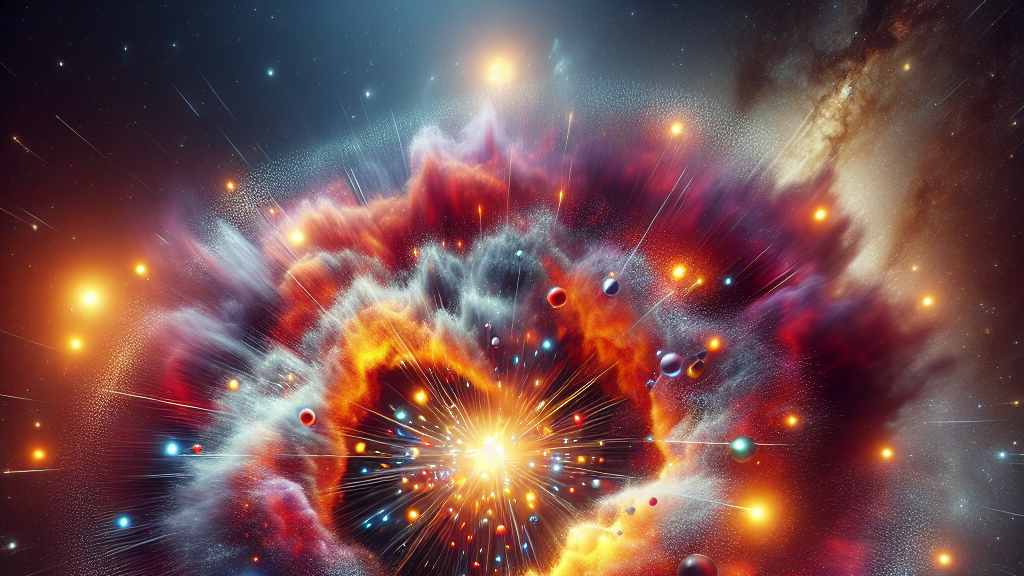
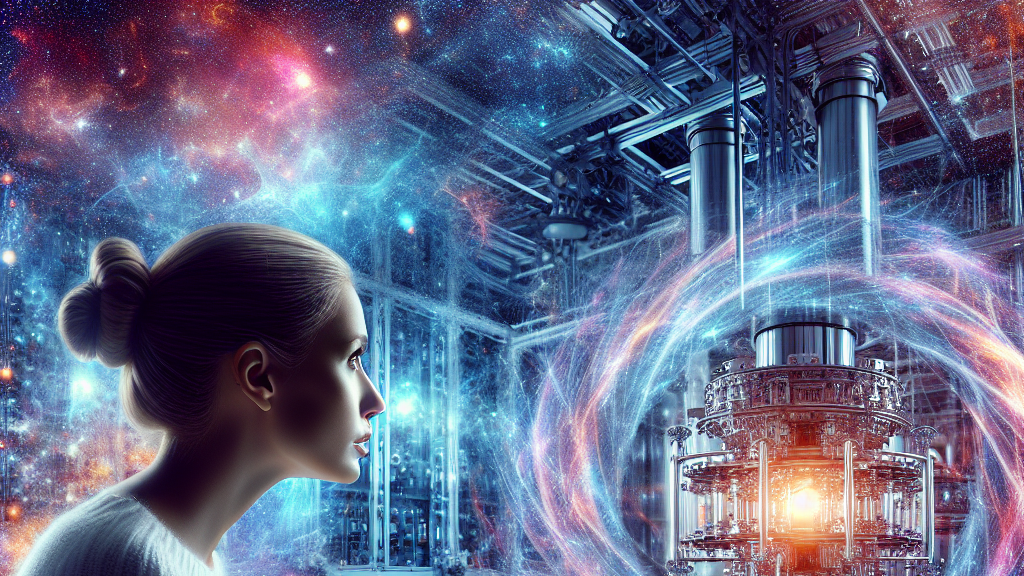
Have you ever wondered why scientists can’t seem to pin down dark matter and dark energy, even though they make up most of the universe? It’s like a cosmic puzzle with invisible pieces. New research suggests that the answer might lie in rare, fleeting bursts in space and time. These bursts are too quick for us to observe, but they could be influencing the universe in ways we have yet to understand. Imagine them as brief fireworks that leave a lasting impact on the cosmic landscape.

The study proposes these unusual bursts, known as temporal singularities, as a new solution to understanding the universe’s expansion and the formation of large-scale structures like galaxies and clusters. These singularities are incredibly fast and rare, making them invisible to us, much like trying to catch a glimpse of lightning in a storm. This could be why the mysterious dark matter and dark energy remain elusive. These ideas challenge our current understanding of cosmology, potentially reshaping our theories about the universe’s composition and its history.

Picture a future where we could harness this knowledge. What if these rapid, unseen forces could help us predict cosmic events or even unlock new energy sources? While it sounds like science fiction, understanding these temporal bursts could lead to revolutionary advancements in technology and space exploration. So, the next time you look up at the night sky, consider the hidden forces that might be shaping everything we see and don’t see.

Dark matter and dark energy together make up about 95% of the universe, yet remain undetected directly!

FAQs

What are temporal singularities in cosmology?

Temporal singularities are rare, brief bursts in space and time that could influence the universe’s expansion and the formation of large structures, helping solve mysteries about dark matter and dark energy.

How could temporal singularities affect our understanding of the universe?

These singularities might help explain why dark matter and dark energy, which make up most of the universe, are so hard to detect. They could offer new insights into cosmic events and the universe’s history.

Are temporal singularities observable?

No, temporal singularities are believed to be too fast and rare to observe directly, much like a flash of lightning in a storm, which may be why they have been overlooked as a cosmic factor.

Why are dark matter and dark energy important?

Dark matter and dark energy make up about 95% of the universe and are fundamental to its structure and expansion, yet remain undetected, posing a significant mystery in cosmology.

Could understanding temporal singularities lead to technological advancements?

If we could grasp these unseen forces, it might revolutionize technology and space exploration, offering insights into new energy sources or ways to predict cosmic events.

Background

In cosmology, temporal singularities are hypothetical points where certain quantities become infinite, impacting the universe’s mass-energy density and pressure. The study of these singularities helps in understanding fundamental forces like gravity and could explain hidden aspects of dark matter and dark energy.

History

The study of temporal singularities builds on various cosmological theories, including the Big Bang and inflationary cosmology. Early theories focused on visible matter, but as these couldn’t account for observed phenomena, researchers began exploring unseen, quick-moving forces that might solve these cosmic puzzles.

Based on “Are dark matter and dark energy omnipresent?” by Richard Lieu, available on arXiv (arxiv.org/abs/2503.08733), used under CC BY 4.0 (creativecommons.org/licenses/by/4.0/).

Trending

Latest

Can AI Save Water Discover How

Computers

AI is transforming the tech world, but it uses lots of water! A new tool, SCARF, helps us measure and reduce AI's water footprint,...

Whats a Forbush Decrease and Why Should We Care Whats a Forbush Decrease and Why Should We Care

Space

Scientists just observed the biggest solar storm event in years, revealing unexpected cosmic ray patterns. Understanding these changes could help us protect our technology...

Can Cars Spot Danger Faster Than Humans Can Cars Spot Danger Faster Than Humans

Computers

Think about how quickly you react when something unexpected happens on the road. This research brings us closer to creating self-driving cars that can...

Can Fear of the Other Stop Social Harmony Can Fear of the Other Stop Social Harmony

Physics

Fear of the unknown might make it harder for people to agree and get along. This study shows that when people have strong xenophobic...

Can AI Revolutionize Breast Cancer Diagnosis Can AI Revolutionize Breast Cancer Diagnosis

Electricity

This research introduces a groundbreaking AI model that can accurately assess HER2-positive breast cancer using widely accessible staining methods, potentially revolutionizing how we diagnose...

Can AI Transform Your Singing into a Choir Can AI Transform Your Singing into a Choir

Computers

Imagine singing solo and having AI turn you into a choir. This research unveils a groundbreaking AI tool that transforms your voice into rich...

You May Also Like

Space

Scientists have discovered a new way that tiny early-universe structures might grow into massive black holes, potentially changing our understanding of cosmic evolution! This...

Space

This research is changing the game for how we see the universe using radio waves! It enlists the help of regular people and smart...

Space

This research uncovers how setting a visibility limit on starlight reveals more realistic details about galaxies, helping us understand their size and mass better—crucial...

General Relativity and Quantum Cosmology

This study explores the possible fate of our universe—revealing that under certain conditions, it might one day collapse into a Big Bang-like singularity or...

Physics

Recent research suggests that supernova explosions in our galaxy might be key to discovering new, elusive forms of dark matter. These cosmic events could...

Space

Imagine invisible particles shaping galaxies from within! This study suggests that certain types of dark matter could help solve long-standing puzzles about galaxy formations...

Physics

Supernovae might be key to unlocking the secrets of dark matter, especially through its activity in our own galaxy, the Milky Way. This research...

Space

Scientists have discovered a possible explanation for how supermassive black holes could form in the early universe. This breakthrough could change our understanding of...

Physics

Scientists are on a mission to discover if ghost-like particles called neutrinos could reveal astonishing insights about the universe. Using cutting-edge technology, they searched...

Copyright © 2024 8ig8rain.

Disclaimer: The content on 8ig8rain.com consists of AI-generated summaries of scientific abstracts from arXiv. Please note that most arXiv abstracts are preprints and may not have undergone formal peer review. While these summaries aim to convey key ideas and potential applications, they are provided for informational purposes only and should not be interpreted as validated scientific findings or professional advice. The summaries are intended to educate, spark curiosity, and inspire further exploration of science.