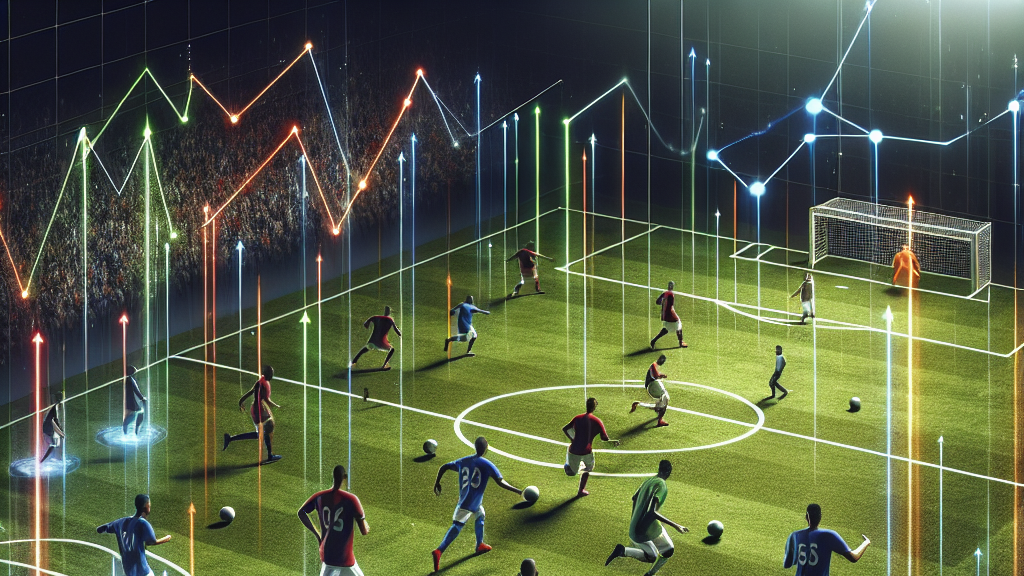
While watching soccer, have you ever wondered how some players seem invisible but are crucial to the game? This research focuses on these unsung heroes. By using tools beyond traditional scoring metrics, it highlights players who may not score but control the game in ways that enhance their team’s chances of winning. These players are the backbone of a successful team, like connectors in an intricate network, linking defense and attack.
The study introduces a clever method using Graph Neural Networks (GNNs) to spot these pivotal roles. Traditional metrics focus heavily on goal-scoring, often ignoring the contributions of players who maintain control and strategically influence matches. By analyzing both the space players cover and the timing of their actions, the research gives credit to roles like defenders and midfielders who make the game more dynamic and unpredictable.
Imagine if we could watch a game and immediately see how each player’s movements contribute to the team’s overall performance. Coaches and fans could understand the true impact of every player, appreciating the game on a deeper level. This could revolutionize scouting and team dynamics, leading to more balanced teams and exciting strategies that celebrate every aspect of the game.
Players who don’t score often control up to 80% of a game’s movements!
FAQs
How do soccer metrics ignore important player roles?
Traditional soccer metrics focus heavily on scoring actions, like goals, often overlooking players who facilitate game flow and manage ball control, like midfielders and defenders.
What are Graph Neural Networks (GNNs) and how are they used in soccer analytics?
GNNs are a type of artificial intelligence that understand relationships in data. In soccer, they’re used to analyze spatial and temporal features, highlighting the contributions of players beyond just scoring goals.
Why are spatial and temporal features crucial in evaluating player contributions?
Spatial features help understand a player’s position on the field, while temporal features look at timing. Together, they show how players influence a game, especially those who enhance team performance without directly scoring.
Can this method change how we appreciate soccer players’ roles?
Yes, by recognizing players’ movements and influence on the field, this method can shift focus from just goal scorers to those who control and link game phases, appreciating all players’ contributions.
Background
The key concept here is expected threat (xT), which predicts the chances of scoring from different field positions. Currently, most metrics highlight players who score, but xT with spatial and temporal analysis allows us to see the value of players who strategically control the ball and game flow.
History
Traditional soccer analysis tools have largely focused on scoring-related metrics, which means that players like defenders or midfielders who significantly impact the game in unseen ways have been overlooked. Recent advances in machine learning and the use of Graph Neural Networks (GNNs) have provided the ability to analyze complex relationships within the game, offering a more holistic view.
Based on “Unveiling Hidden Pivotal Players with GoalNet: A GNN-Based Soccer Player Evaluation System” by Jacky Hao Jiang, Jerry Cai, Anastasios Kyrillidis, available on arXiv (arxiv.org/abs/2503.09737), used under CC BY 4.0 (creativecommons.org/licenses/by/4.0/).