





































































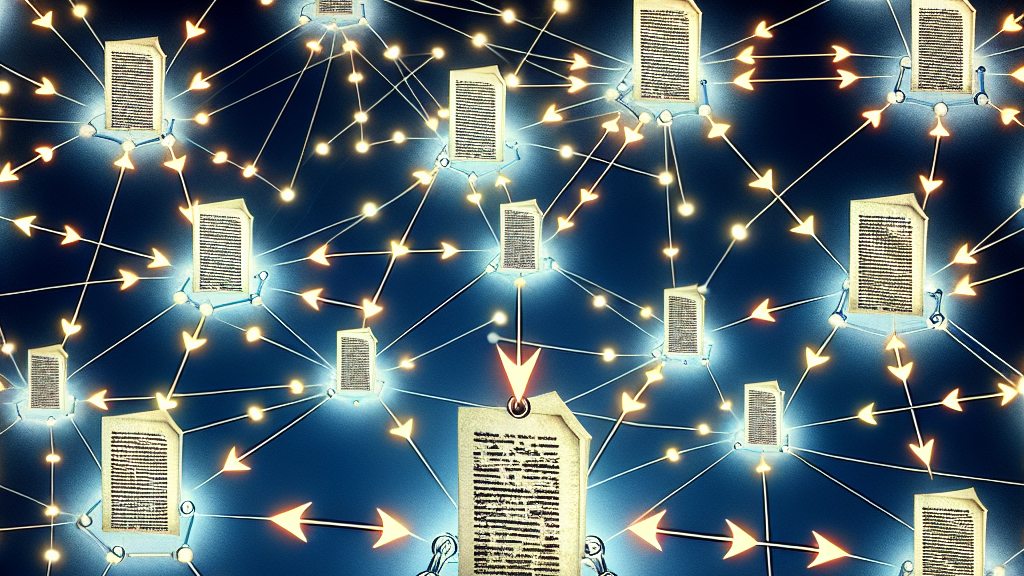
Ever wondered why some scientific papers get cited all the time while others are barely mentioned? It turns out that the popularity of a paper can significantly influence how often it gets cited by other researchers. This happens through a phenomenon called preferential attachment, where already popular papers continue to attract more citations simply because they are more popular. Think about it like viral videos on social media: the more people watch and share, the more it gets seen by others!
Recent research looked into this citation behavior by analyzing a vast dataset of citation events from various scientific papers. They found that around 70% of citations follow this preferential pattern, where popular papers get more attention, creating a kind of ‘rich get richer’ situation. Interestingly, self-citations, where authors cite their own work, do not follow the same pattern, with only 20% adhering to preferential attachment rules. This discrepancy raises fascinating questions about why and how authors cite not only their work but also that of others.
In the future, understanding these citation patterns could revolutionize how we evaluate the impact of scientific work. If we know why some papers get cited more than others, we can improve how we measure the success of research and the value of scientific contributions. For example, adjusting bibliometric indexes to account for preferential attachment could lead to fairer assessments of an author’s work. It might even encourage more collaboration and sharing of research findings across different fields, enhancing the collective growth of scientific knowledge.
Did you know that just like viral videos, over 70% of scientific citations go to already popular papers?
FAQs
What does it mean when 70% of scientific citations follow preferential attachment?
It means that around 70% of the time, citations tend to go to scientific papers that are already well-known or popular, much like how viral content spreads on social platforms by getting more views because it is already widely seen.
How do self-citations differ from external citations in terms of preferential attachment?
Self-citations, where authors cite their own work, do not follow the preferential attachment pattern as much, with only 20% adhering to this rule. This suggests a different behavior in how authors decide to cite their own versus others’ work.
Can understanding citation patterns affect how scientific impact is measured?
Yes, understanding these patterns can improve how scientific impact is measured by making bibliometric indexes more accurate. It can account for citation trends, leading to a fairer evaluation of research contributions.
Why is knowing about these citation behaviors important?
Understanding citation behaviors helps in assessing the true impact of scientific work and can guide researchers and institutions on how to improve the dissemination and recognition of valuable research.
Background
In scientific research, citations are crucial for recognizing the impact and relevance of a study. Preferential attachment is a concept where items that are already popular continue to gain popularity. When applied to citations, it suggests that well-cited papers are more likely to receive future citations. This study examines how citations are distributed among scientific papers and what factors influence this process, including self-citations.
History
The study of citation patterns has roots in understanding academic impact and productivity. Previously, researchers focused on how paper quality and journal reputation influenced citations. The concept of preferential attachment, originally from network theory, has been increasingly applied to understand this ‘rich get richer’ pattern in academic citations, offering insights into how research influence spreads.
Based on “Exploring the dynamics of self-citations and their role in shaping scientific impact” by Maciej J. Mrowinski, Aleksandra Buczek, Agata Fronczak, available on arXiv (arxiv.org/abs/2503.09811), used under CC BY 4.0 (creativecommons.org/licenses/by/4.0/).
