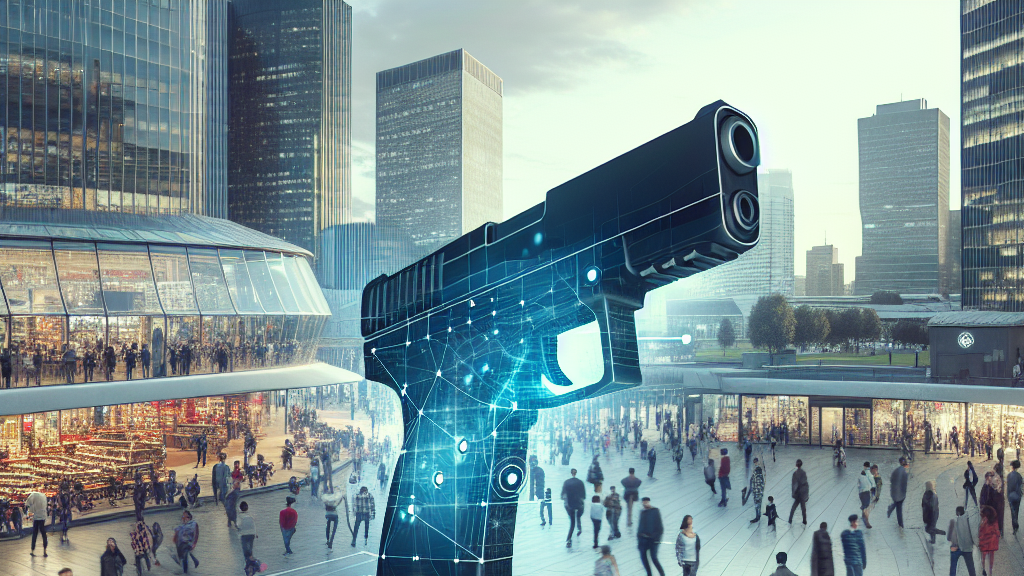
Imagine a future where a hidden threat can be spotted before it causes harm. Thanks to groundbreaking research in AI, the dream of detecting concealed firearms in open spaces is turning into a reality. This is not just about improving technology; it’s about safeguarding lives and creating secure environments where everyone feels at ease. With rising concerns over firearm incidents, this innovation could literally be a life-saver.
The magic lies in combining two powerful elements: understanding human body movements and recognizing specific weapon features. By studying how people move and finding telltale signs of hidden firearms, AI can now spot dangers that would be invisible to the human eye alone. This method is much more accurate than traditional ways of detecting weapons, which rely heavily on manual work and often result in false alarms. What’s remarkable is how the researchers gathered a diverse mix of real and AI-generated images to train this system, ensuring it works well in different scenarios and lighting conditions.
So how could this transform your everyday life? Picture walking into a mall, airport, or concert, knowing that any potential threat is being carefully scanned and detected—without slowing down your day. This technology could become a permanent fixture in public places, providing peace of mind and heightened security without intrusive checks or long lines. As it continues to develop, AI could redefine how we think about safety in public spaces, making them not just smarter, but safer too.
AI can now detect hidden firearms even when they’re concealed under clothing by analyzing posture and movements!
FAQs
How can AI improve firearm detection in public spaces?
AI improves firearm detection by analyzing human posture and weapon appearance simultaneously, which enhances accuracy and reduces false alarms compared to traditional methods that rely solely on manual inspection.
Why is the combination of body movement and weapon detection important?
The combination is crucial because it allows AI to see what humans might miss; it detects suspicious postures that could indicate someone is hiding a firearm, making the overall system more effective.
How does this AI technology learn to recognize firearms?
This AI technology learns using a diverse dataset of images, both from real sources and AI-generated, allowing it to generalize and perform accurately under various surveillance conditions.
What impact could this AI research have on public safety?
This AI research could dramatically increase public safety by allowing for the early detection of concealed weapons, thereby preventing potential threats before they happen.
In what situations could this AI technology be most beneficial?
This technology could be most beneficial in high-risk areas like malls, airports, and public events, where large crowds gather, and the potential for security threats is higher.
Background
Human pose estimation involves understanding the position of a person’s body parts using images or videos, while weapon appearance recognition focuses on identifying firearms based on visual cues. Deep learning, a type of AI, can process vast amounts of data and learn to recognize patterns, making it ideal for tasks like these. By combining these techniques, AI can effectively distinguish between innocuous and potentially threatening behavior.
History
Traditional firearm detection relied heavily on manual processes and continuous human oversight of security footage. While these methods have been somewhat effective, they often result in many false positives and negatives, making them inefficient. Recent advancements in AI, and specifically deep learning, have presented opportunities to automate and improve upon these methods, leading to a new approach that combines human pose estimation with weapon recognition.
Based on “Gun Detection Using Combined Human Pose and Weapon Appearance” by Amulya Reddy Maligireddy, Manohar Reddy Uppula, Nidhi Rastogi, Yaswanth Reddy Parla, available on arXiv (arxiv.org/abs/2503.12215), used under CC BY 4.0 (creativecommons.org/licenses/by/4.0/).