





































































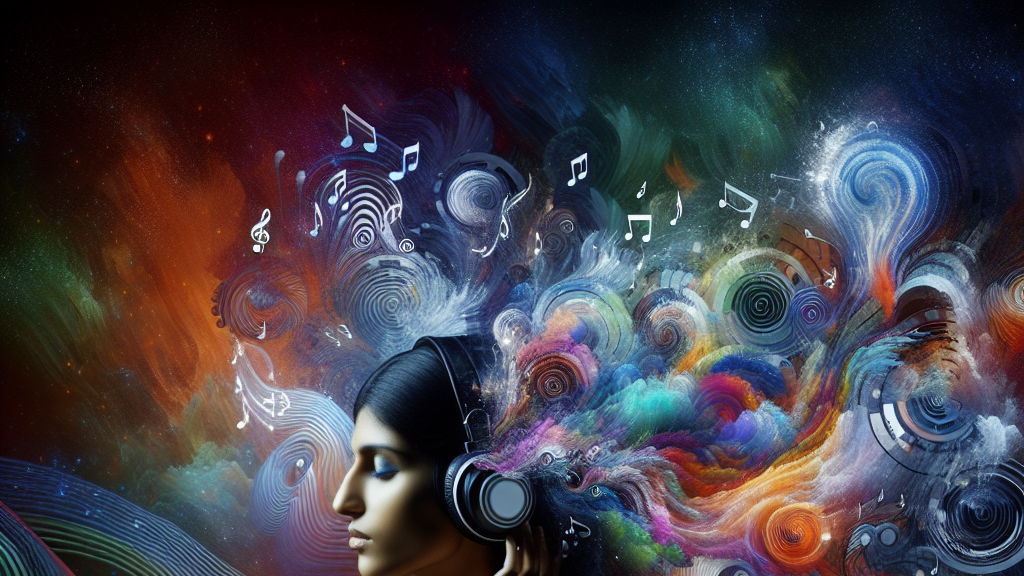
What if your favorite song didn’t just linger in your ears, but came to life in bright, vivid colors dancing before your eyes? Recent research explored just this, bringing a splash of color to the music we love. This isn’t just about music videos or light shows, but about creating a whole new way to experience music that can inspire creativity and induce synesthetic experiences—a phenomenon where you might ‘see’ sounds as colors or shapes.
The study introduced us to musicolors, a revolutionary web-based library that lets users see music in real-time. By taking the sounds and notes of a song and transforming them into dynamic visual art, musicolors offers something special to composers, music lovers, and developers. The research didn’t just stop at creating this feature; it involved gathering real-world feedback from those who use it to maximize inspiration and interaction. It turns out, visualizing music isn’t just pretty—it can be a powerful tool for developing new musical ideas and enhancing live performances.
Imagine musicians sketching out new tunes not just on a score sheet, but in a virtual canvas of colors and shapes. The study’s findings hint at a future where visualizing music becomes a norm—offering listeners a more interactive way to appreciate and craft music. So the next time you hit play on your favorite track, you might not just be listening, you might be painting a masterpiece of your own.
Did you know that some people can literally ‘see’ sounds as colors due to a condition called synesthesia?
FAQs
What is music visualization with synesthetic experiences?
Music visualization with synesthetic experiences involves transforming sounds into vivid visual displays, allowing people to ‘see’ music as colors or patterns. This can inspire creative processes by engaging multiple senses simultaneously.
How does the musicolors tool work for users?
Musicolors is a web-based library that translates music into real-time visual displays. It provides composers, developers, and listeners with a way to sketch musical ideas and integrate these visualizations with other systems for a more immersive experience.
Why is music visualization important for creative inspiration?
Music visualization enhances creative inspiration by providing a new sensory experience of music. By visualizing music, artists and listeners can explore musical ideas more vividly and interactively, potentially leading to new artistic opportunities and creations.
Who benefits from using music visualization tools like musicolors?
Composers, developers, and music enthusiasts can all benefit from tools like musicolors. These tools help users gain a deeper appreciation of music and inspire new creative outlets by allowing them to see the music as they listen.
What are the future possibilities of music visualization in everyday life?
In the future, music visualization could become an everyday part of music listening and creation. It might enhance how we experience live music, how we learn and teach music, and how we enjoy music in personal settings, offering a truly synesthetic experience.
Background
Synesthesia is a condition where one sensory experience involuntarily triggers another, like seeing colors when listening to music. Music visualization takes inspiration from this phenomenon to create digital tools that translate audio into visual art, engaging multiple senses for a richer creative experience. These tools can be used by artists and musicians to explore new artistic avenues and deepen their emotional connection to music.
History
The concept of visualizing music has been around for centuries, from color organs in the 18th century to contemporary music videos and light shows. Recent advancements in digital technology have allowed for real-time, interactive music visualization experiences, such as musicolors, building on these historical foundations to create new ways of experiencing music.
Based on “musicolors: Bridging Sound and Visuals For Synesthetic Creative Musical Experience” by ChungHa Lee, Jin-Hyuk Hong, available on arXiv (arxiv.org/abs/2503.14220), used under CC BY 4.0 (creativecommons.org/licenses/by/4.0/).
