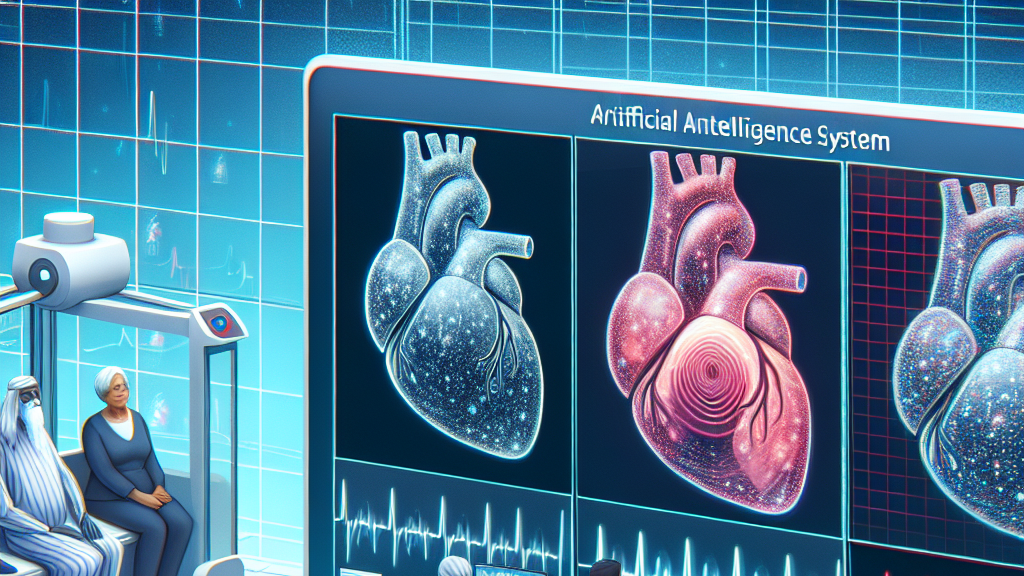
Imagine a world where medical treatments could unfairly favor one group of people over another just because of how a computer learned to read medical images. Shocking, right? Well, that’s the reality we’re facing with some artificial intelligence systems used in medicine today. These systems can become biased if they’re trained on unbalanced datasets, meaning that if they see more images from one group than another, they might make worse decisions for the underrepresented group. This is a huge issue, especially in critical tasks like reading heart scans.
The good news is that scientists are working hard to fix this problem. In recent research, experts tested several techniques to balance the scales. One method called ‘oversampling’ involves showing the AI more images from the underrepresented group until both groups are equally represented in its training. Another method combines showing more images and a special technique called Group DRO, which focuses on improving the system’s ability to treat both races fairly. While these improvements aren’t magic bullets, they do show promise, and even cropping the images differently has made a positive impact.
This kind of work matters because it paves the way for fairer, more accurate medical diagnoses and treatments. Imagine a world where no matter who you are or what you look like, you can receive the highest quality medical care possible. That’s the world researchers are aiming for, and your heart health, quite literally, depends on it.
Did you know AI can unintentionally learn biases from data, impacting critical decisions in healthcare?
FAQs
What is race bias in AI-based medical imaging?
Race bias in AI-based medical imaging happens when algorithms, due to being trained on imbalanced datasets, perform better on certain racial groups compared to others, potentially leading to unfair medical treatment.
How can oversampling reduce bias in AI medical imaging?
Oversampling reduces bias by balancing the dataset. By providing more images from underrepresented groups, the AI learns to perform equally well across different groups, improving fairness and accuracy.
Why are cropped images beneficial in AI training for medical scans?
Cropped images can focus the AI on the most important parts of the scans, reducing distraction from irrelevant details and helping it learn more effectively about the essential features across all groups without bias.
What are the implications of AI bias in healthcare?
AI bias in healthcare can lead to misdiagnoses or unequal treatment, affecting the quality of care received by patients from underrepresented groups, which is why addressing these biases is crucial for equitable healthcare.
What role does AI play in medical imaging today?
AI assists doctors by quickly analyzing complex medical images to help diagnose conditions like heart disease or cancer, making it a powerful tool in modern medicine.
Background
Artificial intelligence in medical imaging is trained by exposing it to vast amounts of scans and associated outcomes. This helps the AI learn patterns to identify similar issues in future patients. However, if the data it trains on is skewed toward a particular race or group, it might not perform as well when facing images from other groups, leading to biased outcomes.
History
AI in medical imaging started as a way to automate monotonous tasks and increase diagnostic speed. Over time, as its capabilities grew, so did awareness of its limitations, such as bias. Prior studies have highlighted these biases, prompting researchers to innovate ways to balance the datasets and better train AI systems, leading to the current focus on bias mitigation strategies.
Based on “Does a Rising Tide Lift All Boats? Bias Mitigation for AI-based CMR Segmentation” by Tiarna Lee, Esther Puyol-Antón, Bram Ruijsink, Miaojing Shi, Andrew P. King, available on arXiv (arxiv.org/abs/2503.17089), used under CC BY 4.0 (creativecommons.org/licenses/by/4.0/).