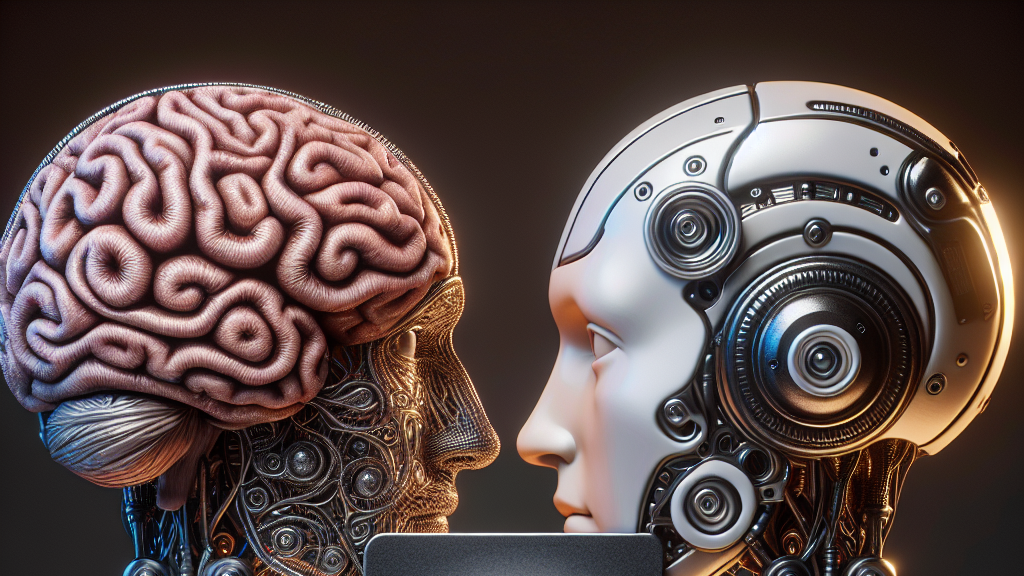
In a fascinating new study, AI helpers are put to the test in a memory match-up called Browsing Lost Unformed Recollections (BLUR). Humans tackle these memory challenges with a 98% success rate, easily recalling and connecting bits of information, while even the smartest AI struggles at 56%. Imagine your smart speaker trying to play a memory game with you—it’s not as sharp as you think! This study opens the door to understanding how we can make AI not just machines that follow commands but assistants that truly understand and anticipate our needs.
BLUR challenges AI by presenting 573 real-world scenarios requiring it to reason across different formats and languages. Just like how you sometimes mix up words in different languages while talking or find yourself searching for a word that’s on the tip of your tongue, AI must navigate this complexity. The benchmark assesses if AI can use digital tools smartly to respond to these scenarios, currently proving to be a huge leap from what machines can handle.
So, what does this mean for us? Imagine your phone helping you recall that obscure song title you just can’t get out of your head, or your computer compiling all the info you need for a last-minute presentation in a flash. These AI memory tools could transform everyday tasks, making tech truly an extension of our own memory, helping us with everything from learning new languages to planning events seamlessly.
Humans can easily outperform today’s top AI in memory challenges by over 40%!
FAQs
What does the Browsing Lost Unformed Recollections (BLUR) benchmark test?
The BLUR benchmark is a challenging test for AI systems, designed to see if they can reason and search information across various formats and languages like humans do in real-world scenarios.
How well do humans perform compared to AI on the BLUR benchmark?
Humans excel at the BLUR benchmark with an average score of 98%, while even the best AI systems currently score only around 56%.
Why can’t AI assistants match human performance on the BLUR benchmark?
AI struggles with BLUR because it requires understanding and connecting information across multiple languages and formats, as well as using digital tools, which is still a complex task for AI systems.
How many questions are part of the BLUR test, and how are they used?
The BLUR benchmark includes 573 questions, with 350 available to the public for development and testing, while 250 remain private to evaluate true AI progress.
What future applications could arise from AI mastering the BLUR benchmark?
Once AI can handle memory challenges like BLUR, it could help in everyday situations like remembering forgotten facts, organizing information more efficiently, and becoming more intuitive helpers in both personal and professional environments.
Background
The key to understanding this study is the concept of a ‘tip-of-the-tongue’ memory challenge, where humans often find themselves in situations where they can almost remember something but need just a bit more information to fully recall it. This study takes that everyday experience and challenges AI to perform similarly, needing to reason and search through diverse types of information and languages.
History
The development of AI has long been about teaching machines to understand and process information similarly to humans. Earlier studies focused on simple tasks like sorting or recognizing images, but over time, the aim has shifted to more complex cognitive challenges like understanding context and making connections—skills that are inherently human. BLUR builds on this evolution, pushing the boundaries of AI memory and reasoning capabilities.
Based on “Browsing Lost Unformed Recollections: A Benchmark for Tip-of-the-Tongue Search and Reasoning” by Sky CH-Wang, Darshan Deshpande, Smaranda Muresan, Anand Kannappan, Rebecca Qian, available on arXiv (arxiv.org/abs/2503.19193), used under CC BY 4.0 (creativecommons.org/licenses/by/4.0/).