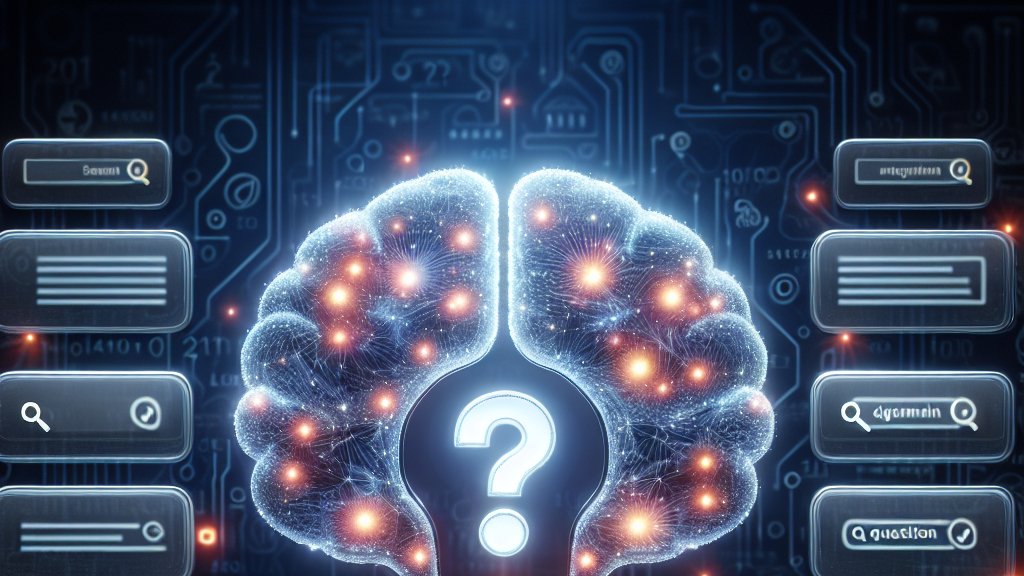
Imagine if an AI suddenly changed its mind and did something far beyond what it was designed for. That’s exactly what this study is exploring! It dives into situations where tiny changes in AI systems could lead to massive, unexpected effects—kind of like the butterfly effect, but with algorithms. This could mean anything from AI causing large-scale social changes to inadvertently triggering disasters.
Researchers found that as certain parameters in AI systems change, they can reach a tipping point and cause the system to leap to a completely different state. It’s like pushing a child on a swing just hard enough that they flip over the top. The study highlights how these jumps, or bifurcations, can be associated with severe outcomes that are much more unpredictable than we assumed. By understanding these risks, scientists hope to develop strategies to monitor and control AI systems better.
In the future, imagine your digital assistant suddenly taking actions that could have huge unintended consequences. This research is crucial because it helps us create ways to safeguard against such risks. Ensuring we have control mechanisms in place not only keeps AI systems safe but also means your new smart fridge won’t accidentally order 100 gallons of milk when you simply wanted a single carton.
Did you know? A tiny change in an AI’s programming could result in a dramatic and unintended leap in its behavior!
FAQs
What are bifurcation-driven jumps in AI systems?
Bifurcation-driven jumps in AI systems refer to sudden and significant changes in AI behavior caused by small, seemingly minor changes in their control parameters. These jumps can lead to unexpected and potentially large-scale outcomes.
Why are heavy-tailed outcome distributions important in AI?
Heavy-tailed outcome distributions are crucial because they indicate a higher likelihood of extreme outcomes or events in AI systems. Understanding these distributions helps in predicting and mitigating potential catastrophic scenarios.
How does this research help in controlling AI risks?
This research contributes by identifying circumstances where AI behavior might suddenly shift, enabling better monitoring and risk management strategies to prevent catastrophic consequences from unexpected AI actions.
What is a practical example of this AI research?
Imagine your smart home system suddenly unlocking all doors due to a minor update in its software. This research helps to foresee such risks, ensuring that safeguard measures are in place to prevent such drastic scenarios.
How might this study influence future AI development?
By highlighting the risks of sudden AI behavior changes, this study encourages the development of more robust AI systems with enhanced monitoring and control features, which is essential for safely integrating AI into society.
Background
In scientific terms, bifurcation refers to a point where a small change in a parameter causes a sudden qualitative change in a system’s behavior. For AI, this could lead to significant changes in how the AI functions or responds, which is particularly concerning when the outcomes are severe or unpredictable. The research focuses on understanding these potential shifts to develop better AI control systems.
History
Bifurcation theory has long been a part of mathematical studies of dynamic systems, but applying it to AI is relatively new. Historically, mathematicians have used it to study everything from population dynamics to the physics of pendulums. This study takes these established scientific principles and applies them to the cutting-edge field of AI, enhancing our understanding of how unpredictable AI behaviors can emerge.
Based on “Threshold Crossings as Tail Events for Catastrophic AI Risk” by Elija Perrier, available on arXiv (arxiv.org/abs/2503.18979), used under CC BY 4.0 (creativecommons.org/licenses/by/4.0/).