





































































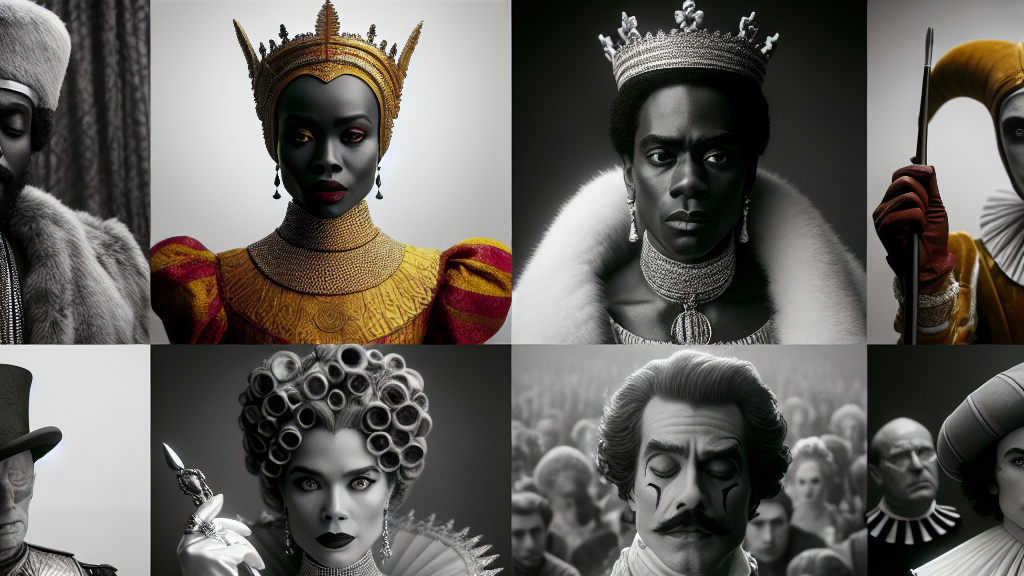
Have you ever wondered how AI technology might change the way we watch movies? Imagine a world where your streaming service not only knows your favorite genres but can also recommend movies based on the actors you love, even when they’re in disguise or wearing costumes. That’s what a recent study set out to explore using advanced machine learning techniques.
This study took on the challenge of recognizing actors from scenes in Arab movies, with complications like varying lighting, different poses, and actors in costumes, makeup, and wigs. The researchers used a dataset of 574 images and multiple machine learning models, eventually finding that the Logistic Regression model performed exceptionally well. This means that AI can get better at recognizing faces, no matter the situation.
The practical applications could be groundbreaking. With more accurate facial recognition, not only can movie streaming services become more personalized, but we could see advancements in how films are categorized and recommended. This technology could also improve movie search services, making it easier for you to find films featuring your favorite actors, even if they’re barely recognizable under layers of makeup and costumes.
Did you know that AI can recognize an actor’s face even if they’re heavily disguised with makeup and costumes?
FAQs
How does AI recognize actors in movies?
AI uses machine learning algorithms that analyze images to identify actors based on facial features, even when they’re in different outfits or disguised with makeup, improving movie searches and recommendations.
Why was the focus on Arab movies?
The study focused on Arab movies because they present unique challenges like various lighting conditions and actors in traditional costumes, which test the AI’s ability to recognize faces under different scenarios.
What are the potential benefits of AI in movie recognition?
AI can enhance movie streaming services by personalizing recommendations, improve search accuracy, and help classify movies by genre or actors, making viewing experiences more tailored and efficient.
Which AI model worked best for this research?
The Logistic Regression model proved most effective, showing higher precision and accuracy in recognizing actors compared to other models tested.
Could this technology affect the film industry?
Yes, it has potential to transform how films are marketed and consumed, offering more personalized and precise ways to recommend, search, and categorize movies.
Background
Machine learning is a branch of artificial intelligence where computers learn from data patterns to make decisions. In the context of facial recognition, algorithms analyze features like facial structure, lighting, and accessories to match and identify people in images. This technology is being refined to work in diverse scenarios, like movies, where lighting and appearance can vary greatly.
History
Facial recognition technology has been evolving for years, with roots going back to early computer vision research. Over time, advances in artificial intelligence and machine learning have significantly improved accuracy and application versatility, from security systems to personal devices. Recent research focuses on making these systems robust against common challenges faced in real-world applications, such as varying environmental conditions and disguises.
Based on “Predicting Movie Production Years through Facial Recognition of Actors with Machine Learning” by Asraa Muayed Abdalah, Noor Redha Alkazaz, available on arXiv (arxiv.org/abs/2504.01047), used under CC BY 4.0 (creativecommons.org/licenses/by/4.0/).



