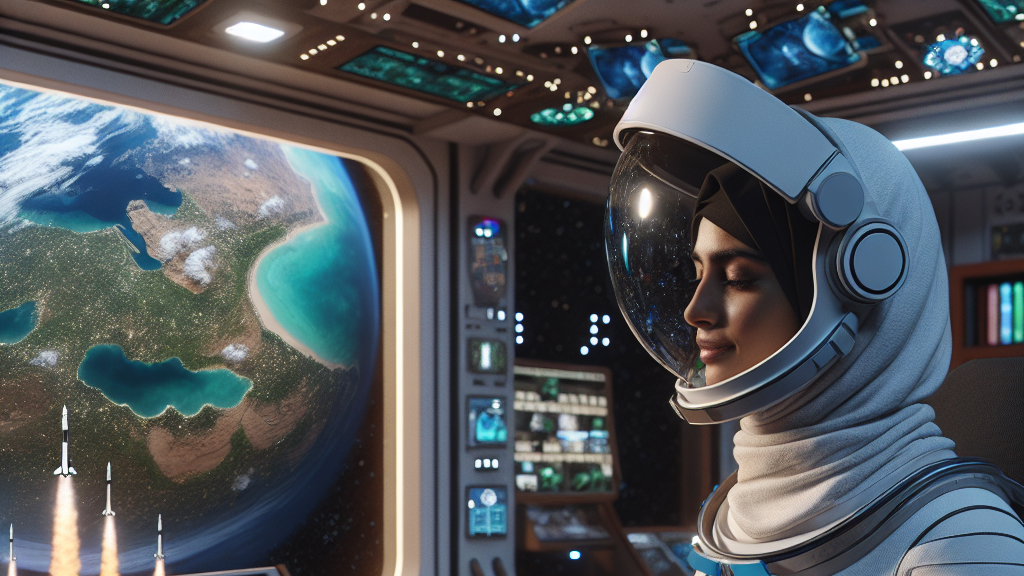
Picture being an astronaut, floating in space thousands of miles from home. Imagine the excitement of exploration but also the intense feelings of isolation and confinement. This is where modern technology steps in, offering solutions to help astronauts cope with the mental strains of such an environment. Researchers are looking into how virtual reality (VR) and artificial intelligence (AI) can offer a sense of familiarity and connection, even when you’re far from anything you know and love.
The study analyzed how VR and AI could help improve the mood of astronauts in these extreme conditions. While the focus was on VR, which showed promising results in helping astronauts relax, boost their mood, and even assist with emergency training, it opened the door to the potential future use of AI in similar applications. VR can create an immersive experience that feels like you’re back on Earth, offering relaxation and emotional relief. The findings were clear: for astronauts, VR can serve as a break from the monotony, offering interactive communication platforms and engaging exercise routines.
In the future, this research could lead to VR headsets becoming a staple in space travel, acting like a mental escape pod to Earth. But there’s still much left to explore, especially concerning AI’s role. Imagine having an AI buddy in space, who understands when you’re stressed or lonely and suggests activities tailored to cheer you up. This isn’t just for astronauts; the same tech could help people working in remote or isolated locations worldwide, providing comfort and maintaining emotional health when needed most.
Did you know virtual reality can significantly reduce the sensation of isolation in space?
FAQs
How do virtual reality and artificial intelligence help astronauts in space?
Virtual reality and artificial intelligence can recreate Earth-like environments and interactions, helping astronauts manage stress, boredom, and isolation while away from Earth.
Why is there a focus on virtual reality instead of artificial intelligence?
The current research found more studies and evidence on the effectiveness of virtual reality in addressing mental health issues during spaceflight, while artificial intelligence applications still require more exploration.
Can this technology be used here on Earth?
Absolutely! Virtual reality and artificial intelligence can benefit individuals in confined or remote environments on Earth, offering mental health support and stress relief.
What are the downsides of using VR in space?
Some users experienced cybersickness, which is a potential drawback of using VR in confined spaces where movement and visual perception can cause nausea.
Are there any practical benefits of VR for space missions?
Yes, VR can improve training for emergencies, communication, interior design evaluation of space habitats, and exercise routines, enhancing overall mission efficacy.
Background
Space missions can be incredibly stressful due to the isolated and confined environment, limited personal interactions, and potential dangers. Virtual reality (VR) and artificial intelligence (AI) have the ability to simulate familiar environments, offer interactive and therapeutic experiences, and serve as companions, potentially mitigating psychological risks and improving mood and emotional health during long-duration spaceflights.
History
For years, space agencies have explored ways to address mental health challenges faced by astronauts. Earlier countermeasures involved cognitive-behavioral strategies, while recent technological advances have introduced VR as a tool to help alleviate these stresses. This study builds upon such past research but indicates a gap in the application of AI technology, suggesting a potential new direction for future studies.
Based on “Virtual Reality and Artificial Intelligence as Psychological Countermeasures in Space and Other Isolated and Confined Environments: A Scoping Review” by Jennifer Sharp, Joshua Kelson, Daryl South, Anthony Saliba, Muhammad Ashad Kabir, available on arXiv (arxiv.org/abs/2504.01366), used under CC BY 4.0 (creativecommons.org/licenses/by/4.0/).