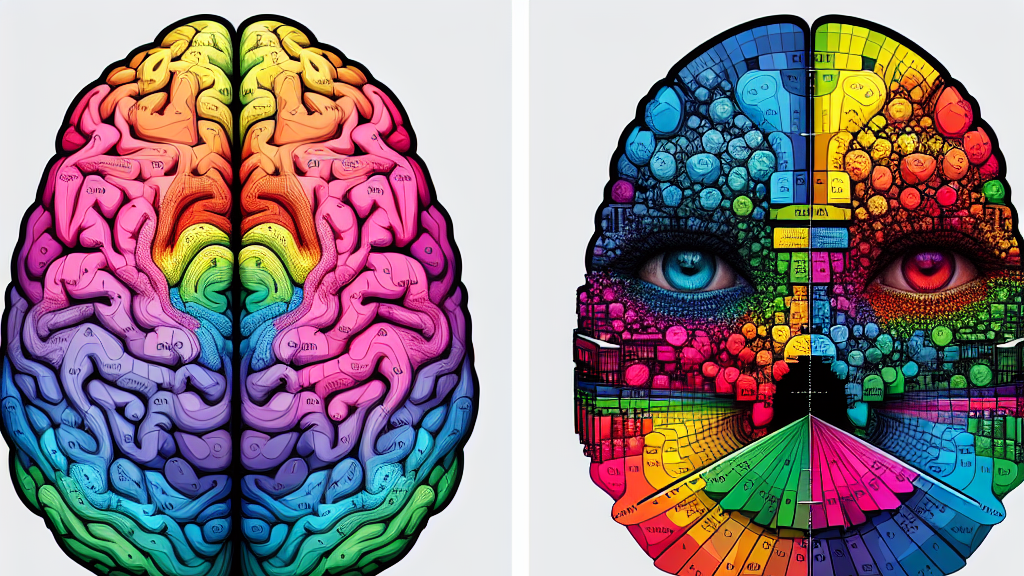
Ever wondered if artificial intelligence sees the world the same way we do? Recent research suggests that Vision Transformers, a type of AI model, might share some visual quirks with the human brain. This study examined if these models develop similar biases in color and orientation as we do, and the results were mind-blowing. It turns out, just like humans, these AI models are better at predicting horizontal angles and tend to make fewer mistakes with certain colors, closely aligning their errors with human perception.
Vision Transformers were put through their paces on datasets specifically designed to tease out variations in noise levels, angles, and colors. These AI models also underwent fine-tuning using LoRA techniques, which adjust their learning processes. Researchers found that AI struggles most with blues and makes the fewest errors with yellows, much like the human brain. Even more intriguing, the study observed that some parts of these models develop specialized talents, effectively picking up on features without any specific task in mind.
These discoveries could have a massive impact on the future of AI applications. Imagine a world where AI can understand and interpret visual data as accurately as we do, enhancing everything from digital photography to automated vehicles. If AI can ‘see’ the same way we do, it could revolutionize industries by providing more intuitive interactions and experiences, blurring the lines between human and machine perception.
Did you know that AI’s vision can mimic some perceptual glitches of the human brain, making it struggle with blue colors while acing yellow ones?
FAQs
How do Vision Transformers mimic human color perception?
Vision Transformers (ViTs) demonstrate biases in color perception similar to the human brain, making fewer errors with yellows than blues, aligning with human perceptual categories.
What is the oblique effect in Vision Transformers?
The oblique effect observed in Vision Transformers refers to their lower angle prediction errors when dealing with horizontal angles, a phenomenon paralleling human visual perception quirks.
Why are phase transitions in AI models important?
Phase transitions in AI models indicate shifts in learning behavior. Observing these can help us understand how AI models evolve and improve through training, especially when integrating complex data attributes like color.
How might this research impact real-world applications?
This research could lead to AI systems with more human-like visual understanding, enhancing fields such as digital imaging and autonomous driving by improving AI interaction with visual environments.
What role do attention heads play in Vision Transformers?
Attention heads in Vision Transformers develop distinct capabilities, acting as versatile feature extractors that function independently of downstream tasks, enriching the model’s flexibility and adaptability.
Background
Vision Transformers are advanced AI models used in visual recognition tasks. They work by mimicking processes in the human brain, such as how we perceive colors and angles. The oblique effect, a known bias in human vision, was formerly thought to be exclusive to natural brains, but now is seen in AI. These models are trained on large datasets, which shape their understanding of visual data. Fine-tuning them with modifications like LoRA can adapt their learning to specific tasks, offering insights into the similarities between machine learning and human perception.
History
Deep learning models have evolved dramatically over the past decade, leading to the development of Vision Transformers. These models are part of a broader trend in AI where massive datasets and neural network architectures are used to mimic aspects of human cognition. This study builds upon existing work exploring how AI might replicate human sensory biases, further bridging the gap between artificial and natural intelligence by identifying shared perceptual characteristics.
Based on “Vision Transformers Exhibit Human-Like Biases: Evidence of Orientation and Color Selectivity, Categorical Perception, and Phase Transitions” by Nooshin Bahador, available on arXiv (arxiv.org/abs/2504.09393), used under CC BY 4.0 (creativecommons.org/licenses/by/4.0/).