Flexible electronics are everywhere, from your smartwatch to even futuristic clothing embedded with tech. However, these devices often face a big problem: they tend to crack easily under stress, especially in the polymer layers that are not supposed to break. This might sound technical, but it’s crucial, because even the tiniest cracks can lead to device failure.
Recent research has uncovered that the common belief—that the tough polymer bases of flexible electronics don’t crack—isn’t true. Under the pressure of bending, these polymers can indeed crack badly, which means that the electronics they support are much less durable than we thought. The real issue lies in the mismatch of materials, where stiffer layers meet the softer polymer base, causing stress that leads to these breaks.
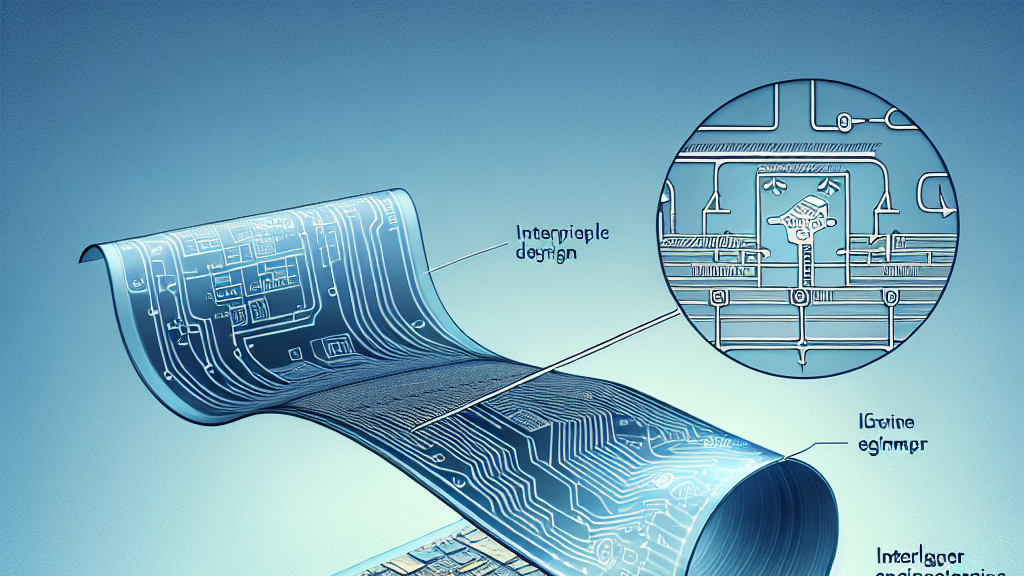
To combat this, scientists have creatively engineered an additional layer between the stiff and soft materials. This interlayer helps balance the stress, dramatically cutting down the chances of cracking. Imagine a phone that you can bend or a fitness tracker that flexes comfortably around your wrist without worries about breaking. These advancements could soon make such robust, flexible technology part of our everyday lives!
Did you know that even microscopic cracks in flexible electronic devices can eventually lead to their failure?
FAQs
Why do flexible electronic devices crack easily?
Flexible electronic devices crack easily because of the stress created at the interface between stiff thin-film electrodes and the softer polymer substrates. This stress becomes a problem during bending, leading to substrate cracking.
How does this study improve the durability of flexible electronics?
This study introduces an interlayer-engineering method that places an additional layer between the stiff and soft materials in flexible electronics, reducing stress and minimizing the risk of cracking, hence enhancing device durability.
Why are polymer substrates used if they crack under stress?
Polymer substrates are used because they offer flexibility and toughness compared to other materials. However, their tendency to crack under stress has been underestimated until recent research highlighted this critical flaw.
What is the interlayer-engineering approach?
The interlayer-engineering approach involves adding a specially designed layer between the stiff thin films and the flexible polymer substrates. This layer helps distribute stress more evenly and prevents cracking, which improves the overall mechanical reliability of flexible electronic devices.
Can this new method be applied to all flexible electronics?
Yes, the interlayer-engineering approach is generic and can potentially be applied to a wide range of flexible electronic devices that use stiff films on compliant substrates, aiming to enhance their lifespan and reliability.
Background
Flexible electronic devices are built with thin layers of electronic components placed on polymer substrates. These substrates are expected to handle bending and flexing without breaking, providing the needed durability for devices that move with our bodies. However, these layers can experience great stress where different materials meet, which was not fully understood before this study.
History
The development of flexible electronics has been a significant advancement, dating back to innovations in thin-film technologies and materials science. Initially, pioneers in this field assumed that polymer substrates had the toughness to prevent cracking. However, with increasing demand for more resilient devices, researchers started identifying flaws in this assumption, leading to the exploration of creative stress-management approaches like interlayer-engineering.
Based on “Cracking in polymer substrates for flexible devices and its mitigation” by Anush Ranka, Madhuja Layek, Sayaka Kochiyama, Cristina Lopez-Pernia, Alicia M. Chandler, Conrad A. Kocoj, Erica Magliano, Aldo Di Carlo, Francesca Brunetti, Peijun Guo, Subra Suresh, David C. Paine, Haneesh Kesari, Nitin P. Padture, available on arXiv (arxiv.org/abs/2504.18553), used under CC BY 4.0 (creativecommons.org/licenses/by/4.0/).