





































































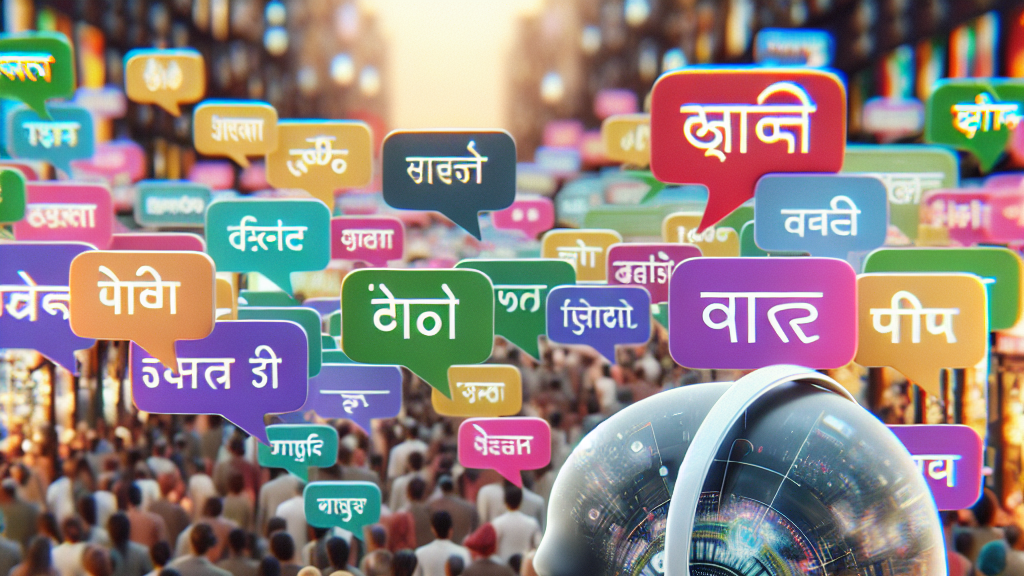
Have you ever dreamed of being able to understand every conversation around you, no matter what language people are speaking? This groundbreaking research brings that dream closer to reality with hearables that not only translate languages in real-time but also maintain the direction from which each speaker is talking. So, even in a busy café or a crowded conference, you’ll feel like you’re part of the conversation in your own language.
The technology behind this innovation is mind-blowing! It uses a combination of auditory magic tricks, like blind source separation and localization, to untangle the voices in a noisy room. It then translates them into your language and keeps the unique sound of each voice, making it feel like everyone is speaking directly to you. Even better, the Apple M2 silicon powers this magic, allowing the translations to happen almost instantly.
Imagine walking through an international airport, and instead of feeling lost in translation, you understand announcements, conversations, and whispers around you as if they were all in your native language. This research paves the way for more inclusive and connected global communication, making language barriers a thing of the past. The future of communication just got a lot more accessible and exciting!
Did you know? The technology can translate speech in real-time in a room full of people talking in different languages!
FAQs
How does the spatial speech translation technology work?
This technology uses advanced methods to separate and translate multiple speakers’ voices in real-time. It maintains each speaker’s spatial direction and voice characteristics, making it feel like they’re speaking your language directly to you.
Why is maintaining the spatial direction of voices important in translation?
Keeping the direction of voices helps your brain process multiple conversations more naturally, making it easier to understand who is speaking to you and from where.
What kind of devices can use this new hearable technology?
Currently, this technology is being tested with prototype binaural headsets. These headsets are equipped with advanced processing units like Apple’s M2 silicon to ensure smooth and real-time translation.
In what situations can this translated speech technology be most useful?
Imagine being in any crowded, multilingual environment—like a market, conference, or international airport—and being able to instantly understand everyone around you. This technology makes it possible!
Background
The key to understanding this research is how it manipulates audio signals. First, it separates individual voices from a mixed audio source using techniques like blind source separation. Then, it localizes where each voice is coming from, translating the speech while preserving these unique audio cues. The result is an experience as if each speaker is talking directly to the listener in their own language.
History
In the past, translation technologies have focused on text or single-source audio. This study builds on recent advancements in real-time audio processing, combining them with smart localization techniques. It marks a significant shift from passive translation tools to immersive, interactive language experiences, integrating spatial awareness into the translation ecosystem for the first time.
Based on “Spatial Speech Translation: Translating Across Space With Binaural Hearables” by Tuochao Chen, Qirui Wang, Runlin He, Shyam Gollakota, available on arXiv (arxiv.org/abs/2504.18715), used under CC BY 4.0 (creativecommons.org/licenses/by/4.0/).
