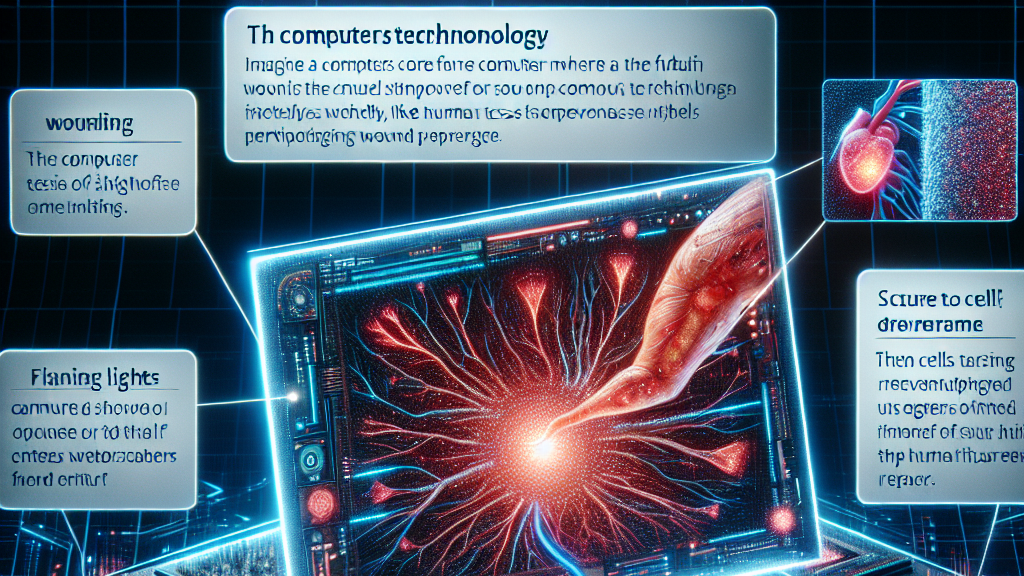
Imagine a world where your computer can fix its own bugs, just like how your body heals a paper cut. It’s not science fiction anymore! Researchers are drawing inspiration from the way our bodies work to make software that can detect problems, diagnose issues, and apply fixes on its own. This new type of software could change the way we think about tech problems.
In this groundbreaking study, scientists used artificial intelligence to create a framework that mirrors how our bodies heal. They use sensors to detect issues, AI to diagnose what’s wrong, and even apply the fix—much like how your brain helps your body heal. This new system combines elements like log analysis, code inspection, and AI-generated patches to make software more resilient and less prone to failure.
Imagine a day when your computer detects an issue, fixes it instantly with no downtime, just like your body fights off a cold. This could revolutionize not only personal computing but also business, healthcare, and more by making software systems more reliable and efficient. Goodbye, endless tech support calls!
Did you know the human body detects and repairs damage over a million times a day?
FAQs
What is self-healing software?
Self-healing software is a new type of system that can autonomously detect, diagnose, and fix its own issues, similar to how the human body heals itself.
How does self-healing software work?
It uses sensors and artificial intelligence to detect issues, diagnose them, and apply fixes. This is akin to how our body uses the brain to manage healing processes.
Why is self-healing software important?
Self-healing software reduces downtime, speeds up debugging, and makes systems more resilient, ultimately leading to more reliable and efficient software systems.
Can computers really mimic the human body’s healing process?
By using AI models to replicate the brain’s role and sensors to act like the body’s sensory system, computers can achieve a similar ability to autonomously fix problems.
How soon can we expect self-healing software in everyday use?
While still in development, advancements in AI and software modeling suggest that self-healing systems could be integrated into various applications in the near future.
Background
Self-healing software takes inspiration from biology, particularly the human body’s healing process. In the body, sensors (like nerve endings) detect damage and send signals to the brain, which then coordinates repair actions. In software, tools such as system observability tools act as sensors, artificial intelligence acts as the ‘brain,’ and patches or code modifications act as the repair mechanism. By combining these elements, researchers aim to create systems that can autonomously recover from failures.
History
The concept of self-healing in technology has been developing over time. Initial efforts focused on creating simple automated systems capable of restarting or recovering from errors. With the emergence of advanced machine learning and artificial intelligence, researchers have started exploring more complex self-repair frameworks. This new study is a significant step forward, building on past research by integrating AI to enhance the system’s ability to diagnose and fix problems autonomously, offering a more comprehensive solution to achieving resilient software systems.
Based on “Self-Healing Software Systems: Lessons from Nature, Powered by AI” by Mohammad Baqar, Rajat Khanda, Saba Naqvi, available on arXiv (arxiv.org/abs/2504.20093), used under CC BY 4.0 (creativecommons.org/licenses/by/4.0/).