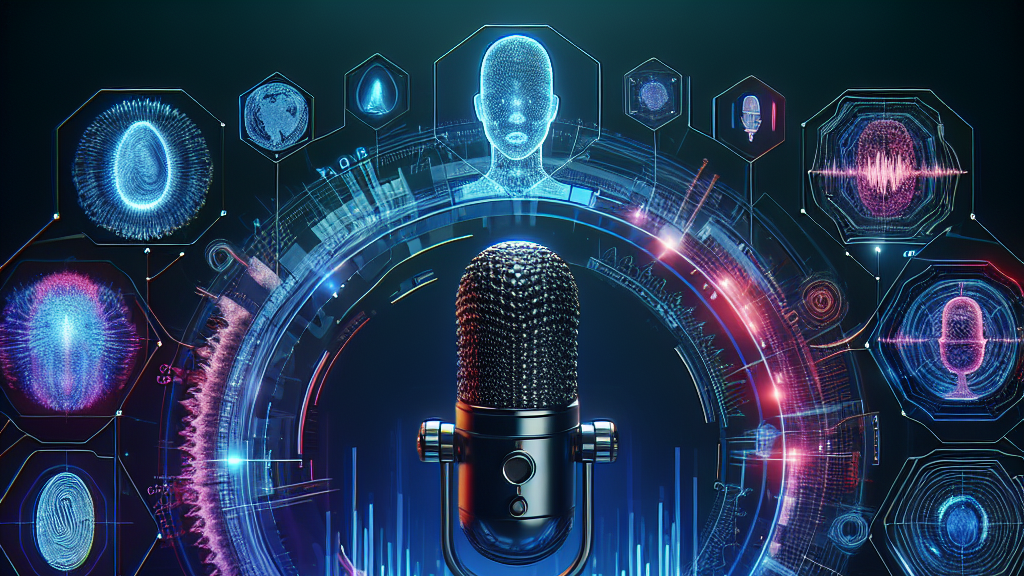
Imagine a world where you could speak any language fluently without ever learning it, or have your favorite celebrity narrate your audiobook in their own voice. Sounds like something out of a sci-fi movie, right? Well, welcome to the world of voice cloning! This groundbreaking technology is transforming how we interact with machines and bringing us closer to a future where digital assistants are as unique as our fingerprints.
At its core, voice cloning involves creating a digital model of someone’s voice so accurately that it can be used to produce speech that sounds just like them. This is achieved through techniques like speaker adaptation, where an original voice model is adjusted to mimic another voice based on minimal input. Then there’s the idea of few-shot or zero-shot synthesis, where just a few or no samples of the target voice are needed, respectively, to generate an authentic-sounding replica. With advances in text-to-speech systems, these technologies are becoming multilingual, meaning they can generate speech in different languages, making them incredibly versatile.
But you might be wondering, why should you care? Imagine using voice cloning to help those who have lost their ability to speak to communicate once again by using their real voice. Or consider how film and gaming industries could create more immersive experiences by easily and affordably adding personalized voices. However, with great power comes great responsibility. Ensuring ethical use and safeguarding against misuse will be crucial as we integrate this innovative technology into our lives.
Did you know? Voice cloning can now replicate a person’s voice with only a few seconds of audio!
FAQs
What is voice cloning, and how does it work?
Voice cloning is a technology that creates a digital model of a person’s voice. This model can then be used to produce speech that sounds just like the person’s actual voice using techniques like speaker adaptation, which adjusts an original voice model to mimic another voice.
How can voice cloning impact our daily lives?
Voice cloning can revolutionize communication by enabling seamless language translation, empowering those with speech impairments, and personalizing digital assistants. However, it’s essential to consider privacy and ethical implications to prevent misuse.
Why is it important to standardize terminology in voice cloning research?
Standardizing terminology in voice cloning research ensures clear communication among researchers and developers. It fosters collaboration and accelerates advancements while addressing potential challenges and ethical concerns.
What are the risks associated with voice cloning technology?
While offering exciting possibilities, voice cloning poses risks such as identity theft, misinformation, and privacy invasion if not managed properly. Ethical guidelines and detection systems are crucial to mitigate these risks.
How is voice cloning improving language translation?
Voice cloning enhances language translation by allowing digital systems to replicate a person’s voice in multiple languages, providing a more authentic and personalized experience in global communication.
Background
Voice cloning involves advanced algorithms that use data from a person’s recorded voice to create a digital replica. This process often starts with speaker adaptation, where a base model is adjusted based on the audio samples to reflect the unique qualities of the target voice. Techniques like few-shot and zero-shot learning allow these systems to clone voices with minimal data, making them highly efficient and accessible for various applications.
History
Voice synthesis has its roots in text-to-speech systems developed decades ago, which were initially used in assistive technologies. As AI and machine learning advanced, these systems evolved to become more natural-sounding and capable of replication. Recent breakthroughs in neural networks have given rise to voice cloning, offering unprecedented accuracy in mimicking specific voices. This study builds on existing TTS systems and contributes to the ongoing discussion of ethical boundaries and innovation in this area.
Based on “Voice Cloning: Comprehensive Survey” by Hussam Azzuni, Abdulmotaleb El Saddik, available on arXiv (arxiv.org/abs/2505.00579), used under CC BY 4.0 (creativecommons.org/licenses/by/4.0/).