





































































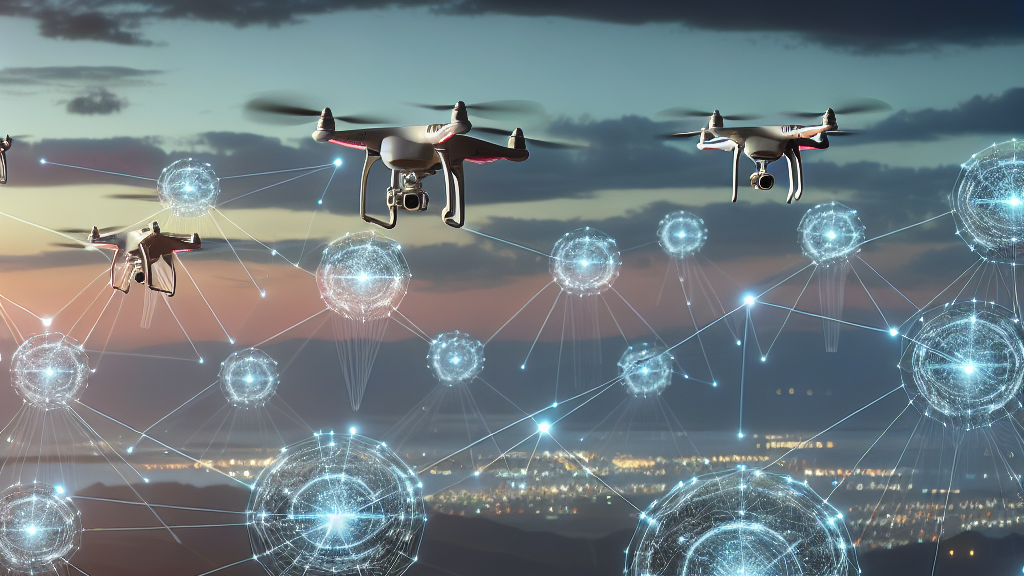
Imagine a fleet of drones working in perfect harmony to carry out tasks like search and rescue or disaster monitoring. These drones work autonomously, making split-second decisions to help each other achieve one common goal. But what if someone tries to sabotage them by feeding them false information?
Researchers have discovered how to protect these drone networks from data attacks using a method called explainable AI. This technology helps us see and understand how drones make decisions and what goes wrong when bad data is introduced. By simulating attacks, researchers were able to pinpoint the weaknesses and adapt strategies to fend off sabotage attempts effectively.
In the future, this advancement could mean safer emergency response services and better disaster management using drones. Imagine a natural disaster where drones are not only quick to respond but are also equipped to resist any cyber threats. This ensures that they can still deliver medicines or locate survivors efficiently, making a real-world difference when every second counts.
Did you know? Just a 10% poison attack on a drone network can lead to inefficient cooperation among drones!
FAQs
What is a data poisoning attack on a drone network?
A data poisoning attack involves feeding false information into a drone network, causing it to make incorrect decisions, leading to inefficient or adversarial behavior among drones.
How does explainable AI help in combating drone data attacks?
Explainable AI allows researchers to visualize and understand how drones make decisions, helping identify flaws in their strategies when faced with data attacks and enabling the creation of robust defense mechanisms.
Why is it crucial to protect drone networks from sabotage?
Drone networks often operate in critical environments, such as during disaster relief or surveillance. Protecting them from sabotage ensures they perform their tasks effectively, making timely and lifesaving contributions in high-stress situations.
How can this research impact everyday life?
This research can lead to more reliable drone deployments in emergency scenarios, improving public safety and ensuring efficient disaster management despite technological threats.
What happens when a drone network is poisoned above 10%?
When data poisoning exceeds 10%, drones may adopt non-optimal strategies, which could severely reduce their ability to collaborate and achieve their objectives efficiently.
Background
Swarming systems involve multiple autonomous agents, like drones, working together to complete tasks. These systems rely on decentralized decision-making, enabling them to adapt and respond swiftly to changing conditions. However, they are susceptible to data poisoning attacks, where incorrect data disrupts the coordination. Explainable AI helps in understanding and countering these disruptions by providing insights into how decisions are made within the network.
History
Swarming technology has evolved significantly with advancements in autonomous systems. Initially inspired by nature, like the flocking behavior of birds or schooling of fish, swarm intelligence has progressed with the integration of AI. Earlier studies focused on coordination and efficacy, leading to increasing attention on security vulnerabilities such as data attacks. This research advances by combining explainable AI to mitigate these threats, building on the premise of safe, intelligent collaboration.
Based on “Explainable AI Based Diagnosis of Poisoning Attacks in Evolutionary Swarms” by Mehrdad Asadi, Roxana Rădulescu, Ann Nowé, available on arXiv (arxiv.org/abs/2505.01181), used under CC BY 4.0 (creativecommons.org/licenses/by/4.0/).
