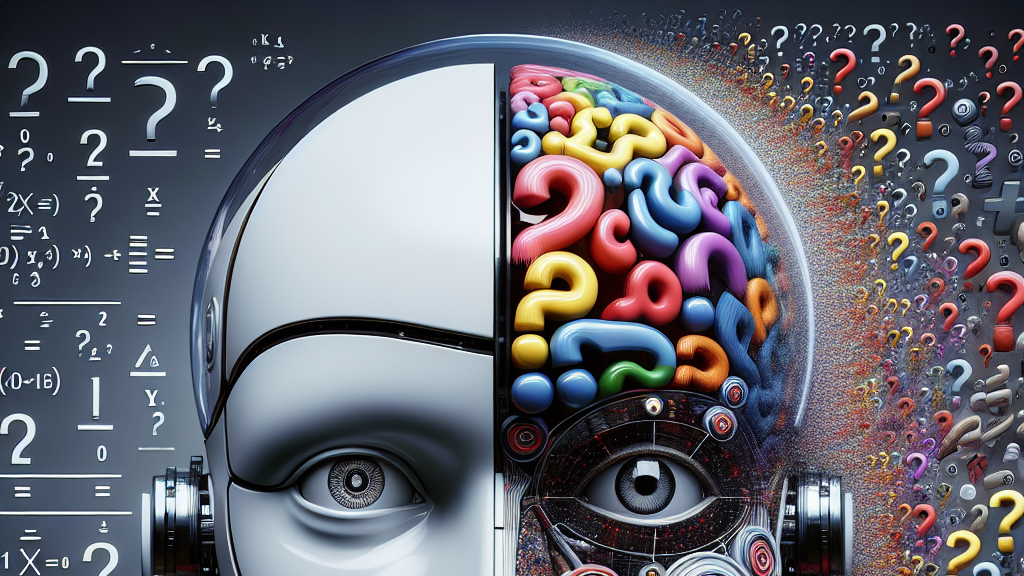
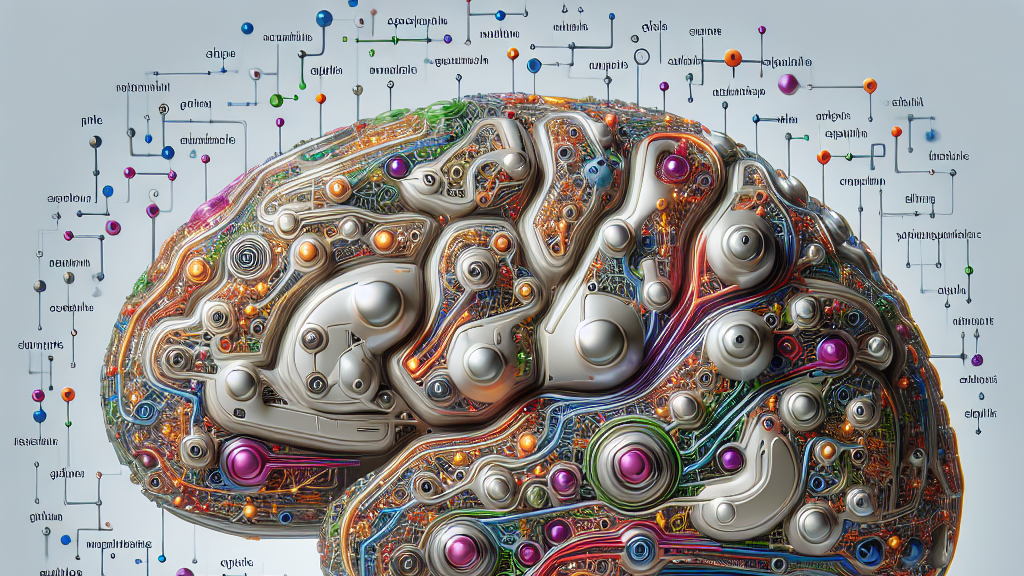
Did you ever wonder how those smart AI assistants seem to understand you almost magically? Well, researchers are diving deep into the minds of these AI models to figure out not just how they predict what we need but also why they sometimes make strange mistakes. It’s like going beyond the curtain to see how the magic trick is done!
This research decodes the link between how AI models, like those used in language processing, compress and predict data. By using fascinating concepts from information theory, like Kolmogorov complexity, scientists explain how AI models absorb data patterns—from common language structures to rare facts, showing us how they grow smarter (or not) as they handle more data.
Imagine an AI that could learn as a child does, refining its understanding of the world with every new piece of data it encounters. Such a breakthrough could transform how we interact with technology, making our gadgets not just smart but wise, adapting even more accurately to our needs and improving our lives in countless ways.
AI models can sometimes ‘hallucinate,’ meaning they confidently provide incorrect information as if it were fact.
FAQs
How do AI language models make predictions?
AI language models learn to predict words and phrases by recognizing patterns in large datasets. This study explores how models compress information to make these predictions more efficient and accurate.
Why do AI models sometimes provide wrong information?
Models sometimes provide incorrect information due to ‘hallucinations,’ which occur when their pattern recognition guesses lead to confident but incorrect statements. Understanding this can help improve their reliability.
What role do compression and prediction play in AI learning?
Compression helps models store data efficiently, while prediction involves using compressed data to anticipate future input. This research shows how these processes influence model behavior and learning as they scale up.
Can AI evolve to become more human-like in understanding?
Yes, by refining how models handle data and predictions, AI could develop more human-like understanding, improving their responses and interactions with us.
What’s the significance of scaling laws in AI research?
Scaling laws help understand how AI performance changes as models grow larger or process more data, offering insights into improving their design and training.
Background
Large Language Models (LLMs) are a type of artificial intelligence that uses deep learning to understand and generate human-like text by recognizing patterns in massive datasets. Kolmogorov complexity and Shannon information theory are mathematical concepts that help explain how these models compress and process information efficiently. Understanding these principles can shine a light on how LLMs learn from data and make predictions.
History
Early studies on AI focused on basic pattern recognition, but as models and datasets grew, researchers discovered that LLMs could perform remarkably complex tasks. This study builds on foundational concepts from information theory and applies them to modern AI models, offering new insights into their scaling and predictive behaviors. By connecting classical theories with today’s LLM capabilities, this research provides a fresh perspective on their inner workings.
Based on “Understanding LLM Behaviors via Compression: Data Generation, Knowledge Acquisition and Scaling Laws” by Zhixuan Pan, Shaowen Wang, Jian Li, available on arXiv (arxiv.org/abs/2504.09597), used under CC BY 4.0 (creativecommons.org/licenses/by/4.0/).