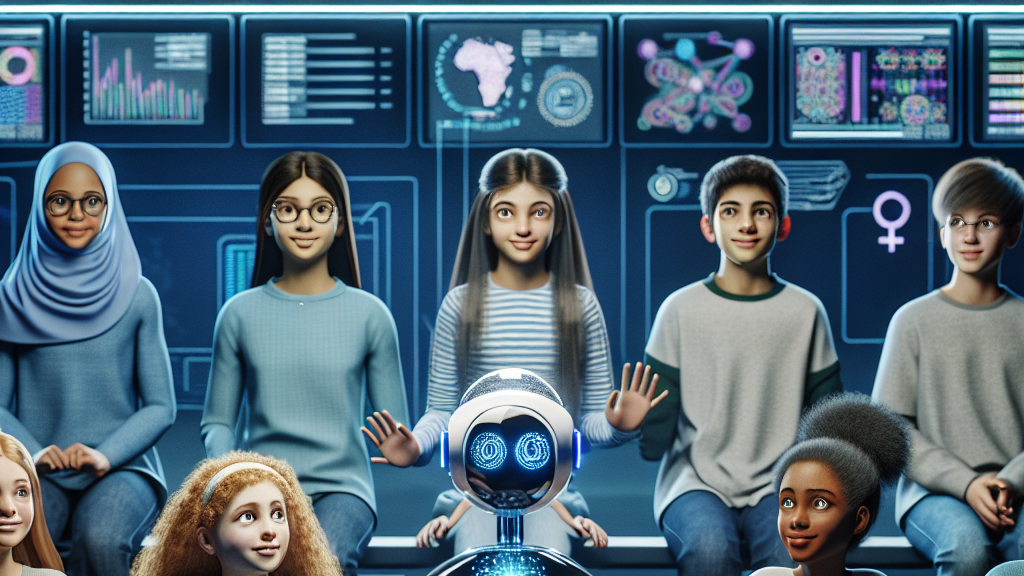
Imagine being a student who can’t hear a math lesson. That’s the reality for many deaf students, and traditional education methods can leave them behind. But what if advanced technology could bridge this gap, making learning math as accessible to deaf students as it is to everyone else? That’s exactly what this exciting new study aims to achieve with a unique artificial intelligence tool.
Researchers have developed a system that uses artificial intelligence to recognize sign language gestures, specifically targeting Palestinian sign language used in mathematics. By creating a new dataset of mathematical signs and training an AI model known as a Vision Transformer, this project aims to boost math accessibility. The AI achieved an impressive 97.59% accuracy in recognizing these gestures, highlighting its potential to become a reliable educational tool.
Envision how this could change learning environments: Teachers could use this AI to create interactive, engaging lessons that ensure no student is left behind, regardless of their hearing ability. This AI-driven approach could also inspire new digital tools worldwide, setting a precedent for inclusive education systems that embrace all students’ needs and capabilities.
Did you know? There’s an AI tool that can understand sign language with over 97% accuracy!
FAQs
How does the AI recognize sign language for math?
The AI uses a Vision Transformer model that has been fine-tuned to recognize 41 different mathematical gestures in Palestinian Sign Language, achieving over 97% accuracy.
What makes this AI tool important for deaf students?
This tool provides real-time recognition of math gestures in sign language, enabling deaf students to learn math more efficiently and bridging the educational gap in such environments.
Can this technology be used for other sign languages or subjects?
Yes, with the right datasets and training, this technology could potentially be adapted to recognize different sign languages and expanded to cover various subjects. The possibilities for educational inclusivity are vast!
Background
The growing intersection of artificial intelligence and education has led to the development of tools that can recognize sign language gestures. This process, known as gesture classification, uses advanced computer vision techniques to interpret visual data, allowing AI to ‘see’ and understand sign language. The application of such AI in education, particularly for hard-of-hearing students, makes learning more inclusive by providing real-time assistance and interpretation.
History
Sign language recognition has been a research interest for decades, with significant advancements made with the advent of machine learning and computer vision technologies. Early systems relied on glove-based sensors, but contemporary approaches use deep learning to recognize gestures from camera inputs. This study builds on existing work by focusing specifically on Palestinian Sign Language for mathematics, an area previously lacking digital resources.
Based on “Enhancing Mathematics Learning for Hard-of-Hearing Students Through Real-Time Palestinian Sign Language Recognition: A New Dataset” by Fidaa khandaqji, Huthaifa I. Ashqar, Abdelrahem Atawnih, available on arXiv (arxiv.org/abs/2505.17055), used under CC BY 4.0 (creativecommons.org/licenses/by/4.0/).