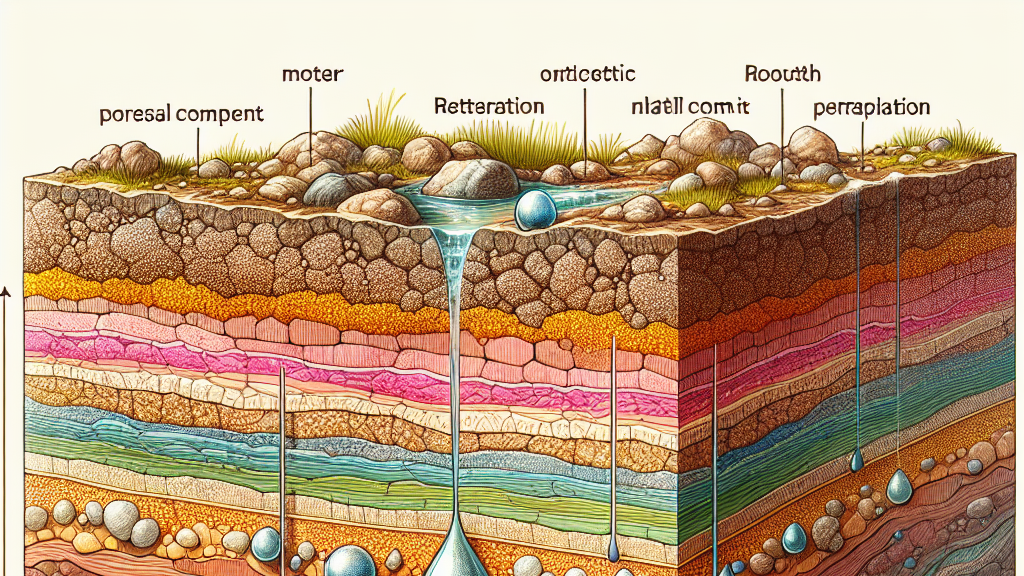
Ever wondered how squishy gels can maneuver through a maze of narrow passages without getting stuck? Imagine a dense forest with pathways barely wide enough for you to pass through. Hydrogel particles face a similar challenge when they move through disordered porous media. This research reveals how these particles manage to navigate such complex environments, which could impact everything from advanced healthcare solutions to cleaning contaminated water.
Researchers used event-driven modeling to simulate how hydrogel particles travel through this tangled web of pathways. By studying their every move, they discovered a fascinating “squeezing parameter”. This number can actually predict how far a particle can get through a medium, depending on its conditions. In an unexpected twist, the study found that when you add more particles, they work together to push each other further into the medium, creating a cooperative effect.
Imagine if a group of people trying to squeeze through a tight alleyway could somehow navigate better by having more people join them. That’s essentially what happens with these particles. This could lead to breakthroughs in how we deliver medicine more effectively or improve filtration systems. In a world constantly looking for new ways to solve problems, understanding how tiny particles interact with their environment could provide massive benefits.
Hydrogel particles can actually work together to sneak through spaces they would otherwise get stuck in alone!
FAQs
What is the significance of hydrogel particle transport in porous media?
Hydrogel particle transport through porous media is crucial for applications like targeted drug delivery, where particles must navigate complex environments to reach their destination.
How does the squeezing parameter help in predicting particle behavior?
The squeezing parameter provides a quantitative measure that predicts how deeply particles can penetrate into a porous medium under various conditions, enhancing control over particle transport.
What surprising cooperative effect did the study reveal?
The study uncovered that adding more particles enables deeper penetration because they redirect fluid flow, helping nearby particles squeeze through tighter spaces.
Why is this research on hydrogel particles important for real-world applications?
This research could improve technologies related to medical therapies, environmental cleanup, and filtration by providing insights into particle behavior in natural and engineered settings.
What practical applications could benefit from these findings?
Applications such as drug delivery systems, water purification, and chemical filters could see improved efficiency and performance by leveraging the cooperative transport of hydrogel particles.
Background
In porous media, particles like hydrogels must navigate tight, maze-like spaces. These hydrogels are soft and can deform, which helps but can also lead to clogging. By using simulations, scientists can project how these particles move, bend, and sometimes accidentally block pathways. The squeezing parameter is a newly discovered measure that predicts how likely these particles are to move deeper into the media, based on their size, flexibility, and the medium’s properties.
History
The study of particle transport through porous media has evolved significantly over the years. Initially focused on fluid dynamics, recent research has incorporated advanced modeling to understand complex particle behaviors, such as clogging and collective movement, in more detail. This work builds on past studies by introducing a quantitative framework that connects small-scale particle mechanics with large-scale transport phenomena. Earlier studies primarily observed the individual behavior of particles, whereas this research highlights cooperative effects that could lead to innovative applications.
Based on “Getting out of a tight spot: Cooperative unclogging of hydrogel particles in disordered porous media” by Sanjana Kamath, Laurent Talon, Meera Ramaswamy, Christopher A. Browne, Sujit S. Datta, available on arXiv (arxiv.org/abs/2505.18415), used under CC BY 4.0 (creativecommons.org/licenses/by/4.0/).