Connect with us

Search by keyword

Computers

Can Your Voice Stay Truly Unique?

Imagine if someone could perfectly mimic your voice with just a short audio clip. That’s the challenge with voice cloning, and why VoiceMark’s new method for protecting audio is a game-changer. It keeps your voice unique, even when synthesized without your knowledge.

Can Your Voice Stay Truly Unique
✨Researched by humans. Explained by robots. Learn more.

What if someone could take just a short clip of your voice and use it to clone your speaking style perfectly? This is a growing concern with voice cloning technology becoming more advanced and more accessible. But don’t worry, a new breakthrough called VoiceMark might just be the super shield our voices need.

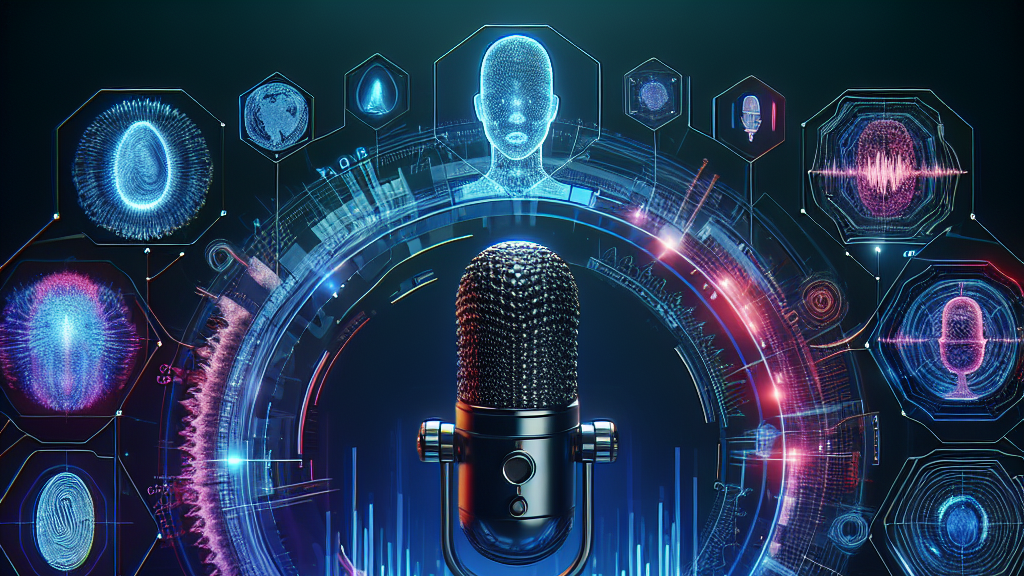
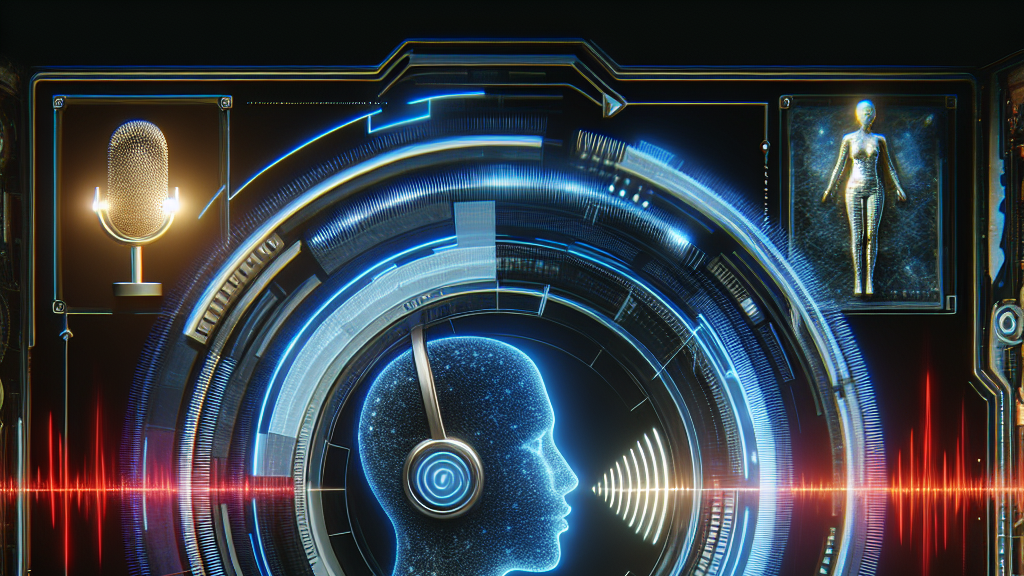
VoiceMark is like a secret signature for your voice. Imagine you could tag your voice with an invisible stamp that stays with it, even if someone tries to create a new version of it using just one audio sample. This technology cleverly uses speaker-specific traits as a watermark, which means that even in zero-shot scenarios (where no learning happens before copying), the cloned audio can still be traced back to its original owner.

Let’s say you’re a famous podcaster and want to ensure your voice can’t be misused. With VoiceMark, even if someone tries to mimic your voice using just a single recording, the stamp that uniquely identifies your voice would remain, helping to prevent unauthorized cloning. This makes VoiceMark a superhero tool in the fight to keep your voice yours alone.

Did you know? With traditional methods, unauthorized voice clones could only be traced about 50% of the time, but with VoiceMark, that accuracy jumps to over 95%.

FAQs

What makes VoiceMark different from other voice protection methods?

VoiceMark is unique because it can trace your voice even in zero-shot scenarios, where no training data is used to create a clone. It leverages specialized speaker traits to create a watermark that remains detectable in cloned audios.

Why is zero-shot voice cloning a concern for privacy?

Zero-shot voice cloning can mimic someone’s voice with just a short snippet, bypassing the need for extensive training. This makes it easier for attackers to impersonate someone else, risking privacy and security.

How does VoiceMark maintain high accuracy in detecting cloned voices?

By using speaker-specific latents as watermark carriers and enhancing robustness with VC-simulated augmentations and specific loss techniques, VoiceMark achieves over 95% accuracy in identifying cloned voices, even after the synthesis process.

Background

Voice cloning is a technique where a system learns to mimic a person’s voice. Traditional methods typically required extensive training on a vast amount of data, but zero-shot voice cloning allows for mimicking with just a small audio sample. Watermarking is about embedding unique identifiers into audio to trace its origin, even through transformations.

History

Voice cloning has evolved rapidly with the advent of machine learning. Initially requiring extensive data for training, recent advancements allow synthesis with minimal input, raising privacy concerns. Previous methods of audio watermarking were less effective in zero-shot scenarios, which VoiceMark aims to address.

Based on “VoiceMark: Zero-Shot Voice Cloning-Resistant Watermarking Approach Leveraging Speaker-Specific Latents” by Haiyun Li, Zhiyong Wu, Xiaofeng Xie, Jingran Xie, Yaoxun Xu, Hanyang Peng, available on arXiv (arxiv.org/abs/2505.21568), used under CC BY 4.0 (creativecommons.org/licenses/by/4.0/).


Trending

Latest

Can AI Save Water Discover How

Computers

AI is transforming the tech world, but it uses lots of water! A new tool, SCARF, helps us measure and reduce AI's water footprint,...

Whats a Forbush Decrease and Why Should We Care Whats a Forbush Decrease and Why Should We Care

Space

Scientists just observed the biggest solar storm event in years, revealing unexpected cosmic ray patterns. Understanding these changes could help us protect our technology...

Can Cars Spot Danger Faster Than Humans Can Cars Spot Danger Faster Than Humans

Computers

Think about how quickly you react when something unexpected happens on the road. This research brings us closer to creating self-driving cars that can...

Can Fear of the Other Stop Social Harmony Can Fear of the Other Stop Social Harmony

Physics

Fear of the unknown might make it harder for people to agree and get along. This study shows that when people have strong xenophobic...

Can AI Revolutionize Breast Cancer Diagnosis Can AI Revolutionize Breast Cancer Diagnosis

Electricity

This research introduces a groundbreaking AI model that can accurately assess HER2-positive breast cancer using widely accessible staining methods, potentially revolutionizing how we diagnose...

Can AI Transform Your Singing into a Choir Can AI Transform Your Singing into a Choir

Computers

Imagine singing solo and having AI turn you into a choir. This research unveils a groundbreaking AI tool that transforms your voice into rich...

You May Also Like

Computers

Imagine keeping your digital secrets safe as they zoom across the web thanks to a clever tech trick. By breaking data into pieces and...

Computers

New research reveals that the internal 'thinking process' of AI personal assistants could be leaking your sensitive information. This could affect how we trust...

Computers

This research uncovers vulnerabilities in AI that could expose private and sensitive data while fine-tuning these models for specific fields like healthcare. By understanding...

Computers

A groundbreaking study reveals that many bots, especially AI-driven ones, often disregard online privacy rules set by websites, suggesting a need for better protective...

Computers

Imagine a world where your loved ones can live independently at home, yet stay safe from potential accidents without giving up their privacy. Researchers...

Computers

This research explores new ways to understand and potentially trick large language models more safely and efficiently, which could help us improve AI systems...

Computers

Ever wished your computer could 'unlearn' personal data as easily as you could forget a bad haircut? This research challenges how effective machine unlearning...

Computers

Discover how new AI tech keeps your emails safe by smartly retrieving info only when needed, leaving your private data untouched. It's a game-changer...

Computers

Voice cloning is changing how we interact with technology by making it possible to replicate someone's voice with stunning accuracy, paving the way for...

Copyright © 2024 8ig8rain.

Disclaimer: The content on 8ig8rain.com consists of AI-generated summaries of scientific abstracts from arXiv. Please note that most arXiv abstracts are preprints and may not have undergone formal peer review. While these summaries aim to convey key ideas and potential applications, they are provided for informational purposes only and should not be interpreted as validated scientific findings or professional advice. The summaries are intended to educate, spark curiosity, and inspire further exploration of science.