





































































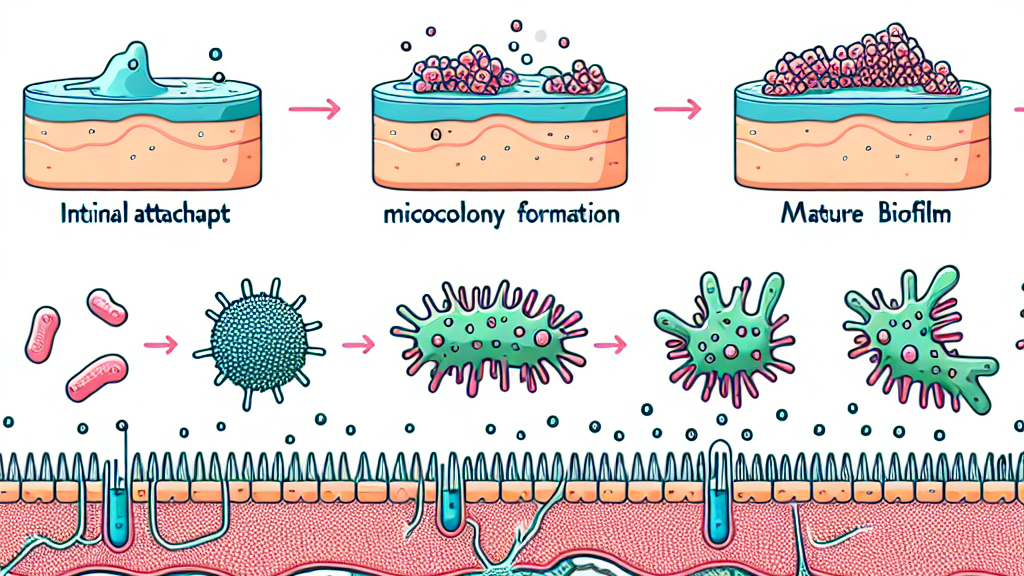
Biofilms are those sneaky layers of microorganisms that can grow on just about any surface, from your teeth to underwater pipes. They’re not just static; they expand and move, which can sometimes cause problems like clogged pipes or persistent infections. But what if we could really understand this growth? Scientists have cracked part of the code, and it could change how we deal with biofilms for good.
The latest research dives deep into understanding biofilm expansion through a special moving boundary model. Imagine it as a way to track how biofilms change over time, influenced by essential nutrients called substrates. By breaking down these interactions into understandable equations, researchers have managed to predict not just the existence of biofilms, but also their stability and growth patterns. This prediction helps us see how biofilms will behave, making sure there are no surprises when they suddenly appear in unwanted places.
Think about it—if we could predict biofilm growth, we could revolutionize how we fight infections or even enhance industrial processes. Imagine faster water treatment plants or more effective hospital sterilization techniques. This research is the first step toward a future where biofilms no longer surprise us but instead work in our favor!
Did you know that biofilms can be found on rocks in rivers, helping shape entire ecosystems?
FAQs
What is the significance of understanding biofilm growth?
Understanding biofilm growth can help us predict and manage their formation on surfaces, potentially preventing industrial blockages and improving infection control.
How does a moving boundary model help in studying biofilms?
A moving boundary model tracks how biofilms expand over time, providing insights into their behavior and stability, which are crucial for predicting their growth in different environments.
Can this research on biofilm growth lead to practical solutions?
Yes, the insights gained can lead to innovations in healthcare and industry, such as improved methods for preventing biofilm-related infections or enhancing industrial cleaning processes.
Background
In essence, a moving boundary model is a mathematical framework that considers changes over time. When applied to biofilms, it looks at how these living layers expand as they consume substrates, which are like their food source. The goal is to understand how fast they grow and what conditions make them stable or unstable.
History
The study of biofilms has been ongoing, with early research focusing on identifying them and understanding their basic structure. Over time, scientists have developed more sophisticated models to analyze biofilm behavior. This study builds on previous work by providing a more detailed mathematical model that addresses not only the existence of biofilms but also their growth dynamics.
Based on “Analysis of a one-dimensional biofilm model” by Patrick Guidotti, Christoph Walker, available on arXiv (arxiv.org/abs/2505.23545), used under CC BY 4.0 (creativecommons.org/licenses/by/4.0/).
