Connect with us

Search by keyword

Computers

Can AI Help You Feel Understood?

This research dives into how AI, like large language models, can create a true sense of intimacy in conversations by cleverly using self-disclosure and natural responses. Imagine feeling truly understood by a machine—this study explores how it’s possible and why it matters for our future digital interactions.

Can AI Help You Feel Understood
✨Researched by humans. Explained by robots. Learn more.

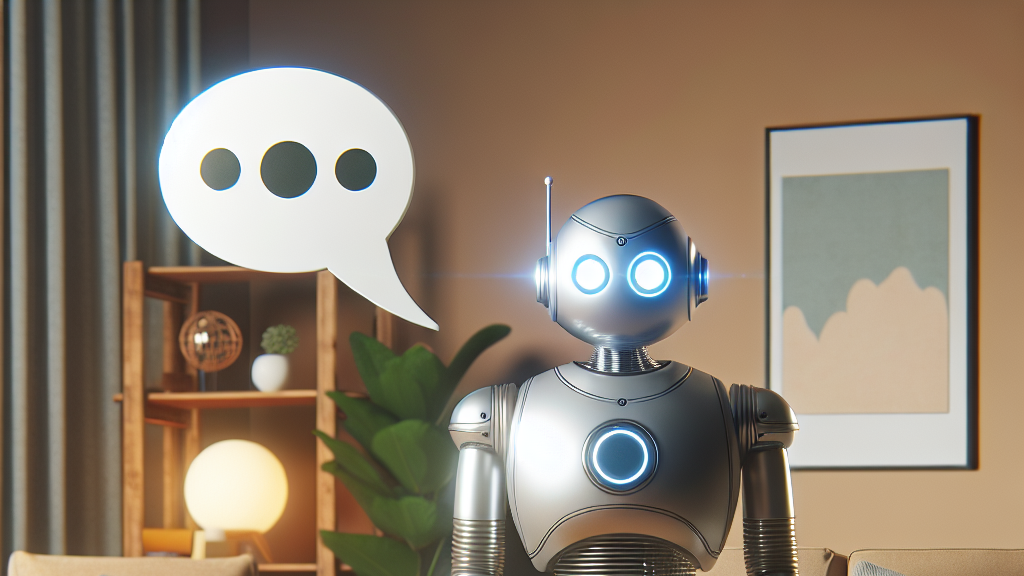
Imagine having a conversation with a chatbot that not only understands your words but your emotions too. That’s the groundbreaking possibility being explored in recent research on how AI can foster genuine feelings of closeness and understanding in digital interactions. This isn’t just a techie fantasy—it’s becoming a reality!

The study explores how humans bond with AI through self-disclosure, which is when we share personal details about ourselves. They found that when people gradually and mutually open up to AI, it greatly enhances the feeling of intimacy. With 29 users, they tested this using basic large language models, and then refined the process with 53 users by incorporating ‘self-criticism,’ a method to make AI responses feel more natural. Interestingly, the AI’s ability to calibrate its responses—avoiding excessive empathy—also played a crucial role in forming these bonds.

Now, why does this matter to you? Picture a future where your digital assistant isn’t just a tool but a companion that understands and comforts you. The potential applications are vast, from mental health support to improved customer service experiences. Imagine an AI that can not only order your favorite pizza but chat with you about your day, offering insights and understanding like a close friend would. That’s the future this research is aiming to build!

Did you know that AI can be trained to form emotional bonds through conversation, just like humans do when they gradually open up to each other?

FAQs

How does AI create a sense of intimacy with users?

AI can foster intimacy by gradually engaging in self-disclosure, sharing personal information in a natural and reciprocal way, which enhances the perception of being understood and creates a bond with the user.

What role does ‘self-criticism’ play in AI conversations?

‘Self-criticism’ helps AI generate more natural and relatable responses by evaluating and improving its own outputs, which users perceive as more genuine, thus fostering deeper intimacy.

Why is response calibration important in AI interactions?

Response calibration ensures that AI doesn’t overdo empathy, maintaining the user’s sense of immersion and comfort, which is critical in building a true sense of intimacy during interactions.

Can AI really understand human emotions?

While AI doesn’t ‘feel’ emotions, it can be designed to recognize and respond to emotional cues from users, creating interactions that mimic real emotional understanding.

How could this research change my everyday interactions with technology?

This research could transform digital assistants from mere tools into companions that provide emotional support and understanding, enhancing everyday user experiences.

Background

Large language models (LLMs) are advanced AI systems that understand and generate human-like text. They enable chatbots to engage in conversations that are increasingly lifelike. Key to this study is ‘self-disclosure,’ a process where people share personal information over time to form connections. Understanding how this works in human-AI interactions could redefine how we perceive digital companionship.

History

Human-chatbot interactions have evolved from simple Q&A systems to more complex chatbots that can mimic human conversation. Previous research emphasized the role of self-disclosure for building rapport with chatbots, but this study takes it further by experimenting with methods like self-criticism to enhance response naturalness and intimacy.

Based on “Can LLMs and humans be friends? Uncovering factors affecting human-AI intimacy formation” by Yeseon Hong, Junhyuk Choi, Minju Kim, Bugeun Kim, available on arXiv (arxiv.org/abs/2505.24658), used under CC BY 4.0 (creativecommons.org/licenses/by/4.0/).

Trending

Latest

Can AI Save Water Discover How

Computers

AI is transforming the tech world, but it uses lots of water! A new tool, SCARF, helps us measure and reduce AI's water footprint,...

Whats a Forbush Decrease and Why Should We Care Whats a Forbush Decrease and Why Should We Care

Space

Scientists just observed the biggest solar storm event in years, revealing unexpected cosmic ray patterns. Understanding these changes could help us protect our technology...

Can Cars Spot Danger Faster Than Humans Can Cars Spot Danger Faster Than Humans

Computers

Think about how quickly you react when something unexpected happens on the road. This research brings us closer to creating self-driving cars that can...

Can Fear of the Other Stop Social Harmony Can Fear of the Other Stop Social Harmony

Physics

Fear of the unknown might make it harder for people to agree and get along. This study shows that when people have strong xenophobic...

Can AI Revolutionize Breast Cancer Diagnosis Can AI Revolutionize Breast Cancer Diagnosis

Electricity

This research introduces a groundbreaking AI model that can accurately assess HER2-positive breast cancer using widely accessible staining methods, potentially revolutionizing how we diagnose...

Can AI Transform Your Singing into a Choir Can AI Transform Your Singing into a Choir

Computers

Imagine singing solo and having AI turn you into a choir. This research unveils a groundbreaking AI tool that transforms your voice into rich...

You May Also Like

Computers

AI is transforming the tech world, but it uses lots of water! A new tool, SCARF, helps us measure and reduce AI's water footprint,...

Computers

Think about how quickly you react when something unexpected happens on the road. This research brings us closer to creating self-driving cars that can...

Electricity

This research introduces a groundbreaking AI model that can accurately assess HER2-positive breast cancer using widely accessible staining methods, potentially revolutionizing how we diagnose...

Computers

Imagine a machine capable of reading ancient books, deciphering complex pages with precision! This research is paving the way for AI to unlock the...

Economics

Discover how AI models can unknowingly favor certain races in mortgage decisions and how new methods could dramatically reduce these biases, fostering a fairer...

Computers

This research explores how AI models designed to understand both images and words might improve their performance simply by teaching themselves to think better....

Computers

Imagine if playing games could make a computer program better at understanding and creating text! This research suggests that by using creative tasks like...

Computers

Dive into the world of AI mistrust, where computers don't always know when they're wrong! Discover how teaching AI to see like us might...

Computers

What if talking to a robot could feel as comforting as a therapy session? This research uncovers the striking similarities between human therapists and...

Copyright © 2024 8ig8rain.

Disclaimer: The content on 8ig8rain.com consists of AI-generated summaries of scientific abstracts from arXiv. Please note that most arXiv abstracts are preprints and may not have undergone formal peer review. While these summaries aim to convey key ideas and potential applications, they are provided for informational purposes only and should not be interpreted as validated scientific findings or professional advice. The summaries are intended to educate, spark curiosity, and inspire further exploration of science.