Connect with us

Search by keyword

Physics

Can Simple 2D Systems Hold Complex Secrets?

Physicists have discovered a deceptively simple 2D system that reveals deep insights into how particles can interact in complex ways. This newfound understanding could revolutionize how we think about quantum systems and potentially lead to advancements in quantum computing.

Can Simple 2D Systems Hold Complex Secrets
✨Researched by humans. Explained by robots. Learn more.

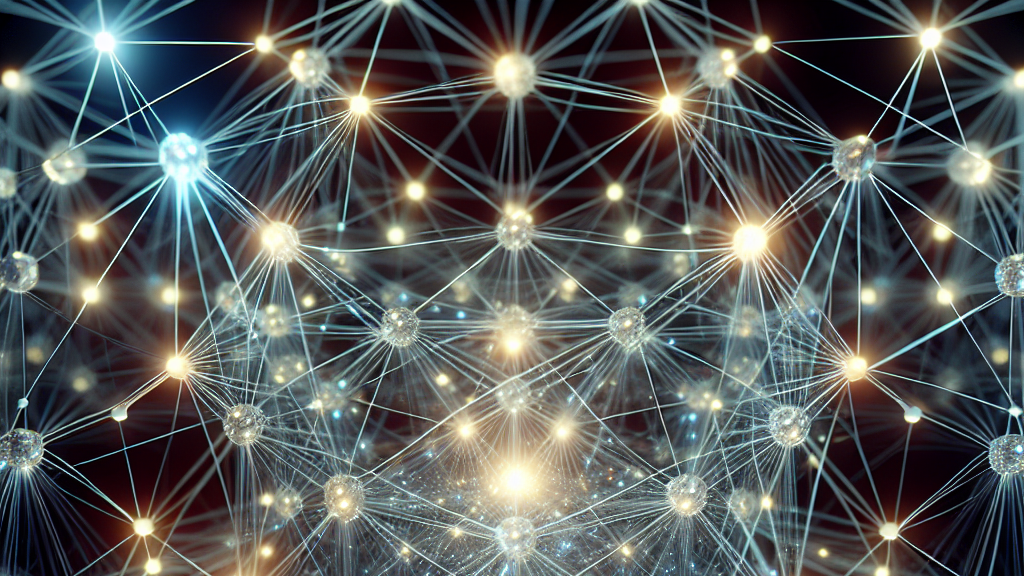
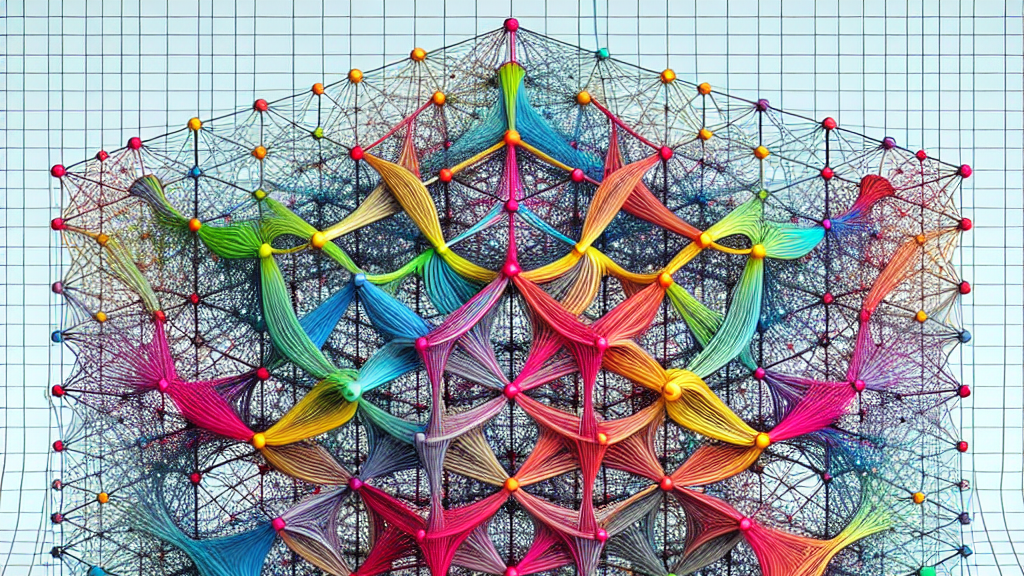
**Could the Next Big Thing in Quantum Physics Be Hidden in Simple Patterns?** Quantum systems are often associated with mind-bending complexity. However, scientists are now unveiling secrets about how particles interact using surprisingly simple 2D grids. Imagine a net woven from the thinnest threads; at first glance, it might seem straightforward, but it holds vast potential to reveal the mysteries of quantum entanglement, where particles become interconnected in ways that defy classic physics. This exploration has just taken a significant leap forward as researchers have found a 2D system that behaves in ways previously thought impossible unless you look closer at its sophisticated interactions. The magic here lies in the interactions between just two nearest neighbors on a lattice system. This simplicity might deceive, as these interactions support an intricate dance of entanglement whose characteristics—much like how tightly we knot the threads of a net—can change dramatically at a critical point. What makes this breakthrough really exciting is its potential applications. If we can control and harness such systems, we could enhance quantum technologies like computers or secure communications, making them faster, more efficient, and more advanced than ever before.

Did you know? A single piece of paper folded 42 times would reach the moon!

FAQs

What is the importance of 2D systems in physics?

2D systems are crucial as they allow scientists to study interactions between neighboring particles in a simplified manner, helping us understand complex quantum behaviors that could revolutionize technology.

How does this research on entanglement entropy benefit us?

Understanding entanglement entropy provides insights into quantum computing, potentially leading to more advanced and powerful computing solutions in the future.

What is an entanglement phase transition in this context?

An entanglement phase transition refers to a change in how particles are interconnected within a system, which can affect the properties and potential applications of the system.

Background

In quantum physics, the concept of entanglement entropy measures how intertwined particles become within a system. Typically, these interactions are studied in complex environments, known as Hamiltonians, which dictate how particles move and interact. The research at hand explores these interactions in a simpler 2D lattice, providing insights into the collective behaviors of particles and how they transition between phases of entanglement.

History

Historically, entanglement has been studied within one-dimensional systems, focusing on linear chains of particles. This research builds on the notion of understanding these complex interactions in two dimensions, revealing more about how simple systems can sustain intricate quantum behaviors and transition between different states of entanglement.

Based on “2D Entanglement from a Single Motzkin Spaghetto” by Zhao Zhang, available on arXiv (arxiv.org/abs/2506.02103), used under CC BY 4.0 (creativecommons.org/licenses/by/4.0/).

Trending

Latest

Can AI Save Water Discover How

Computers

AI is transforming the tech world, but it uses lots of water! A new tool, SCARF, helps us measure and reduce AI's water footprint,...

Whats a Forbush Decrease and Why Should We Care Whats a Forbush Decrease and Why Should We Care

Space

Scientists just observed the biggest solar storm event in years, revealing unexpected cosmic ray patterns. Understanding these changes could help us protect our technology...

Can Cars Spot Danger Faster Than Humans Can Cars Spot Danger Faster Than Humans

Computers

Think about how quickly you react when something unexpected happens on the road. This research brings us closer to creating self-driving cars that can...

Can Fear of the Other Stop Social Harmony Can Fear of the Other Stop Social Harmony

Physics

Fear of the unknown might make it harder for people to agree and get along. This study shows that when people have strong xenophobic...

Can AI Revolutionize Breast Cancer Diagnosis Can AI Revolutionize Breast Cancer Diagnosis

Electricity

This research introduces a groundbreaking AI model that can accurately assess HER2-positive breast cancer using widely accessible staining methods, potentially revolutionizing how we diagnose...

Can AI Transform Your Singing into a Choir Can AI Transform Your Singing into a Choir

Computers

Imagine singing solo and having AI turn you into a choir. This research unveils a groundbreaking AI tool that transforms your voice into rich...

You May Also Like

Physics

Understanding how carbon dioxide behaves when stored deep underground could be the key to combating climate change. With a new model, scientists can predict...

Physics

Scientists are exploring the mind-bending idea of using strings in extra dimensions to understand particles with weird properties. This groundbreaking research could unlock new...

Nuclear Theory

Scientists are diving deep into the mysterious heart of neutron stars, where phase transitions might reveal a cosmic shift. This could help us understand...

Math

Scientists have found a way to 'see' atoms by using light and unique detectors, helping us understand the invisible world around us better.

Physics

This research unveils a 2D grid system that transforms how we understand entanglement in quantum physics. With more entangled states than ever before, it...

Physics

Discover a hidden phase of cosmic matter that bridges the gap between a dense hadron gas and a free-flowing plasma of quarks. It could...

General Relativity and Quantum Cosmology

Ever wondered what happens to information once it falls into a black hole? This thrilling research delves into the discrepancies of quantum theories and...

Physics

Scientists are diving into the world of particles, using quantum entanglement to possibly unlock secrets of the universe! Imagine if understanding tiny particles can...

General Relativity and Quantum Cosmology

Imagine our universe was born from a wormhole and intertwined with another universe. This research suggests it might just be true, potentially changing our...

Copyright © 2024 8ig8rain.

Disclaimer: The content on 8ig8rain.com consists of AI-generated summaries of scientific abstracts from arXiv. Please note that most arXiv abstracts are preprints and may not have undergone formal peer review. While these summaries aim to convey key ideas and potential applications, they are provided for informational purposes only and should not be interpreted as validated scientific findings or professional advice. The summaries are intended to educate, spark curiosity, and inspire further exploration of science.