Connect with us

Search by keyword

Computers

Can AI Make Cybersecurity Effortless?

This research shows how a new AI approach can make detecting hacker attacks more reliable and adaptable, potentially transforming how we keep our digital world safe.

Can AI Make Cybersecurity Effortless
✨Researched by humans. Explained by robots. Learn more.

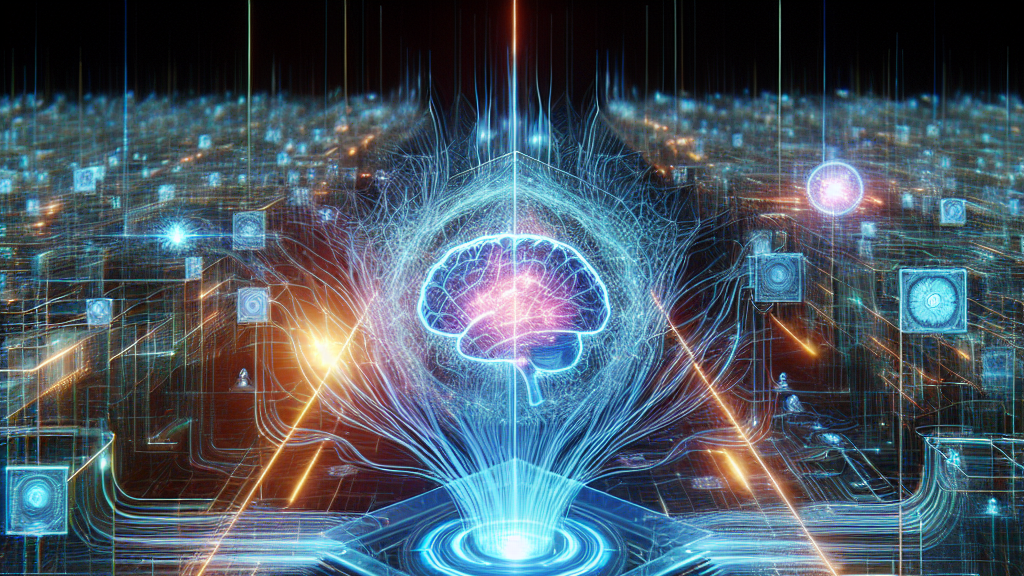
Imagine a world where computer systems can almost outsmart hackers at their own game. That’s the groundbreaking potential behind new AI research aiming to revolutionize how we secure our digital spaces. By blending cutting-edge AI techniques with deep learning and symbolic reasoning, this study proposes a smarter, more reliable way to detect network intrusions and fend off cyber-attacks.

This research enhances an existing AI system by adding extra features that make it more intelligent and adaptable. It uses a process similar to human learning, where a system learns from examples and can improve its accuracy and reliability over time. By analyzing large datasets, these new AI models become exceptionally good at spotting suspicious activities that traditional systems might miss.

Looking ahead, this AI could change the way businesses and individuals safeguard their information. Picture a future where your devices can preemptively recognize and block threats, significantly reducing the risk of data breaches and making online interactions safer. This could lead to new levels of cybersecurity that are both robust and user-friendly, transforming how we approach digital security.

Did you know? Only about 50% of traditional training data is needed by this AI model to outperform previous models.

FAQs

How does the new AI cybersecurity system improve network security?

This groundbreaking AI system enhances network security by using deep learning combined with symbolic reasoning to more accurately detect and prevent cyber threats, making it more reliable than traditional models.

Why is transfer learning important in cybersecurity?

Transfer learning allows pre-trained AI models to be adapted for new datasets, making cybersecurity solutions more flexible and reducing the need for extensive retraining, which saves time and resources.

What makes the new AI model better at detecting cyber threats?

The new AI model integrates advanced predictive techniques and uncertainty quantification, which improve its ability to evaluate prediction reliability and adapt to new threat scenarios more effectively than traditional methods.

Can the AI system be applied to protect personal devices?

Yes, the AI system’s adaptability and robustness make it suitable for safeguarding personal devices, providing enhanced protection against potential cyber attacks.

What role does deep learning play in this AI system?

Deep learning helps the AI system analyze complex, high-dimensional data, enabling it to detect subtle patterns associated with malicious activity, thus improving the detection rate of network intrusions.

Background

In modern cybersecurity, detecting intrusions into network systems is crucial to prevent data breaches and cyber-attacks. Traditional systems often rely on predefined rules and struggle with new, sophisticated threats. AI-driven approaches leverage deep learning and symbolic reasoning to better recognize patterns and anomalies that signal potential security threats.

History

In the past, cybersecurity strategies heavily relied on rule-based systems, leading to a high rate of false positives and limited adaptability. Emerging AI techniques have introduced systems that can learn from data, improving detection accuracy. This research builds on the concept of Neurosymbolic AI, which combines the strengths of neural networks and symbolic reasoning to create more adaptable and intelligent security systems.

Based on “Neurosymbolic Artificial Intelligence for Robust Network Intrusion Detection: From Scratch to Transfer Learning” by Huynh T. T. Tran, Jacob Sander, Achraf Cohen, Brian Jalaian, Nathaniel D. Bastian, available on arXiv (arxiv.org/abs/2506.04454), used under CC BY 4.0 (creativecommons.org/licenses/by/4.0/).

Trending

Latest

Can AI Save Water Discover How

Computers

AI is transforming the tech world, but it uses lots of water! A new tool, SCARF, helps us measure and reduce AI's water footprint,...

Whats a Forbush Decrease and Why Should We Care Whats a Forbush Decrease and Why Should We Care

Space

Scientists just observed the biggest solar storm event in years, revealing unexpected cosmic ray patterns. Understanding these changes could help us protect our technology...

Can Cars Spot Danger Faster Than Humans Can Cars Spot Danger Faster Than Humans

Computers

Think about how quickly you react when something unexpected happens on the road. This research brings us closer to creating self-driving cars that can...

Can Fear of the Other Stop Social Harmony Can Fear of the Other Stop Social Harmony

Physics

Fear of the unknown might make it harder for people to agree and get along. This study shows that when people have strong xenophobic...

Can AI Revolutionize Breast Cancer Diagnosis Can AI Revolutionize Breast Cancer Diagnosis

Electricity

This research introduces a groundbreaking AI model that can accurately assess HER2-positive breast cancer using widely accessible staining methods, potentially revolutionizing how we diagnose...

Can AI Transform Your Singing into a Choir Can AI Transform Your Singing into a Choir

Computers

Imagine singing solo and having AI turn you into a choir. This research unveils a groundbreaking AI tool that transforms your voice into rich...

You May Also Like

Computers

AI is transforming the tech world, but it uses lots of water! A new tool, SCARF, helps us measure and reduce AI's water footprint,...

Computers

Think about how quickly you react when something unexpected happens on the road. This research brings us closer to creating self-driving cars that can...

Electricity

This research introduces a groundbreaking AI model that can accurately assess HER2-positive breast cancer using widely accessible staining methods, potentially revolutionizing how we diagnose...

Computers

Imagine a machine capable of reading ancient books, deciphering complex pages with precision! This research is paving the way for AI to unlock the...

Economics

Discover how AI models can unknowingly favor certain races in mortgage decisions and how new methods could dramatically reduce these biases, fostering a fairer...

Computers

This research explores how AI models designed to understand both images and words might improve their performance simply by teaching themselves to think better....

Computers

Imagine if playing games could make a computer program better at understanding and creating text! This research suggests that by using creative tasks like...

Computers

Dive into the world of AI mistrust, where computers don't always know when they're wrong! Discover how teaching AI to see like us might...

Computers

What if talking to a robot could feel as comforting as a therapy session? This research uncovers the striking similarities between human therapists and...

Copyright © 2024 8ig8rain.

Disclaimer: The content on 8ig8rain.com consists of AI-generated summaries of scientific abstracts from arXiv. Please note that most arXiv abstracts are preprints and may not have undergone formal peer review. While these summaries aim to convey key ideas and potential applications, they are provided for informational purposes only and should not be interpreted as validated scientific findings or professional advice. The summaries are intended to educate, spark curiosity, and inspire further exploration of science.