Imagine a world where AI models can work together like a basketball team, each player (or AI) knowing their role but also adapting to the game as it unfolds. That’s the future of technology being explored by researchers who are teaching AI models to learn and work together more effectively. Instead of acting individually, these AI ‘teammates’ share their knowledge and decisions, leading to smarter and more efficient outcomes.
The research focuses on something called ‘Learn as Individuals, Evolve as a Team’ (or LIET for short). In simple terms, it means each AI model learns on its own first and then shares its learning with others to improve teamwork. Just like each player in a team knows their strengths, these AI models become better at understanding the environment they’re in. They can then communicate better with each other, leading to more coordinated actions and decisions, which is a huge leap forward from what we’ve seen so far.
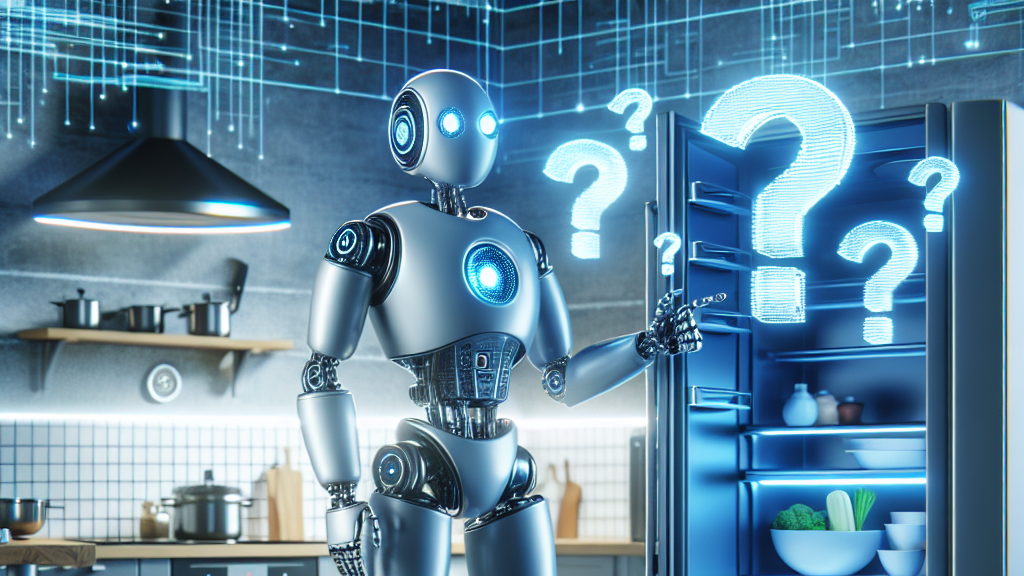
In practical terms, imagine your smart home devices not only doing their usual tasks but also working together intelligently. Your smart fridge, for example, could communicate with the grocery delivery service and your calendar to ensure you never run out of essentials, all while saving you time and effort. This research sets the stage for AI that is smarter, more adaptable, and capable of changing how we live our daily lives.
Did you know? AI models can now work together and adapt their behavior in real-time, just like a team of humans!
FAQs
How do AI language models learn to cooperate in complex tasks?
AI language models learn to cooperate by using a framework called ‘Learn as Individuals, Evolve as a Team,’ which allows them to adapt to their environment and work together in real-time.
What makes this AI teamwork approach different from previous methods?
This AI teamwork approach is unique because it combines individual learning with team evolution, improving their cooperation and communication abilities for better decision-making.
How could AI teamwork impact everyday technology use?
AI teamwork could significantly enhance everyday technology by making devices smarter and more responsive, leading to better home automation, efficient transportation, and improved personal assistants.
What real-world applications can benefit from AI cooperation?
Real-world applications such as smart home systems, automated vehicles, and even complex industrial operations could benefit from AI cooperation, leading to more efficient and intelligent systems.
Why is enhanced communication important in AI teamwork?
Enhanced communication is vital in AI teamwork as it allows AI models to share their experiences and knowledge in real-time, resulting in smarter decision-making and more coordinated actions.
Background
In multi-agent systems, where different AI models interact, it’s crucial for them to communicate and adapt to their environment. This is similar to how humans collaborate, requiring a blend of individual skills and teamwork. The LIET framework achieves this by allowing AI models to learn individually and then combine their knowledge to make better decisions collectively.
History
The idea of multi-agent cooperation in AI has evolved over time. Initially, AI models worked independently, much like individuals in a solo sport. Over the years, research focused on improving communication between these models, leading to frameworks like centralized training with decentralized execution. The LIET approach builds on these ideas, offering a refined method where AI models can learn and grow both individually and as a team.
Based on “Learn as Individuals, Evolve as a Team: Multi-agent LLMs Adaptation in Embodied Environments” by Xinran Li, Chenjia Bai, Zijian Li, Jiakun Zheng, Ting Xiao, Jun Zhang, available on arXiv (arxiv.org/abs/2506.07232), used under CC BY 4.0 (creativecommons.org/licenses/by/4.0/).