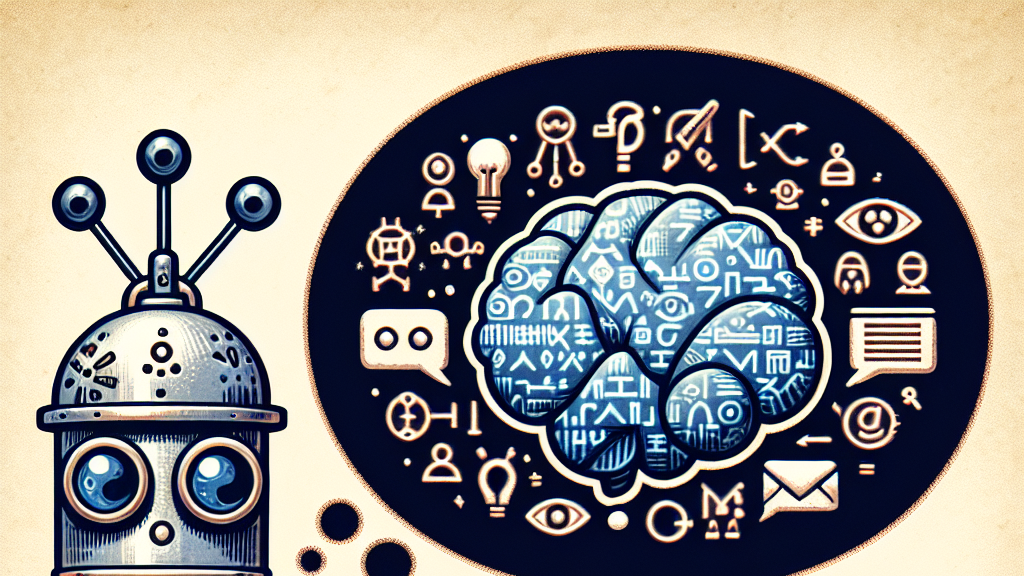
Hold on a minute, is your trusty AI assistant accidentally spilling your secrets? Research now shows that while these smart helpers are great at giving final answers, their internal ‘thinking’ traces might be leaking sensitive info like your personal data. This isn’t just about technical glitches—it’s about trust and privacy in our digital age.
So, what’s actually going on? When these AIs work through problems, they leave behind reasoning traces, kind of like a trail of breadcrumbs. These traces are usually tucked away inside the AI and assumed to be safe. However, researchers have found that these trails can accidently share private data, especially when the AI is asked to think more deeply and take longer strides to get a final answer. More computation means more detail, and sometimes, too much detail that shouldn’t be shared.
Imagine if every time you asked your digital assistant for help, it left little clues that others could follow to get a peek into your life. This can make us reconsider how we use AI, especially in personal settings, and encourage developers to heighten security not just in what these models say, but how they think too.
Did you know? Your AI helper might be revealing secrets about you without you even knowing!
FAQs
What is privacy leakage in AI reasoning models?
Privacy leakage refers to when sensitive user data is unintentionally exposed through the internal processes, or ‘reasoning traces,’ of AI models that are used as personal assistants. This can occur during the AI’s problem-solving steps, where private information might be accidentally included in unseen or unexpected places.
How could AI reasoning traces leak my sensitive information?
AI reasoning traces, which are usually internal and invisible, might include snippets of personal data as the AI processes tasks. These can be inadvertently exposed during prompt injections or show up accidentally in the AI’s final outputs, especially if the AI is given more time or steps to compute an answer.
Why is increasing the reasoning steps in AI models a problem?
While more reasoning steps can make AI models more detailed in their answers, it also means they think more aloud internally, increasing the possibility of including sensitive information in those reasoning traces. Unfortunately, this also enlarges the potential privacy attack surface.
How can I protect my information when using an AI assistant?
To protect your information, be cautious about what data you share with AI assistants, and look for models that prioritize privacy and have strong safeguards not just in what they output, but also in their internal processes or ‘thinking’ patterns.
What are researchers doing to fix AI privacy leakage?
Researchers are urging developers to extend safety efforts to the model’s internal reasoning processes, ensuring that not only the final outputs but also the AI’s internal ‘thought’ processes are secure and free from privacy risks.
Background
Reasoning models are AI systems designed to process information and provide outputs similar to human thinking. These systems leave traces called ‘reasoning traces’ during their internal computation process. These traces have been assumed to be safe as they are not the final output accessible to users. However, with more complex computations, these traces might include private user data inadvertently.
History
As AI has evolved, especially in personal assistant applications, researchers have focused on improving their reasoning capabilities. Historically, the focus has been on optimizing final outputs for accuracy. However, this study highlights that increasing the complexity of reasoning processes can accidentally lead to privacy leaks, a significant concern as AI becomes more integrated into everyday life.
Based on “Leaky Thoughts: Large Reasoning Models Are Not Private Thinkers” by Tommaso Green, Martin Gubri, Haritz Puerto, Sangdoo Yun, Seong Joon Oh, available on arXiv (arxiv.org/abs/2506.15674), used under CC BY 4.0 (creativecommons.org/licenses/by/4.0/).