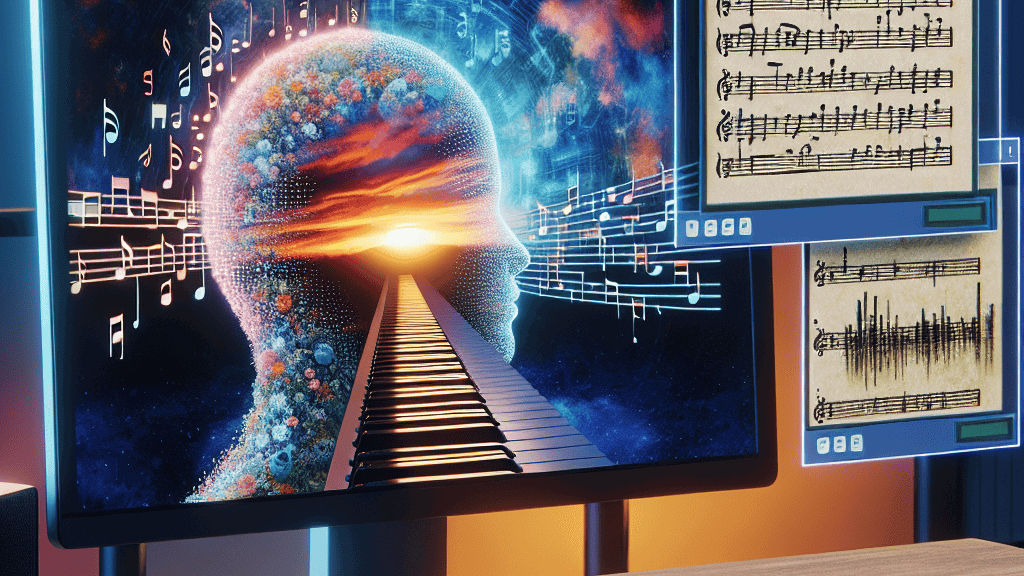
Imagine taking a photo of a stunning sunset or reading a captivating story, and instantly creating a piece of music inspired by it. That’s exactly what the new AI tool Amuse promises to do for songwriters. By transforming images, text, or audio into music, Amuse is opening up a whole new world of creativity.
The innovative part about Amuse is how it interprets these different forms of input and translates them into chord progressions for music. By using powerful large language models, it makes initial guesses at what these inputs might sound like in a musical form. Then, it refines these guesses using a specialized chord model to ensure they’re music-ready. This process helps songwriters seamlessly incorporate unique inspirations into their work, without needing a specific database to find matching examples.
Picture a songwriter using Amuse on their next project. They could snap a photo of a colorful cityscape, and Amuse would help them generate harmonies and melodies that echo its vibrancy and spirit. This isn’t just a technical advance—it’s a new way for artists to play with ideas and elevate their creative process, making what seems impossible possible.
Amuse can turn a simple image into a harmonious chord progression, even if there’s no existing music associated with it.
FAQs
How does Amuse help songwriters?
Amuse transforms images, text, or audio into music by turning them into chord progressions, making it easier for songwriters to connect various forms of inspiration to their music.
What makes Amuse unique?
Amuse uses advanced large language models to suggest chords from multimodal inputs and refines these suggestions to be musically coherent without needing a specific database of examples.
Who can benefit from using Amuse?
Songwriters looking to enhance their creative process with innovative tools can find Amuse especially useful, as it opens new ways to incorporate diverse inspirations into their music.
Can Amuse work with images alone?
Yes, Amuse can take an image and generate meaningful chord progressions that reflect the image’s mood or theme.
Is musical experience required to use Amuse?
No, even those without musical experience can use Amuse to explore and create music-inspired outputs from their creative inputs.
Background
At its core, Amuse uses multimodal large language models to interpret various inputs—like images and text—and convert them into musical suggestions. These models are trained to understand and generate language (or music, in this case) based on a wide range of data. The system also includes a specialized unimodal chord model that filters these suggestions, ensuring they make musical sense and are cohesive.
History
Traditionally, music creation tools focused on providing musical templates or helping with editing existing tracks. However, these systems often limited creativity to a single medium, like audio. Recent advancements in AI, particularly with large language models, have enabled a shift towards more versatile tools that can process and integrate diverse types of input, such as images and text, into music composition.
Based on “Amuse: Human-AI Collaborative Songwriting with Multimodal Inspirations” by Yewon Kim, Sung-Ju Lee, Chris Donahue, available on arXiv (arxiv.org/abs/2412.18940), used under CC BY 4.0 (creativecommons.org/licenses/by/4.0/).