Learning an instrument as a beginner can feel like navigating a maze without a map. Many first-time musicians struggle to identify what exactly is going wrong in their performances, whether it’s playing the wrong note or missing the rhythm. That’s where the new AI technology comes in, offering a breakthrough tool that helps beginners pinpoint mistakes in their music playing with ease.
This cutting-edge tool, called Polytune, uses advanced AI to listen to music performances and then accurately label music scores with any errors. Unlike previous systems, Polytune doesn’t just rely on aligning notes perfectly, which can lead to inaccuracies. Instead, it uses a sophisticated model to understand the music more like a human ear would. Plus, Polytune has an innovative way of creating vast amounts of practice data, ensuring the AI is well-trained and reliable.
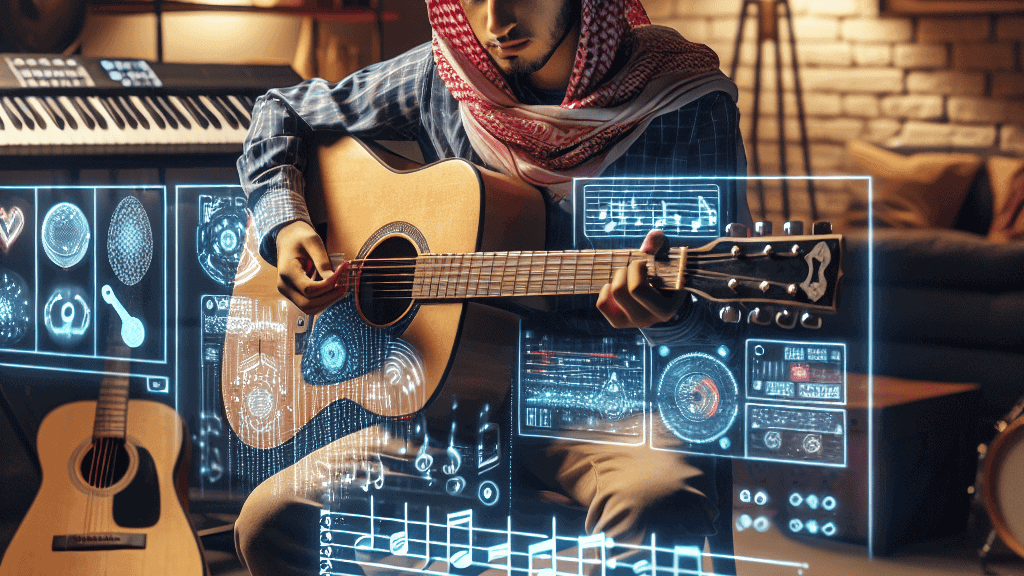
Imagine a young guitarist practicing at home, and Polytune is there to immediately highlight missed notes or rhythm slips, helping them improve faster. This kind of technology can not only aid individual learners but also revolutionize music education by providing teachers with a powerful tool to support students more effectively. It’s like having a smart music mentor that’s always ready to help.
AI can analyze music and spot errors with greater accuracy than humans, thanks to extensive training data and advanced algorithms.
FAQs
What unexpected discovery did scientists make?
Researchers found that their new AI model dramatically boosts accuracy in detecting music errors, improving performance by 40 percentage points compared to previous methods.
How does this technology handle multiple instruments?
The Polytune model is capable of learning from various instruments through its versatile design, making it adaptable for different musical contexts.
Why is this development significant for beginner musicians?
It provides an easy-to-use tool that helps beginners rapidly identify and correct mistakes, making learning instruments more efficient and enjoyable.
What was a major challenge in existing music error detection tools?
Previous tools struggled with errors due to slight misalignments and relied heavily on limited, heuristic-based datasets for training.
How does Polytune’s synthetic data generation improve its effectiveness?
By generating large-scale synthetic datasets, Polytune can be trained with a diverse range of music scenarios, enhancing its accuracy and reliability.
Background
The key challenge in music error detection is accurately identifying mistakes like incorrect notes or rhythms during a performance. Traditional methods rely on aligning music scores with actual performances, which can be error-prone due to slight misalignments and lack of comprehensive data for training the models. Polytune introduces a new approach by using sophisticated AI technology to listen to and annotate performances more intelligently, alongside generating extensive synthetic datasets to train its model more effectively.
History
Music error detection has evolved from simple heuristic methods to more complex AI-driven approaches. The early attempts were limited by their reliance on manual alignment of music scores and actual performances, often failing due to small deviations. The development of transformer models, like Polytune, represents a significant leap forward, enabling more accurate detection by learning from large-scale synthetic datasets and understanding music similarly to human perception.
Based on “Detecting Music Performance Errors with Transformers” by Benjamin Shiue-Hal Chou, Purvish Jajal, Nicholas John Eliopoulos, Tim Nadolsky, Cheng-Yun Yang, Nikita Ravi, James C. Davis, Kristen Yeon-Ji Yun, Yung-Hsiang Lu, available on arXiv (arxiv.org/abs/2501.02030), used under CC BY 4.0 (creativecommons.org/licenses/by/4.0/).