Connect with us

Search by keyword

Computers

Can A.I. Fail Faster to Succeed More?

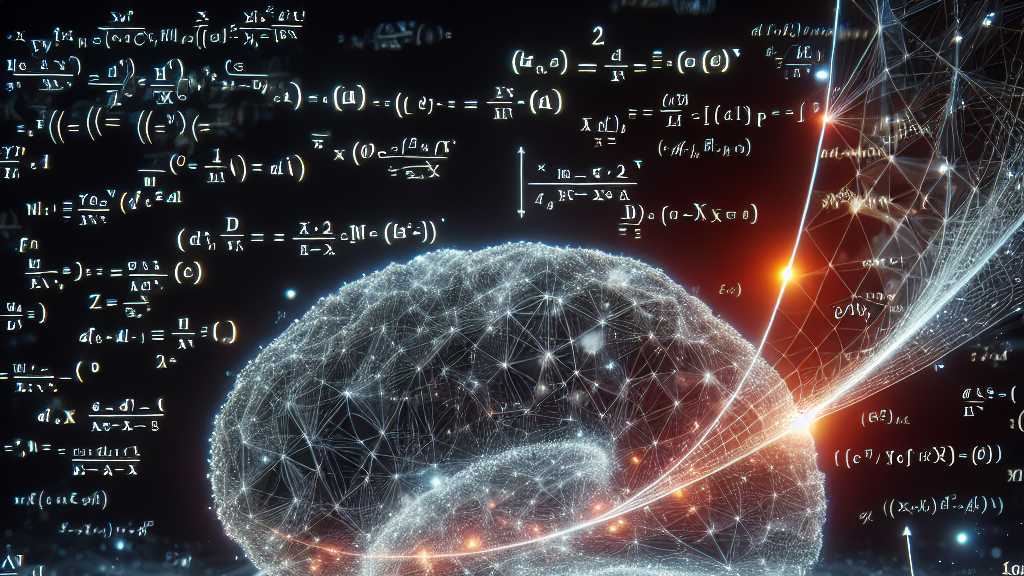
Recent research reveals that even when AI fails often, it can still succeed by understanding how success rates change with multiple attempts. This insight could make AI smarter and more efficient, which might revolutionize how we interact with technology daily.

Can A I Fail Faster to Succeed More
✨Researched by humans. Explained by robots. Learn more.

Imagine if failing more often could actually make something smarter. Sounds wild, right? But that’s what’s happening with artificial intelligence. Recent research shows that when AI tries a task multiple times, even if it fails a lot, it could still get it right eventually. This might explain why AI can tackle complex problems with persistence, similar to how we might finally solve a tricky puzzle after numerous attempts.

The research found that while we might expect AI’s failure rate to decrease in a straightforward, exponential way—as it keeps trying—it actually follows unexpected patterns due to some tasks being much harder than others. In these cases, those tough tasks act like speed bumps, making the overall success trend appear more complicated. Imagine trying to jump over hurdles of different heights; some are easy, but a few are really tough, skewing your overall pace.

In practical terms, this insight could transform AI development, making it more predictable and efficient in fields like automated tutoring or any application where AI learns and adapts. Picture an AI tutor that learns which math problems stump students the most and adjusts its teaching strategy accordingly. That kind of intelligence could revolutionize education, making learning more personalized and effective.

Artificial intelligence can calculate the potential of success with much fewer resources by understanding the patterns in its failures!

FAQs

How does AI’s failure rate relate to its success?

AI’s failure rate on individual tasks can actually decrease exponentially as it attempts them multiple times, leading to a higher overall success rate, even if it fails many times initially.

What is the significance of power law scaling in AI?

Power law scaling in AI means that a small number of very difficult tasks can heavily influence the overall pattern of success, making it look more complex than simple exponential improvements would suggest.

How can this research make AI more efficient?

By understanding the distribution of task difficulties, we can predict AI performance more accurately, reducing the need for excessive computation and allowing for smarter AI development.

Why do some AI tasks have extremely low success probabilities?

Some tasks are inherently more complex or require more nuanced understanding, which makes them harder for AI to solve compared to simpler tasks.

How does this understanding of AI task success help in real-world applications?

This knowledge can lead to better design and evaluation of AI systems, making them more efficient and effective in areas like education, healthcare, and customer service.

Background

When tackling tasks, AI systems make multiple attempts to get a correct answer. The success rate of these attempts can be visualized as either exponential or polynomial scaling. Exponential scaling shows improvement with each try, while polynomial scaling may result from some tasks being exceptionally difficult, skewing success rates.

History

Traditionally, AI improvements were predicted using exponential scaling models, where performance increased steadily with more attempts. Recent studies found deviations from this model, due to the uneven distribution of task difficulties, leading to exploration of polynomial scaling implications.

Based on “How Do Large Language Monkeys Get Their Power (Laws)?” by Rylan Schaeffer, Joshua Kazdan, John Hughes, Jordan Juravsky, Sara Price, Aengus Lynch, Erik Jones, Robert Kirk, Azalia Mirhoseini, Sanmi Koyejo, available on arXiv (arxiv.org/abs/2502.17578), used under CC BY 4.0 (creativecommons.org/licenses/by/4.0/).

Trending

Latest

Can AI Save Water Discover How

Computers

AI is transforming the tech world, but it uses lots of water! A new tool, SCARF, helps us measure and reduce AI's water footprint,...

Whats a Forbush Decrease and Why Should We Care Whats a Forbush Decrease and Why Should We Care

Space

Scientists just observed the biggest solar storm event in years, revealing unexpected cosmic ray patterns. Understanding these changes could help us protect our technology...

Can Cars Spot Danger Faster Than Humans Can Cars Spot Danger Faster Than Humans

Computers

Think about how quickly you react when something unexpected happens on the road. This research brings us closer to creating self-driving cars that can...

Can Fear of the Other Stop Social Harmony Can Fear of the Other Stop Social Harmony

Physics

Fear of the unknown might make it harder for people to agree and get along. This study shows that when people have strong xenophobic...

Can AI Revolutionize Breast Cancer Diagnosis Can AI Revolutionize Breast Cancer Diagnosis

Electricity

This research introduces a groundbreaking AI model that can accurately assess HER2-positive breast cancer using widely accessible staining methods, potentially revolutionizing how we diagnose...

Can AI Transform Your Singing into a Choir Can AI Transform Your Singing into a Choir

Computers

Imagine singing solo and having AI turn you into a choir. This research unveils a groundbreaking AI tool that transforms your voice into rich...

You May Also Like

Computers

AI is transforming the tech world, but it uses lots of water! A new tool, SCARF, helps us measure and reduce AI's water footprint,...

Computers

Think about how quickly you react when something unexpected happens on the road. This research brings us closer to creating self-driving cars that can...

Electricity

This research introduces a groundbreaking AI model that can accurately assess HER2-positive breast cancer using widely accessible staining methods, potentially revolutionizing how we diagnose...

Computers

Imagine a machine capable of reading ancient books, deciphering complex pages with precision! This research is paving the way for AI to unlock the...

Economics

Discover how AI models can unknowingly favor certain races in mortgage decisions and how new methods could dramatically reduce these biases, fostering a fairer...

Computers

This research explores how AI models designed to understand both images and words might improve their performance simply by teaching themselves to think better....

Computers

Imagine if playing games could make a computer program better at understanding and creating text! This research suggests that by using creative tasks like...

Computers

Dive into the world of AI mistrust, where computers don't always know when they're wrong! Discover how teaching AI to see like us might...

Computers

What if talking to a robot could feel as comforting as a therapy session? This research uncovers the striking similarities between human therapists and...

Copyright © 2024 8ig8rain.

Disclaimer: The content on 8ig8rain.com consists of AI-generated summaries of scientific abstracts from arXiv. Please note that most arXiv abstracts are preprints and may not have undergone formal peer review. While these summaries aim to convey key ideas and potential applications, they are provided for informational purposes only and should not be interpreted as validated scientific findings or professional advice. The summaries are intended to educate, spark curiosity, and inspire further exploration of science.