Connect with us

Search by keyword

Computers

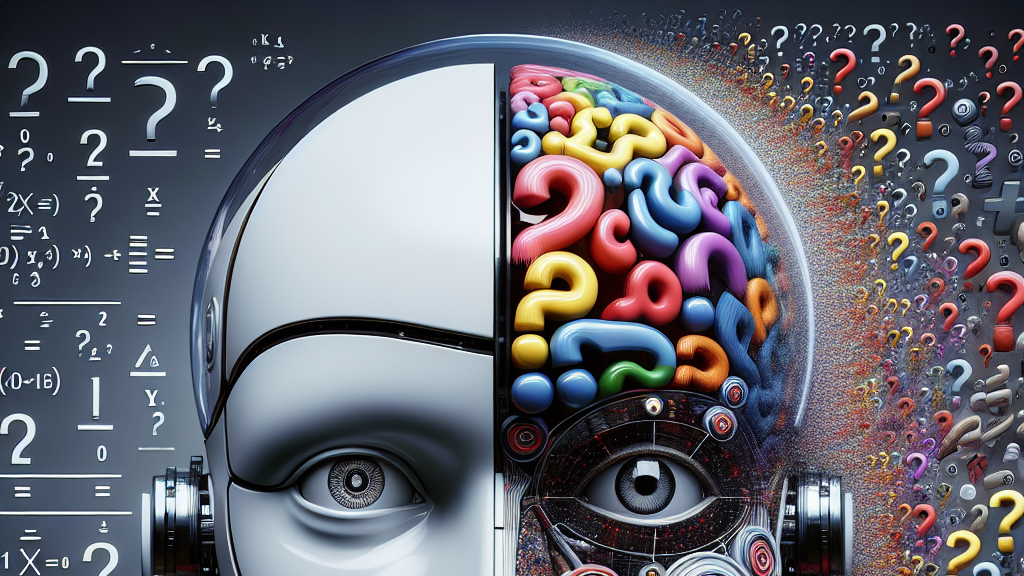
Can A.I. Really Be Trusted? Discover the Truth!

The study reveals that an AI’s funny quirk of making stuff up, known as hallucinations, can be triggered and measured with special techniques. This discovery could lead to safer AI in areas where accuracy is crucial, like healthcare and law.

Can A I Really Be Trusted Discover the Truth
✨Researched by humans. Explained by robots. Learn more.

Picture this: an AI that tells you something with complete confidence, and it sounds totally convincing… but it’s not quite true. This is something researchers are grappling with as they study ‘hallucinations’ in AI, which can be misleading in high-stakes fields like healthcare and law. It’s like when your GPS confidently tells you to turn down a non-existent road—only, imagine lives or legal outcomes depending on it!

Researchers have developed a novel way to study these AI mishaps. They created a framework using specific prompts to intentionally confuse the AI, sort of like asking it to mix up concepts from science and mysticism. By doing this, they can see just how easy it is for AI to get off track and measure how badly it goes wrong. Interestingly, some AI models handle these tricky prompts better than others, showing that not all AI is created equal.

Imagine a future where AI can identify when it’s about to ‘hallucinate’ and self-correct before delivering information. This could revolutionize fields where accuracy is crucial and could make AI a much more reliable assistant for doctors, lawyers, and beyond. By understanding and controlling AI’s tendency to stray from facts, we could make technology smarter and safer for everyone.

Did you know? AI can sometimes sound completely confident while making up facts, a phenomenon researchers call ‘hallucination.’

FAQs

What are hallucinations in language models?

Hallucinations in language models occur when the AI generates information that sounds fluent and confident but is factually incorrect, posing challenges in fields like healthcare and law.

How does the new framework study AI hallucinations?

The framework uses special prompts to intentionally confuse the AI and measure its responses, helping researchers understand how and why AI goes off track.

Can this research make AI more reliable?

Yes! By identifying and understanding AI hallucinations, the research could lead to developing AI systems that recognize when they’re about to stray from facts and correct themselves, making them safer and more reliable.

Why is it important to tackle AI hallucinations now?

Tackling AI hallucinations is crucial because AI is increasingly being used in sensitive areas where accuracy and factual reliability are essential, such as healthcare and legal systems.

How might this research affect AI development in the future?

It could lead to the creation of AI that can regulate its own output more effectively, reducing errors and increasing trust in AI technology.

Background

A large language model is a type of AI that can generate human-like text by predicting the next word in a sequence based on the input it receives. Despite being highly sophisticated, these models sometimes ‘hallucinate,’ or produce text that is factually incorrect but sounds convincing. This is a problem when accuracy is critical, such as when AI is used in healthcare or legal advice. Understanding why and how these hallucinations occur is key to improving AI reliability.

History

The evolution of language models has been rapid, starting with simpler algorithms that could complete basic tasks to today’s sophisticated systems that can emulate human-like conversation. Early AI models focused mainly on technical improvement, but as they entered more serious applications, the issue of hallucinations became evident. Past studies have worked on making AI more human-like, but now the focus is on improving factual reliability, which is where this study’s framework comes in, aiming to reduce errors and improve trust.

Based on “Triggering Hallucinations in LLMs: A Quantitative Study of Prompt-Induced Hallucination in Large Language Models” by Makoto Sato, available on arXiv (arxiv.org/abs/2505.00557), used under CC BY 4.0 (creativecommons.org/licenses/by/4.0/).


Trending

Latest

Can AI Save Water Discover How

Computers

AI is transforming the tech world, but it uses lots of water! A new tool, SCARF, helps us measure and reduce AI's water footprint,...

Whats a Forbush Decrease and Why Should We Care Whats a Forbush Decrease and Why Should We Care

Space

Scientists just observed the biggest solar storm event in years, revealing unexpected cosmic ray patterns. Understanding these changes could help us protect our technology...

Can Cars Spot Danger Faster Than Humans Can Cars Spot Danger Faster Than Humans

Computers

Think about how quickly you react when something unexpected happens on the road. This research brings us closer to creating self-driving cars that can...

Can Fear of the Other Stop Social Harmony Can Fear of the Other Stop Social Harmony

Physics

Fear of the unknown might make it harder for people to agree and get along. This study shows that when people have strong xenophobic...

Can AI Revolutionize Breast Cancer Diagnosis Can AI Revolutionize Breast Cancer Diagnosis

Electricity

This research introduces a groundbreaking AI model that can accurately assess HER2-positive breast cancer using widely accessible staining methods, potentially revolutionizing how we diagnose...

Can AI Transform Your Singing into a Choir Can AI Transform Your Singing into a Choir

Computers

Imagine singing solo and having AI turn you into a choir. This research unveils a groundbreaking AI tool that transforms your voice into rich...

You May Also Like

Computers

This research explores how AI models designed to understand both images and words might improve their performance simply by teaching themselves to think better....

Computers

Imagine if playing games could make a computer program better at understanding and creating text! This research suggests that by using creative tasks like...

Computers

Imagine a super-smart AI that can watch your daily life in real-time and remember everything without taking up much space. This research shows how...

Computers

This research explores how artificial intelligence language-powered robots might think they're seeing things that aren't actually there. Investigating this quirk could lead to more...

Computers

This exciting study reveals that just like us, AI has its own biases that can skew its thinking, especially when solving problems. Understanding and...

Computers

This research uncovers vulnerabilities in AI that could expose private and sensitive data while fine-tuning these models for specific fields like healthcare. By understanding...

Computers

Discover how language models might not be as random as we thought! By examining their decision-making processes, researchers found that these models can sometimes...

Computers

Understanding how small changes in computer settings can lead to big differences in AI performance has huge implications for reliability in AI applications. This...

Computers

Imagine teaching artificial intelligence to truly get the physical world by using sound! This research shows it's possible by equipping AI with nifty tricks...

Copyright © 2024 8ig8rain.

Disclaimer: The content on 8ig8rain.com consists of AI-generated summaries of scientific abstracts from arXiv. Please note that most arXiv abstracts are preprints and may not have undergone formal peer review. While these summaries aim to convey key ideas and potential applications, they are provided for informational purposes only and should not be interpreted as validated scientific findings or professional advice. The summaries are intended to educate, spark curiosity, and inspire further exploration of science.