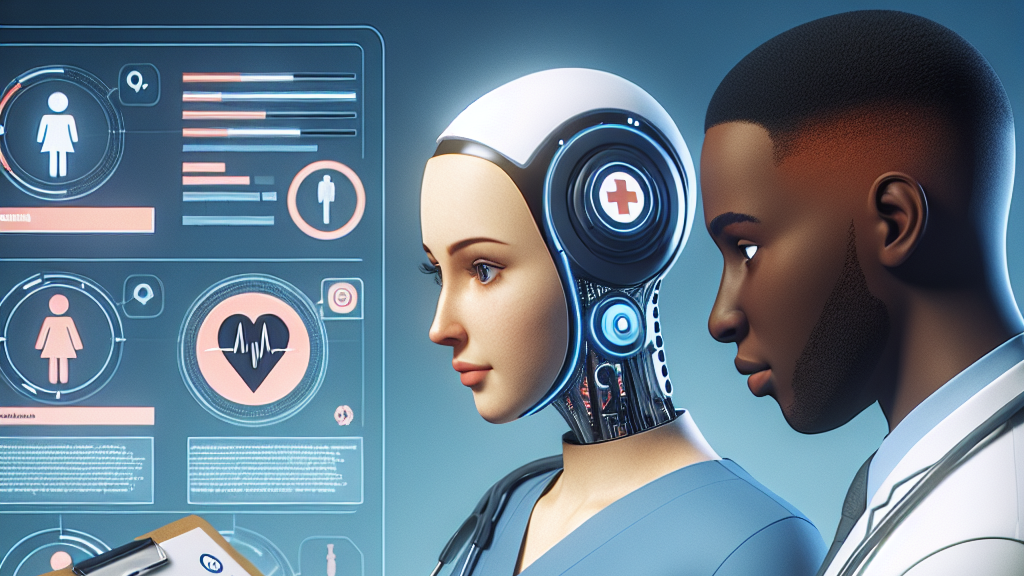
In the exciting world of AI, doctors may soon have robotic colleagues helping diagnose and treat patients. But can these AI doctors handle the natural variability we see in real clinical settings? That’s the fascinating question researchers are trying to answer with MedPerturb, a dataset uniquely designed to test medical language models under different scenarios.
MedPerturb is like a toolkit for testing AI in healthcare. It contains clinical situations—think of them like short medical stories—transformed with changes like gender-swapping a patient, using casual language, or altering the format from a typical doctor’s note to a chat conversation. By doing this, researchers can see how these changes affect the AI’s decisions compared to human doctors.
This research could change the way we think about AI in medicine. Imagine going to a doctor with symptoms and knowing that an AI could process all the nuances of your case with the same understanding and flexibility as a human. It means improved healthcare access and precision, making sure that anyone, regardless of the differences in how they communicate their symptoms, gets the best care possible.
Did you know? Medical AI can now be tested with virtual patient stories that change things like gender and language style, challenging AI to keep up with real-life variability.
FAQs
How does the MedPerturb dataset test AI’s adaptability in healthcare?
The MedPerturb dataset challenges AI by transforming clinical cases with changes like gender swaps, casual language, or format adjustments. This tests how well AI models can adapt to the sort of variability seen in real clinical settings.
Why is gender modification in clinical cases important for AI testing?
Gender modification helps researchers understand if AI models are biased or if they can accurately interpret medical cases regardless of the patient’s gender, which is crucial for providing unbiased healthcare recommendations.
How do AI doctors compare to human doctors in handling clinical variability?
In the studies using MedPerturb, AI doctors were found to be more sensitive to changes in gender and language style, while human doctors were more affected by adjustments in clinical data formats.
Background
The study focuses on how Artificial Intelligence, specifically Large Language Models, can be robustly deployed in clinical settings. These models are designed to understand human language and make decisions based on input, but human language in medical situations is not always straightforward—it can be influenced by diverse factors such as gender, language style, and how information is presented. Understanding how AI responds to these changes is crucial for ensuring that AI can be relied upon in real-world healthcare environments.
History
The concept of using AI in healthcare has been around for years, with early research focusing on automated diagnosis systems. As machine learning evolved, these systems became more sophisticated, giving rise to Large Language Models capable of processing natural language. This research builds upon past studies by introducing variability as a core factor, which reflects real-world clinical settings more accurately than static evaluation benchmarks.
Based on “The MedPerturb Dataset: What Non-Content Perturbations Reveal About Human and Clinical LLM Decision Making” by Abinitha Gourabathina, Yuexing Hao, Walter Gerych, Marzyeh Ghassemi, available on arXiv (arxiv.org/abs/2506.17163), used under CC BY 4.0 (creativecommons.org/licenses/by/4.0/).